
By Francesca Montillo, ISDA Food + Travel Writer
Growing up in a southern Italian family, I learned about Italian superstitions and beliefs early on. Italy is a country where superstitions reign, and Italians are the most superstitious people there are!
Superstitions make up strange rites and habits; we’re no strangers to them, especially in the South! The majority of Italians admit to being superstitious; they may not be true, but we believe them!
Superstitions in Italy mostly come from the Middle Ages. Some Italian superstitions have simple explanations, others more complex.
Let’s begin:
Placing Your Hat on a Bed
Removing a hat when entering someone’s house is an obvious sign of respect, but placing a hat on a bed is a sign of bad luck for the homeowner. When doctors or priests made house visits because someone was seriously ill or on the verge of dying, they would take off their hats and place them at the foot of the bed. Because of this ritual, you’ll never see an Italian man put a hat on a bed, least of all his own bed. This is one Italian superstition you don’t want to break.

Careful Not to Spill the Salt
In ancient times, salt was a very precious commodity. Once considered rare, the seasoning and natural preservative was a luxury reserved for the wealthier class. The term “salary” actually derives from the word salt. The act of spilling salt is associated with forthcoming financial losses. To avoid the misfortune, immediately pick up what has fallen and throw it behind your back, preferably over your left shoulder.

Careful Not to Spill Oil Either
Several years back, while my family and I were vacationing in Italy, we received a beautiful, two-liter bottle of olio nuovo, or new oil, as a gift. I carelessly placed the bottle on the floor of our pantry back in Calabria. It wasn’t in our house an hour before I knocked it over while sweeping up. The bottle broke, spilling oil all over the floor. Let me tell you, cleaning up two liters of oil is no picnic, nor is seeing your mother in hysterics over the cosmic uncertainties that may follow.
This superstition derives from ancient times. Much like salt, this liquid gold was a particularly precious commodity, and therefore wasting it was an absolute sin that would upset the Gods of prosperity.
On the contrary, gifting oil brings good luck to the giver.

The Black Cat Misfortune
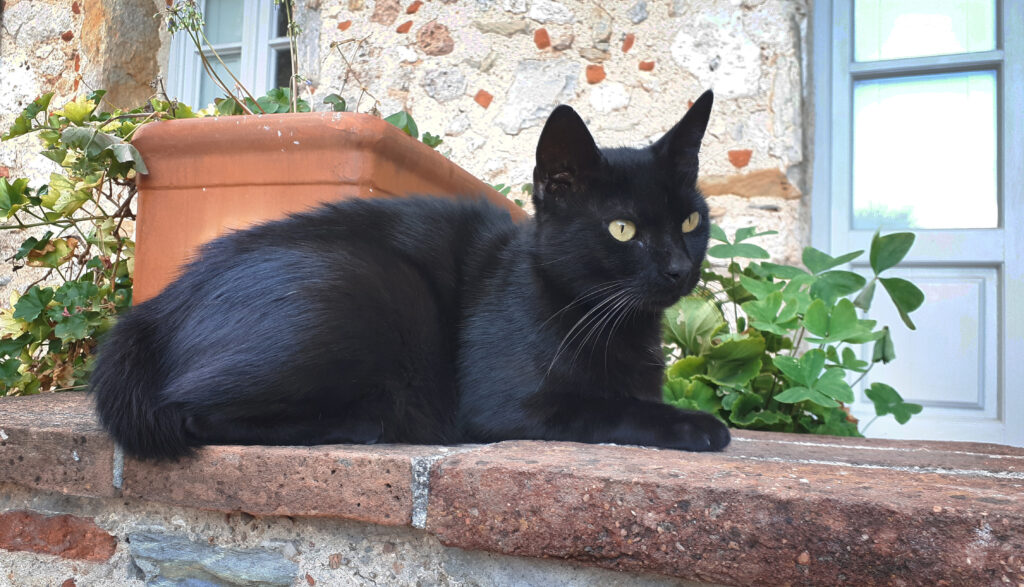
In the Middle Ages traveling by horse-and-carriage at night was common, and the horses were frightened by the yellow eyes of black cats, so much so that the sudden crossing of a noir feline disoriented them, resulting in accidents. This sparked the legend that united them with the devil’s work. Because of this, in 1200 AD, Pope Gregory IX declared that black cats were the friends of witches and devils and ordered that all black cats be killed!
Opening an Umbrella Indoors
If you grew up in an Italian household like me, chances are more than once someone scolded you for opening an umbrella indoors! According to legend, opening an umbrella indoors leads to financial problems. Where did this superstition come from? There are two origins: the first arrives from ancient Rome, where umbrellas would be used to shelter from rain and sun. Anyone who opened an umbrella at home did not respect the God of the Sun, surely bringing misfortune to the family. Secondly, umbrellas were often used to plug holes in poor people’s homes, and as a result, opening them would mean financial disruption! To this day, I never open an umbrella indoors.

Look Into My Eyes
No matter the situation, making eye contact with someone is synonymous with honesty and loyalty. Those who lower their gaze may indeed have something to hide. Because of this, it is most important to look someone in the eye when making a toast. Like many other superstitions, this one also dates back to the Middle Ages. During this period, during banquets and gatherings, guests feared their food or drink would be poisoned! Therefore, it was believed that looking into the eyes of others at the time of the toast helped to prevent someone from slipping poison into drinks! You should also never cross arms with anyone while toasting, or you might cross them in life!
 A toast among friends? Just look me in the eyes while doing it!
The Broom Theory
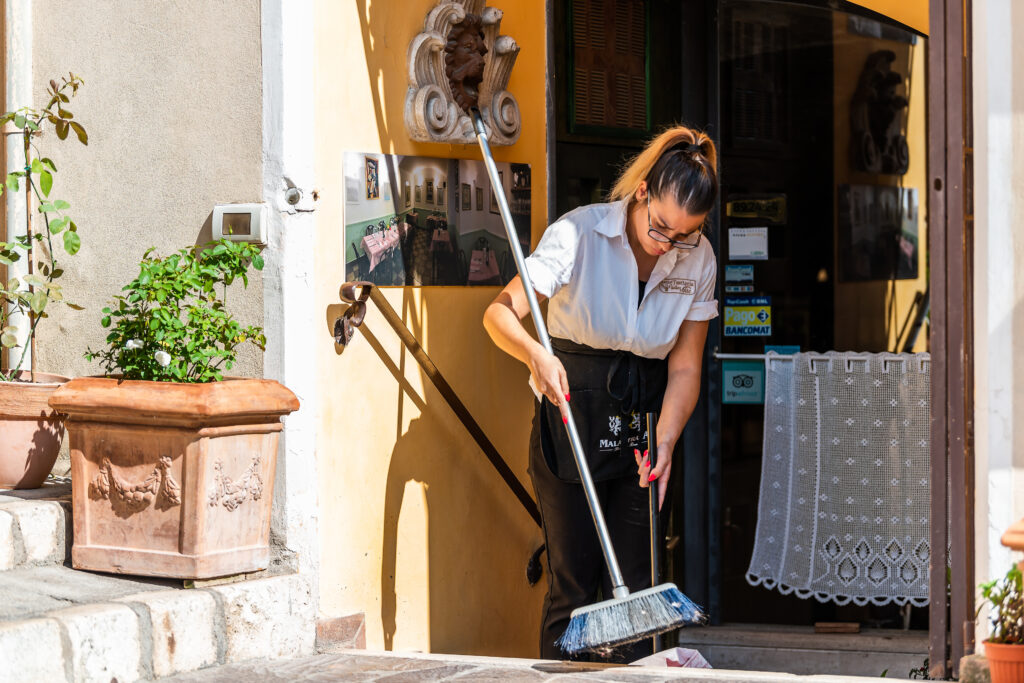
Did your Italian grandmother or mother ever tell you to pick up your feet, or you will never get married? For women looking for a husband, it is bad luck if someone nits their feet with a broom. Or, God forbid, you accidentally sweep over your own feet! Once upon a time, a woman who inadvertently touched her feet with a broom, or had her feet swept over by someone else’s broom, was not considered good at household chores and, consequently, was deemed a questionable future wife.
13: The “Last Supper” Curse
The number 13 has a bad rep globally, and it’s certainly not a favored number of the Italians, either. You will especially want to avoid it at the dinner table. This belief comes from Jesus’ last Supper, where 13 were seated. Italians believe that if 13 sit at the table, one will die within a year, known as the Last Supper Curse. As a side note, I often bring groups to Italy with 12 participants, counting myself, that makes us 13. On several occasions, I have had restaurant staff ask me to “grab the driver” to join us to break the number 13 at the table!
Number 17 Is No Better
But it’s number 17 you really want to avoid if you’re visiting Italy. The Roman numeral for 17 is XVII; if rearranged, it looks like this: VIXI, which means “I have lived,” a symbol once placed on tombstones and associated with death. As a side note, have you ever flown ITA-Airways? The Italian national airline? If so, you might have noticed that ITA does not have rows numbered 13 and 17. And many Italian hotels do not have a floor numbered 17. Yes, this is how superstitious Italians are!
Don’t Forget to Carry a Little Horn
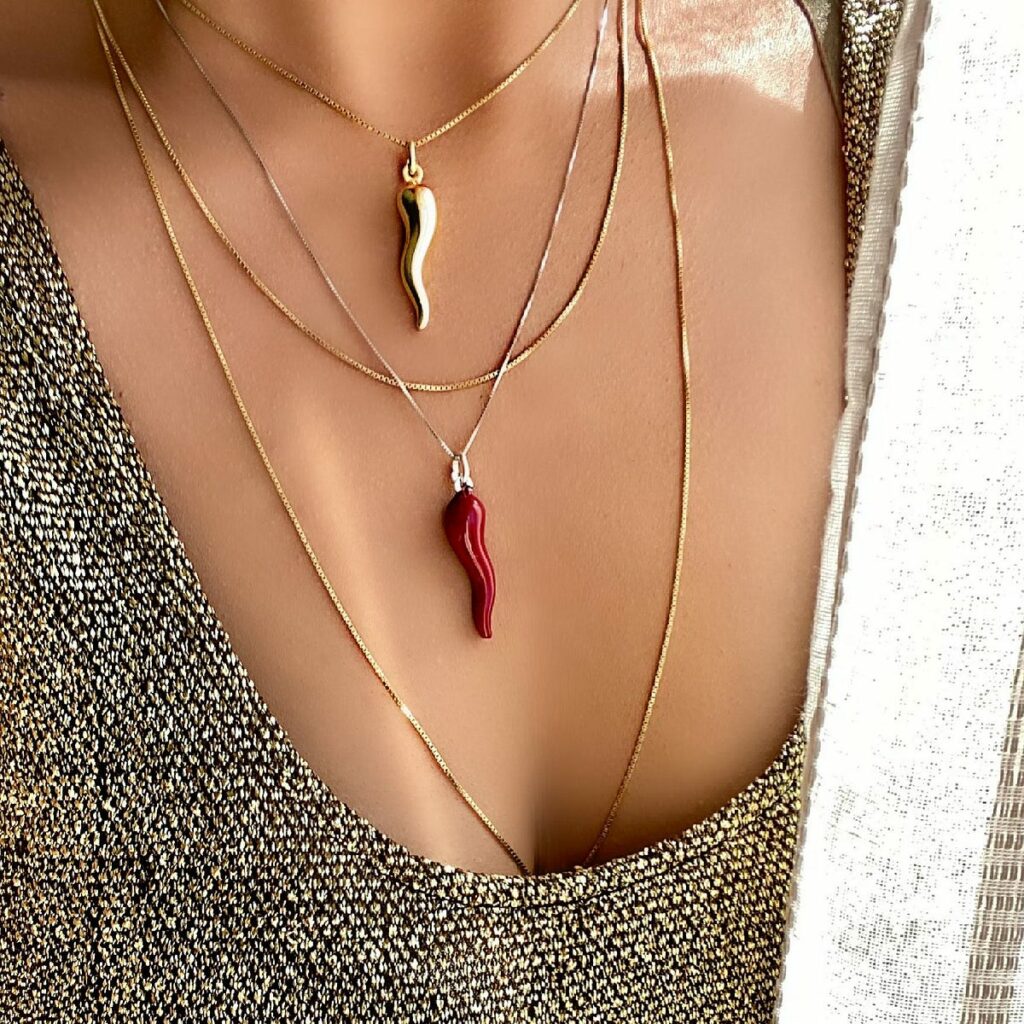
Ever notice how many Italians have a charm around their neck that looks like a little chili pepper? Tour participants often ask me where they, too, can get one as it’s become a symbol synonymous with Italy. The cornicello represents the horns of the Old European Moon Goddess, and is said to ward off bad luck while bringing about good fortune.