

By Mike DeLucia, La Nostra Voce
We live in a culture where stereotyping and the inclusion of individuality is demanded. A negative word or action against religion, physicality, sexual orientation, or race will cripple a person’s reputation. Friends, associates, and organizations will distance themselves from the pariah, as not to be considered guilty by association. The repercussion is both immediate and feared, and no one understands this more than celebrities.
- Amy Schumer apologized for a racist joke she used to make about Latino men.
- Eddie Murphy apologized for his past material about the LGBTQ+ community. Murphy said he was “ignorant,” and he deeply regrets “[…] any and all pain this has caused.”
- Weird Al Yankovic was “deeply sorry” for using the word “spastic” in the song World Crimes.
- Jimmy Kimmel, Sarah Silverman, and Jimmy Fallon have all apologized for their past blackface skits.
- Nikki Glaser apologized for shaming Taylor Swift’s “skinny” body.
- Jay Leno issued an apology for his past racist jokes about the Asian-American community.
- Ryan Reynolds and Blake Lively apologized for the location of their wedding venue. They said they are “deeply and unreservedly sorry” for holding their 2012 nuptials at a former slave plantation in South Carolina.
- The Academy Awards demanded that appointed host, Kevin Hart, apologize for the homophobic jokes from his distant past even though he had previously done so.
Hollywood sits at the center of this movement by adhering to a no-tolerance policy. If its members are accused of inappropriate behavior, they face severe consequences regardless of how long of a storied career they may have enjoyed. In fact, Hollywood is so committed to setting an example, the Academy of Motion Picture Arts and Sciences announced new inclusion standards for Best Picture eligibility that began phasing in this year. The statute mandates that a film cannot be nominated for Best Picture unless it has met two of the following four newly created standards.
Standards A and B set specific requirements regarding the inclusion of underrepresented ethnic groups in regard to actors, casting directors, cinematographers, composers, costume designers, directors, editors, hairstylists, makeup artists, producers, production designers, set decorators, sound supervisors, and writers.
Standards C and D address guidelines in the areas of marketing, publicity, distribution and paid apprenticeships.
Underrepresented Groups are categorized as women, LGBTQ+, racial or ethnic groups, or people with cognitive or physical disabilities, or those who are deaf or hard of hearing.
Underrepresented Racial or Ethnicities are categorized as Asian, Hispanic/Latinx, Black/African American, Indigenous/Native American/Alaskan Native, Middle Eastern/North African, Native Hawaiian or other Pacific Islander, or other underrepresented races.
Yet underneath Hollywood’s polished identity, lies a vast history of inscrutable racism and bigotry.
They are profiteers of creating and propagating a stereotypical view of Italian Americans as either criminals or unintelligent/uneducated/unrefined individuals who curse profusely and constantly eat, and there’s no reason to believe this injustice will end because business is good.
Since the mid 1970’s until the present, there have been a handful of mainstream films that did not attach Hollywood’s stereotype. They are The Karate Kid (1984), Gladiator (2000), Unbroken (2014), and this list excludes comedies since the purpose of that genre is to laugh at its characters. Some believe Rocky isn’t stereotypical, possibly because Balboa is an iconic character, but in the original film, Rocky is an unrefined, uneducated man who makes a living as a boxer and a leg-breaker for the local loan shark, Tony Gazzo. The character evolves in Rocky III, and kudos to Stallone for Balboa’s transformation, but it is important to note that the studios were hungry for the promising rewards of the sequel. The bigger question is, would the world have ever gotten to meet The Italian Stallion if Sylvester Stallone wrote Rocky III, first?
Hollywood has, in fact, reshaped, reinvented, and repackaged an entire ethnicity according to its own design. It created a script that diminishes 2,000 years of profound societal contributions.
Besides the Roman Empire and the Renaissance, Italians have produced world-renowned composers, artists, singers, dancers, musicians, actors, writers, directors, athletes, businesspeople, architects, scientists, mathematicians, fashion designers, automobile manufacturers, entrepreneurs, explorers, military geniuses, politicians, philosophers, chefs, and every other category that defines human intellect and achievement. We have given society the Sistine Chapel, piano, violin, cello, opera, ballet, Columbia Exchange, thermometer, barometer, telephone, Ferrari/Lamborghini/Maserati/Bugatti, Gucci/Armani/Prada/Versace, Prosecco, gelato, pizza, pretzels, shopping malls, eyeglasses, and a slew of other invaluable contributions that have been camouflaged by a smokescreen of Hollywood bias.
Hollywood’s depiction of Italians over the past 50 years has influenced an international audience. A friend of mine mentioned a recent incident that occurred during her family trip to the Caribbean where she was greeted by the resort’s restaurant host. He said, with a chuckle, “I’ll make sure you guys sit in a place where your backs aren’t to the door.” She asked, “Why would you say that?” He said, “I’m only joking. You’re Italians, right?” The host’s ignorance is the result of his lifelong education. While brainwashing is not part of a Hollywood conspiracy to deface an ethnicity, the unintentional effect of its greed and thoughtlessness produces similar results.
While films such as The Irishman (2019) or The Many Saints of Newark (2021) are blatant reenforced representations, productions like Ford v Ferrari (2019) — a historical fiction account of the Ford Motor Company’s goal to beat Ferrari at Le Mans — include the subtle concepts that may cause an even greater psychological imprint. In the scene where Lee Iacocca meets the Ferrari entourage outside their offices in Italy, Iacocca says to his colleague as an aside, “You gotta understand: this is like the Mafia showing up to buy the Statue of Liberty.” This film has nothing to do with the Mafia and little to do with Italians, but Hollywood refuses to separate the two. The Punisher, a Marvel comic book that was made into a film in 2004 and a Netflix series (2017-2019), features Frank Castle (Francis Castiglione), whose road as a vigilante begins when his family is murdered by the Mafia. One is led to believe that where there are Italians, there is Mafia. That is conditioning. That is propagandism. That is the foundation of pedagogics.
Even though fewer than .0025% of Italian Americans belong to organized crime, it doesn’t mean the Italian Mafia doesn’t exist, and I have no issue with Goodfellas (1990), A Bronx Tale (1993), Casino (1995), or Donnie Brasco (1997). These are superb films, and The Godfather (1972) is a cinematic masterpiece. Similarly, Jersey-Shore-types of Italians do exist, as do the Tony Lips of the world, but would Green Book (2018) have been produced if Lip wasn’t a gun-toting, good-hearted, badass, reformed-racist-Italian American who gets his grammar and manners corrected by his cultured employer? The answer is obvious, especially since Italian characters are not written to play presidents, professionals, or the thinkers in a room. Even the lovable yet dimwitted Joey Tribbiani from Friends would see that.
Paramount’s The Offer (2022) is excellent in terms of storytelling, acting, and directing, but excluding Pacino and Coppola, the Italian characters are cliché, one-dimensional stereotypes.
Hollywood’s greatest offender of Italian Americans is Spike Lee. There is no other writer/director who singles out and demeans a specific ethnicity as Lee does. Do The Right Thing (1989), Jungle Fever (1991), She hates Me (2004), and Inside Man (2006) portray Italian Americans as violent racists and thugs, but his worst attack occurs in Summer of Sam (1999). The film’s title suggests a story about serial killer David Berkowitz, but its plot is crafted around humiliating and deprecating the Italian people. In addition to Lee’s usual racist/thug portrayal, he shows Italian Americans as sexual deviants, low-lifes, fools, drug addicts, drug dealers, and societal misfits who have dysfunctional families. In his 2008 Miracle at St Anna, Spike Lee directs a historical-fiction film about Italians based on the slaughter of 560 children in a Tuscan village during WWII. The film provoked outrage in Rome where Lee and writer James McBride held a press conference. Spike Lee states, “I am not apologizing for anything. I think these questions are evidence that there is still a lot about your history during the war that you (Italians) have got to come to grips with.” Perhaps if Spike Lee knew the history of the Italian people during World War II, he would know that they risked their lives to save over 30,000 Jews during the German occupancy, facts exhibited in the documentary My Italian Secret (2014). If Oscar Schindler is a hero for saving the lives of 1,200 Jews, who then are the Italian people?
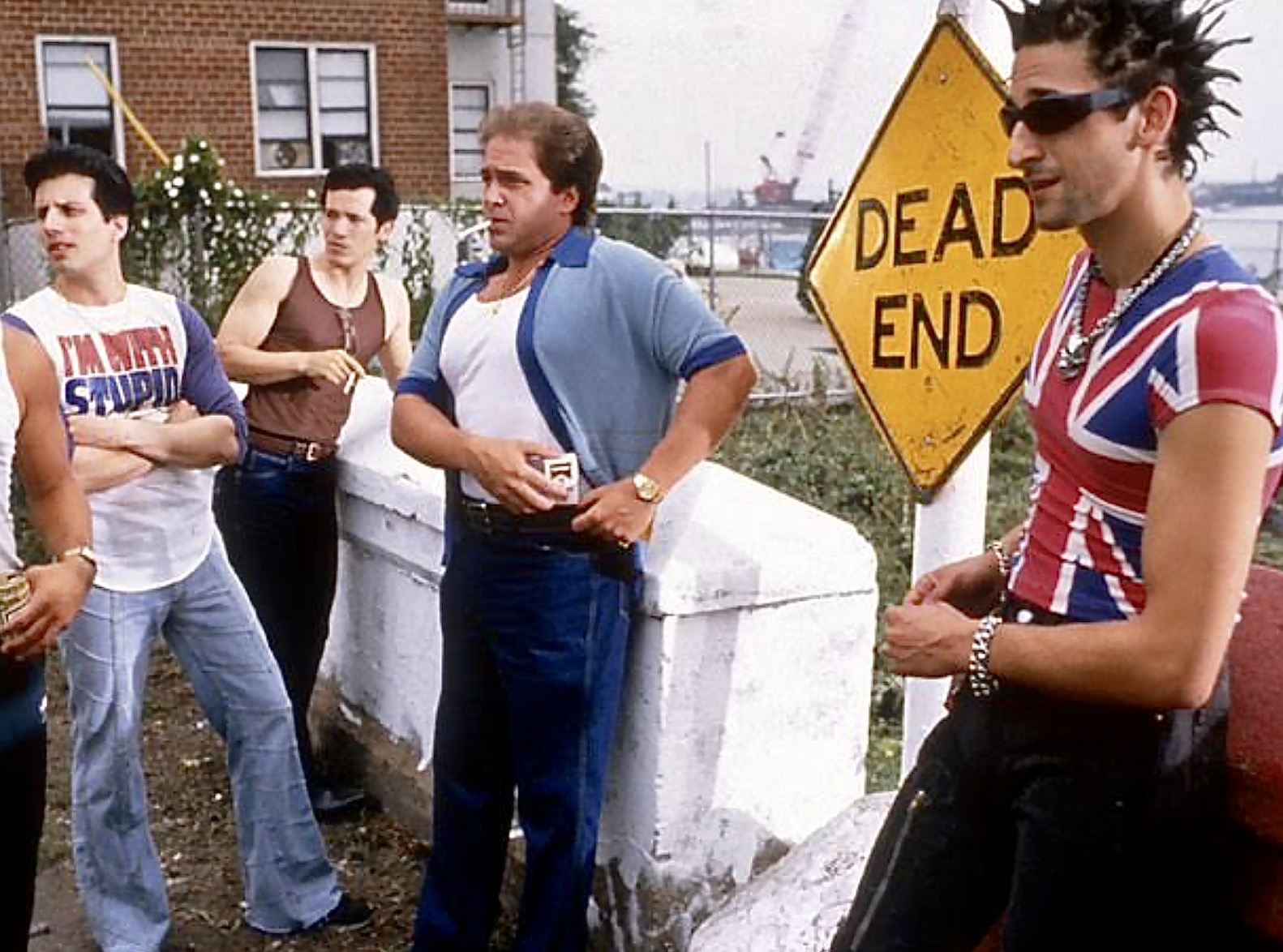
I’m unsure why Lee has such profound contempt for Italians. Perhaps it grew from a classroom bully, neighborhood kids, or a former boss or teacher. Whatever the reason, his choice of debasing an entire ethnicity based on his personal history is malicious and inappropriate.
The bigger issue, though, is not Lee’s repeated trashing another ethnicity, it is that Hollywood’s elites, studios, and the Academy of Motion Picture Arts and Sciences both recognize and support him. This is inexcusable. While Lee’s films have been released several years ago, why isn’t Hollywood demanding an apology over his past works? Why is there silence over Lee’s transparent prejudice of the Italian people? Why is this acceptable?
As the movie industry continues to polish its progressive image, it’s perfectly clear that Italians are excluded from the discussion and will continue to be an ethnicity defined by Hollywood unless its people begin to make noise.
The time for change is now and the onus rests squarely upon our shoulders.
Award-winning author, Mike DeLucia, grew up in the Bronx during the 1960s and 70s. His novels and screenplays feature honest depictions of Italians, Italian Americans, their family life, and their culture. His books can be found at booksbymikedelucia.com or on Amazon: Madness: The Man Who Changed Basketball, Being Brothers, and Born For The Game.

