
By Francesca Montillo, ISDA Food + Travel Writer
Drive down any neighborhood in the U.S. a few days after Christmas and you’re likely to see holiday trees at the curb, ready to be picked up by the local trash men. I’ve seen my share with tinsel or fake snow still on them.
For many, Dec. 26 is the day to un-decorate, but actually, “Little Christmas” is just getting started. Having been raised in Italy, I myself — like many of you — celebrate the blessed season until January 6.
Speaking of Jan. 6, it is exactly 12 days after Christmas, when Italians and all Catholics celebrate the Feast of the Epiphany. This is the real last day of the Christmas season. If we want to get technical, the Christmas season actually starts on Christmas Day, and lasts until the Epiphany. The days prior to Christmas are part of Advent.
Join La Befana LIVE on zoom for a special virtual event for youngsters on Jan. 5, 2026 at 7 p.m. Click here to register.
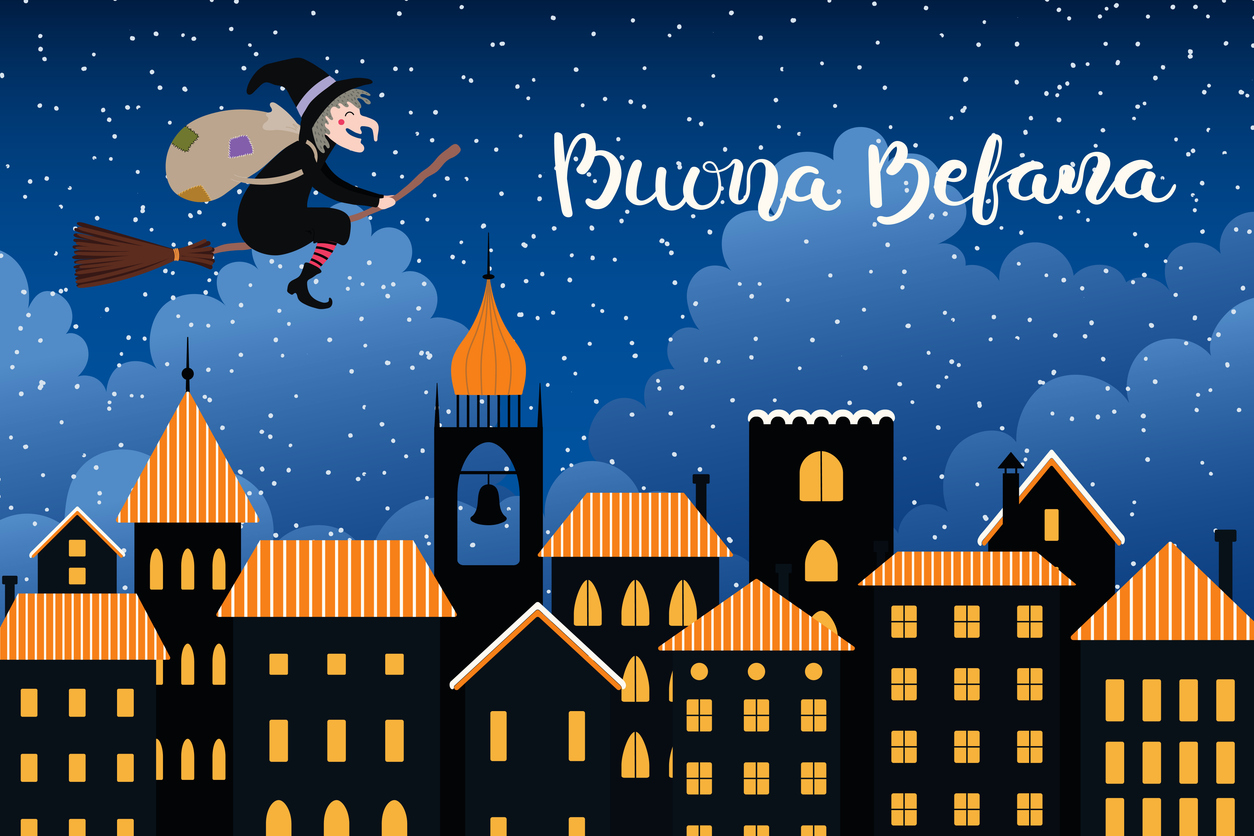
While Italians conjure up images of a friendly witch on a broom delivering small gifts to well-behaved children; the Epiphany, of course, has a much deeper, religious meaning.
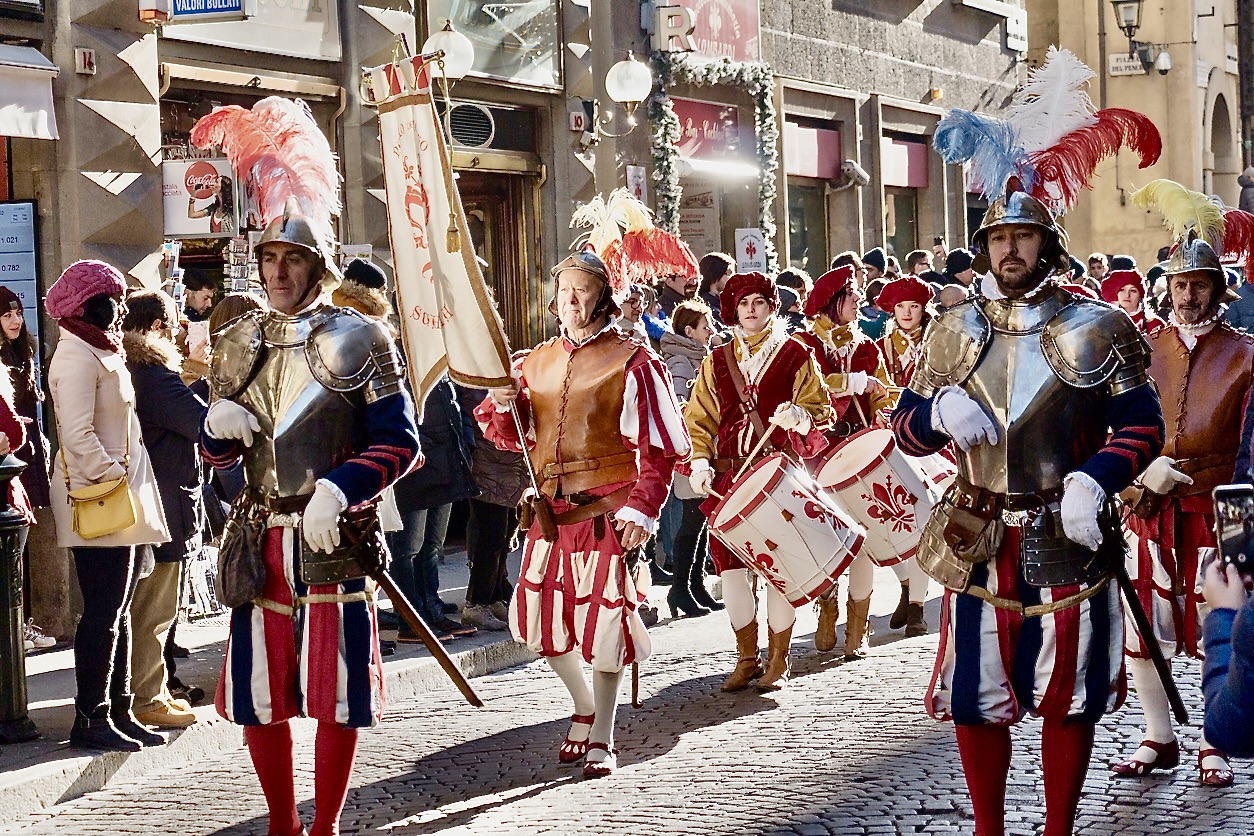
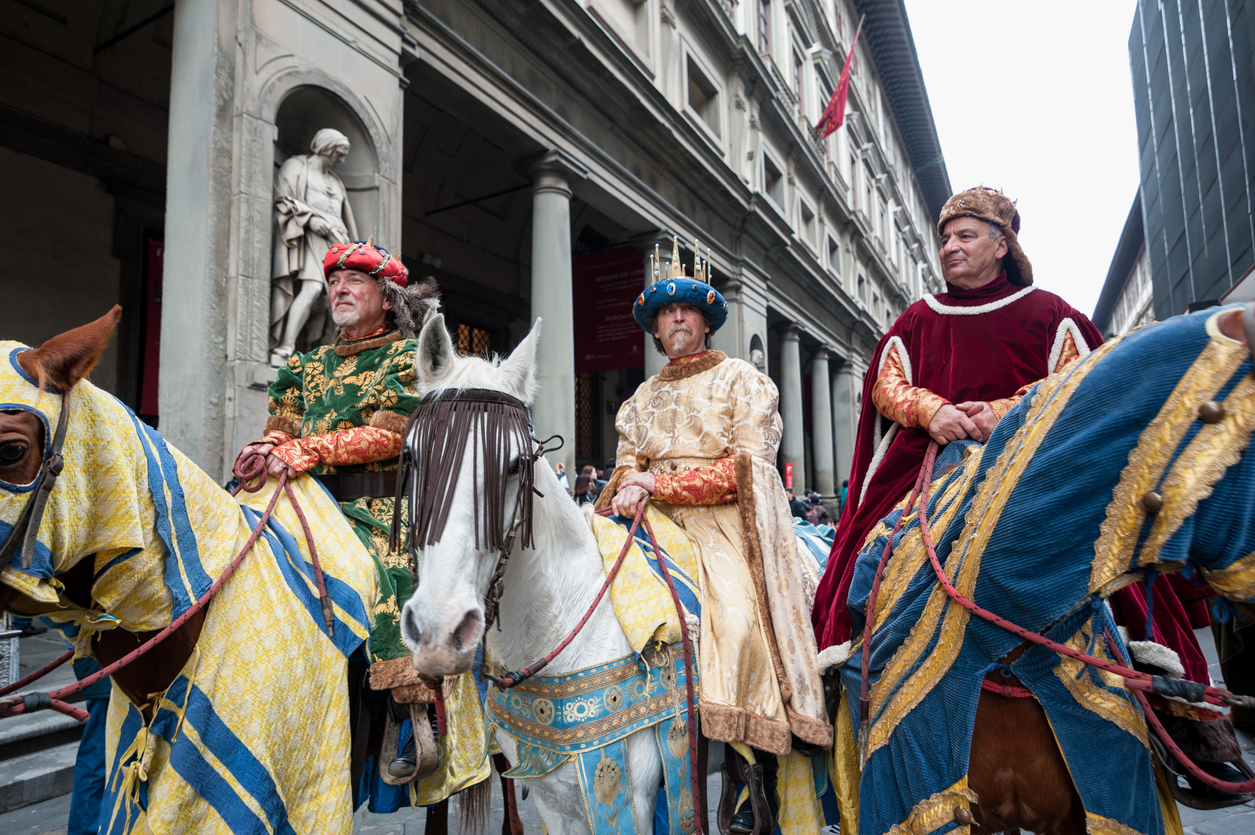
According to the Gregorian calendar, Jan. 6 marks the day the Three Wise Men, also known as the Magi, find the newly born baby Jesus after a days-long, starlit search.
The Epiphany is also believed to be Jesus’s Baptism day, which occurred some 30 years after his birth. The word itself is of Greek origin and means “manifestation” or “to show or display” to an audience.
Per the Catholic Church, the Epiphany rejoices the adoration of Jesus by the visiting Wise Men.
So where and how does the Befana, the friendly witch delivering goodies to all well-behaved Italian children, actually come into play?
Christian folklore tells us that the Three Wise Men approached a friendly woman and asked her to help them find Jesus. She did not know where he was, but since they were in for a long journey, she welcomed them in for the night. As she kept a very clean home, always sweeping and tidying up, she was more than able to accommodate the unexpected guests.
The next day, they continued on and invited the kind woman to join them in their search for the newly born King. She turned them down, saying far too much housework needed to be done.
Soon after, she had a change of heart and set out to catch up with the Magi and Jesus. She was unable to find them, so to this day she goes out on her broom, looking for the little baby.
She enters every home with the hope of laying her eyes upon him, but when she doesn’t, she leaves behind small toys or candy for the children she does find.
Jan. 6 really is the end of the Christmas season in Italy. The feast day of the Immaculate Conception (Dec. 8) opens the Christmas season, and the Feast of the Epiphany closes it, much to the dismay of children all over, who have received batches of presents from Babbo Natale, and La Befana.
This article first appeared in La Nostra Voce, ISDA’s monthly newspaper that chronicles Italian American history, news, culture and traditions. Subscribe today.
