

Filomena Manfredi (Chiaini) and her three children, Raimondo, Silvia and Nicola, emigrated from Controne, Italy, in 1927 to reunite with Vincenzo Manfredi in the U.S.
By Ed Manfredi, President, Victory Lodge (ISDA)
My family’s roots trace back to the small mountain town of Controne, Italy, about 70 miles south of Naples. It was there that my grandparents — Vincenzo Manfredi, born on December 24, 1885, and Filomena Chiaini, born on October 12, 1892 — began their lives together. They married on May 3, 1914, and had four children: Nicola, Silvia, Eduardo (my father) and Raimondo.
Like many families in southern Italy during the early 20th century, they had little in terms of material wealth, but they held tight to the hope of a better future. Vincenzo came to the United States on April 1, 1926, entering through Ellis Island in New York. He settled in the bygone Hays neighborhood of Pittsburgh and became a U.S. citizen months later on December 20. Although he became naturalized, a 1922 change in U.S. immigration law meant that Filomena did not automatically gain American citizenship. However, their children were granted U.S. citizenship even while still living in Italy.
In 1927, Filomena brought her and Vincenzo’s small family to America, and my father, Eduardo, was born two years later in 1929. All four of the Manfredi children graduated from high school — a remarkable achievement for an immigrant family at that time. Tragically, Nicola passed away at the age of 18 from pneumonia.
Related story: ‘We Will Not Rest’: Italian American Leaders Step Up Fight for Dual Citizenship
The Manfredi children built successful working-class careers in Pittsburgh. Raimondo worked his way up at J&L Steel to become a general foreman. My father, Eduardo, initially studied to become an auto mechanic at a trade school, but the steel mills called to him too, and he became a furnace operator at J&L. Silvia worked at a candy factory and later became a cake decorator. All three were hardworking, determined individuals who made the most of the opportunities that came their way.
Filomena had come to the U.S. at age 34 and lived here for the next 61 years. Because of the 1922 law, she never became a U.S. citizen. Still, she had the greatest influence on me growing up. She was my best teacher — she taught me how to speak Italian, told me stories about our family in Italy, and gave me life lessons I still carry today. She never returned to her homeland or saw her family again.
When I graduated from high school, I told my father I wanted to work in the mills, just like him. But he stopped me in my tracks. “No,” he said, “you’re going to college.” Because of that decision, I became the first in my family to earn a degree. When I started my career as an educator, the steel industry in Pittsburgh was already in decline, and my father’s foresight spared me from a fading way of life.
My parents visited Italy in 1978, where they met my dad’s uncles, aunts and cousins. Six years ago, I traveled to Controne myself, hoping I might finally be able to secure Italian citizenship — something I had started working toward nearly two decades earlier.
My Italian citizenship journey began 18 years ago, when my middle daughter, Michelle, was playing professional basketball. Her agent was helping her find a spot with a team in Venice and suggested that she get dual citizenship, which would improve her chances of playing in Europe. Each European team can only sign two American players, and dual citizenship would open doors.
I was determined to help her, and I knew that my grandmother had never become an American. So, I went to the Italian consulate in Pittsburgh, filled out the application and began the process. It required gathering 10 different certificates — birth, marriage, death and naturalization — some of which had to be translated into English and apostilled. After eight months, we got an appointment at the Italian Consulate General in Philadelphia. That appointment happened to fall during the final week of Michelle’s senior year of college.
But we were told that Michelle did not qualify for citizenship through my grandmother. The consulate said Italian citizenship could only be passed through the paternal line. The application I had received from the Pittsburgh consulate was outdated; it listed “great-grandfather or great-grandmother.” The updated version allowed only the great-grandfather. We had spent a great deal of time and money, and it was deeply frustrating.
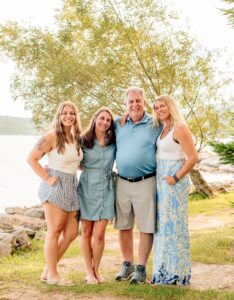
Then, four years ago, I met Rob Cancilla, a new member of my lodge, who told me he had gained Italian citizenship through his paternal grandmother. He put me in touch with his attorney, Luigi Paiano. Luigi carefully reviewed my case and told me exactly which documents were required. This time, I needed 18 documents — birth, marriage, death, naturalization and a certificate of non-existence of naturalization — all translated into Italian or English and properly apostilled by licensed professionals.
Over the next two and a half years, I sent countless letters, emails and made dozens of phone calls. Eventually, Luigi was ready to take my case to the Italian courts. The case centered on discrimination: I was being denied citizenship because the bloodline passed through my grandmother’s side.
There were two major setbacks along the way. First, UPS lost a set of documents, including my daughters’ birth certificates. I had to reorder, retranslate, and re-apostille the documents (if you’re ever shipping important papers to Italy, use DHL — better service and it was less expensive).
The second setback nearly broke me. The most critical document — the certificate of non-existence of U.S. naturalization relating to my grandmother Filomena — had a misspelling in her last name. It was incorrectly spelled with an “o” (Chiaino) instead of an “i” (Chiaini). It had taken months to get that document from the Department of Homeland Security, and I was devastated. I thought about giving up. But my wife Judith encouraged me: “You’ve come this far; you have to keep going.”
On September 20, 2024, I received an email from Luigi. The Italian court in Salerno had ruled in our favor: my three daughters (Jess, Christina and Michelle) and I were officially recognized as Italian citizens.
People often ask me two things: How much did it cost, and why did I do it?
The cost was around $10,000 for my daughters and myself, and the reason? It was the right thing to do. I’m proud of my Italian heritage, and I want my daughters — and my four grandsons — to carry it forward.
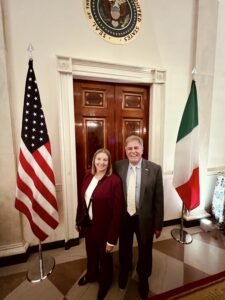
The most important reason of all: I wanted to honor my Italian grandparents, my father, my aunt, and my two uncles. I know they’re looking down and saying, “Bravo.” Through constructive advocacy efforts, it’s my hope that the Italian government reverses its newly passed dual citizenship restrictions, so my grandchildren can carry on the torch of their proud heritage.
-Ed Manfredi, a longtime ISDA leader, is president of Western PA’s Victory Lodge, and he sits on the ISDA Financial Life Board of Directors.
Make a Pledge and join Italian Sons and Daughters of America today.
