By Dolores Alfieri Taranto, La Nostra Voce
My father worked with his hands beginning at the age of 10, and he never stopped, right up to the very day he walked off the job site and into the hospital, where he swiftly passed away. He never wanted my brothers to take over the landscaping business he had built. He wanted them to wear suits and ties and sit behind desks. You probably know this story; there’s a good chance it’s your own: Our ancestors wanted for us lives that were easier than their own, lighter lives, lives gentler on our bodies, minds and spirits. In order to give us these things, they gave us to America, and the hope and opportunity she promises. To give America, something has to be taken, which is often the authenticity and boisterousness inherent in the immigrant generation. It seems an inevitable part of the American experience that with each passing generation, we become more staid, less ethnic.
Even though I’m among the first generation born here, I can remember when I realized this more conventional, less outsider status had begun to appear in my family. My parents emigrated from Campania in the late 1960s. Growing up, it may have been Madonna, ripped jeans, and crimped hair outside of my house, but inside it was La Madonna, strict curfews, and constant emphasis on honor, respect and dignity. Both small and large celebrations were a routine part of life—communions that ran long after midnight, loud with laughter and dancing; impromptu weekday dinners with extended family and friends, homemade wine on the table and no fewer than 10 children screeching through the house. The Neapolitan my family spoke hung thick in the air, as did the traditions and values of the Old World.
This article first appeared in La Nostra Voce, ISDA’s monthly newspaper that chronicles Italian American news, history, culture and traditions. Subscribe today.
In 2015, when I began The Italian American Podcast, along with my then co-host Anthony Fasano, one of our earliest guests was author Tom Santopietro. You can still listen to that episode, and if you do, you’ll hear Tom and me welling with emotion, teetering on tears, as we talk about how the large, boisterous families and events of our youth grew paler over the years as assimilation took root. We learned to wear less gold and fewer cornicelli. The candles on home altars, like the one my mother has always had in her bedroom, are dismantled. We become more professional, less physical. We begin to look more like our neighbors, diluting the need to live together on the margins. We become, in short, integrated, successful Americans.
While I’m fortunate to have a family still in many ways deeply rooted in Italian mores and traditions, during this period, the shifts I’d seen over the decades grieved me, because in some way, I think I kept waiting for it all to circle back. I realized that somewhere in my mind, some part of me thought it was just a lull, and the tables of my childhood would reappear, crowded with aunts and uncles and cousins. But the past is gone, and for many, so are the people who populate some of their most beloved memories. Facing the fact that things had simply changed, irreparably, I worried if the future would continue to dilute my roots, if my heritage would all but fade, a ship bleached of its color after years in the sun. Then something happened that gave me hope.
To your ancestors, the life you’re living now was “once upon a time…”
My dear friend John Viola, current host of The Italian American Podcast, was president of The National Italian American Foundation at the time, and he had come across the podcast, loved what Anthony and I were doing and wanted to meet. What developed was not only a strong friendship, but eventually a business partnership, where John joined us and took over the helm of the show. What emerged was the missing piece I needed: A new community of the same generation. With community I gained hope that my heritage—its traditions, language, values, food and even its spirituality—could remain an important part of my life. Because let’s be honest, you can take some soppressata and put it on the table with a loaf of bread and wine, but if there’s no one there to revel in it with you, it isn’t really the full cultural experience one pines for. We need people; especially we Italian Americans, we need people.
Through The Italian American Podcast, and the various other projects I continue to pursue, a whole world of young, passionate Italian Americans opened up to me. We couldn’t recreate the experiences of our ancestors or childhoods. Many of us live in different states, even different countries, and life has a speed the past didn’t possess, but we could connect in modern ways, online, on social media, the telephone, through podcasts and yearly events—and celebrate our culture, explore its many sides, and keep the fire alive. We are everything our ancestors wanted us to be—professionals, educated, sophisticated, successful, knowledgeable about American culture and comfortable navigating it. From their sufferings we made beauty from ashes. We became natives. And many of these friends felt the loss of ethnicity just as I did that afternoon when I spoke to Tom Santopietro, and they, too, sought a way to reconnect.
This past January, much of this was taken a step further, with the first-ever Italian American Future Leaders Conference held in Fort Lauderdale, Fla. The brainchild of ISDA President Basil Russo, ISDA District VP Pat O’Boyle and Viola, the weekend felt like a gift to soft-hearted Italian Americans like me, as I saw, in so many of the young people who traveled to join together and explore their cultural roots, a continued passion for heritage, an embracing of ethnic signifiers like gold jewelry and fashion, a love and knowledge for the traditional Neapolitan songs of their ancestors, and a drive to continue celebrating our culture long into the future.

In 2019 I began a second podcast, “Bella Figura—The Tradition of Living Beautifully,” to further explore how heritage influences and strengthens us. I wanted to open up the conversation to non-Italian Americans and talk about how our ancestors, their Old World ways and traditions, and connecting to these things makes us more confident and makes the days of our lives richer and more rooted. I haven’t been disappointed. The conversations have only confirmed what I instinctively felt: We can leave the Old World, but if we lose our ties to its ways, we lose pieces of ourselves. And just take a look around, it isn’t hard to see millions of people living lives that are clearly broken, pieces of themselves missing. I like to say, “Your heritage is your superpower.” It’s the magical force that makes you bolder, braver and more whole. It’s the lifeline that ties you to the ages, where your ancestors wait, their sacrifices made golden by the level of beauty in your life.
Something I talk about often on my show is that knowing our family stories strengthens us. Studies show that when children know who and where they come from, they are less likely to abuse drugs, become truant, and more likely to achieve, as they have a strong sense of self. They know who they are. They know what they belong to. This makes them brave and grounded.
So what is “Bella Figura?” It’s the Italian value of presenting oneself well to the world, a demonstration of respect for yourself and a celebration of the life you were born into. We do this, in part, by representing our ancestors in the best way possible. We honor them by respecting ourselves. We celebrate them by building the very best lives we can. We stay connected to the past to which they belonged by celebrating its traditions in the present and encouraging their continued celebration into the future. We make good, and the people who got us here rest in peace because of it. On their shoulders we make lives of bella figura.
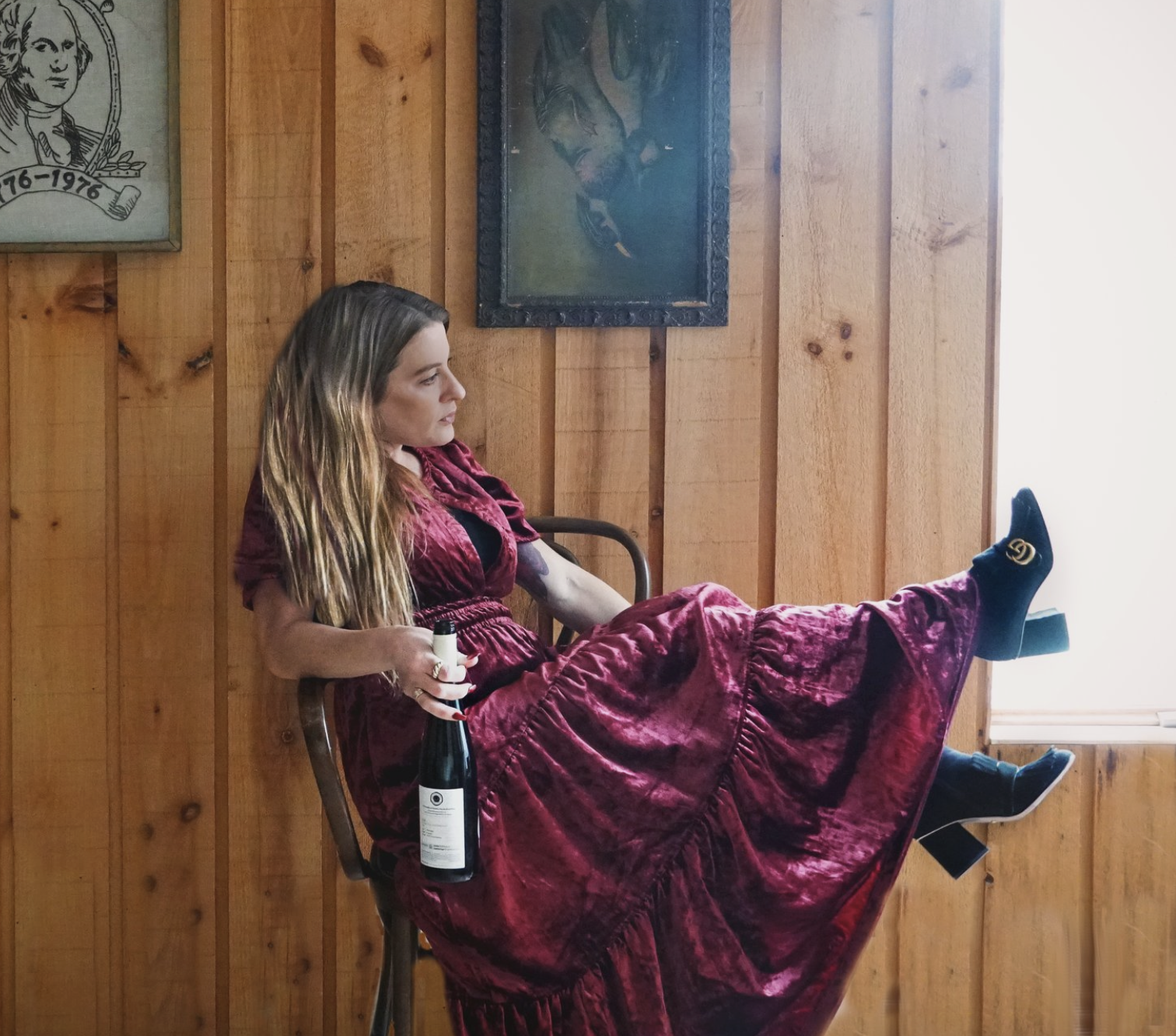
Dolores Alfieri Taranto, a writer, editor, photographer, podcaster and member of ISDA’s New York district, explores tradition, old world style, ancestral inspiration, food—homegrown and from scratch—and, of course, family. Catch up with her at www.bellafigurapodcast.com
