By Pamela Dorazio Dean, Director, Italian American Museum of Cleveland
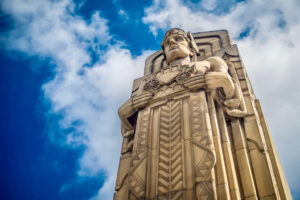
In mid-20th-century Cleveland, Ohio, a plan to widen one of the city’s most significant bridges nearly erased its most iconic landmarks. At stake were the Guardians of Traffic — towering Art Deco sculptures lining the Hope Memorial Bridge, which spans the Cuyahoga River and physically links Cleveland’s East and West sides.
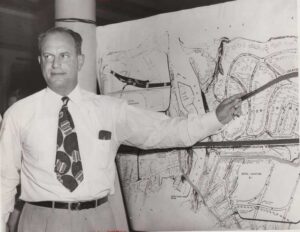
In the 1960s, Cuyahoga County Engineer Albert S. Porter proposed removing the statues to make room for more automobile lanes. Porter, a dominant force in Northeast Ohio infrastructure planning from 1947 to 1976, dismissed the sculptures as outdated ornamentation — “just a bunch of old stone men with helmets,” he scoffed. His priorities were clear: function over form. “Beauty doesn’t reduce traffic jams,” he argued.
This article appears in the June 2025 edition of La Nostra Voce, ISDA’s monthly newspaper that chronicles Italian American news, history, culture and tradition — Subscribe today.
Yet Porter’s proposal would ignite a preservation movement that not only saved the Guardians but served as a pivotal chapter in the unraveling of his political career.
The bridge, originally named the Lorain-Carnegie Bridge, opened in 1932 after decades of discussion around how to unify Cleveland’s split urban landscape. Local leaders believed a major bridge could symbolize not just physical connection, but civic ambition. Rather than build a bland utilitarian bridge, the city commissioned architect Frank Walker and sculptor Henry Hering to imbue the design of the structure with artistic and historical significance. The result was eight sandstone figures — monumental pylons, each holding a different mode of transportation — watching over the flow of traffic from both directions.
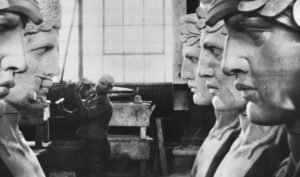
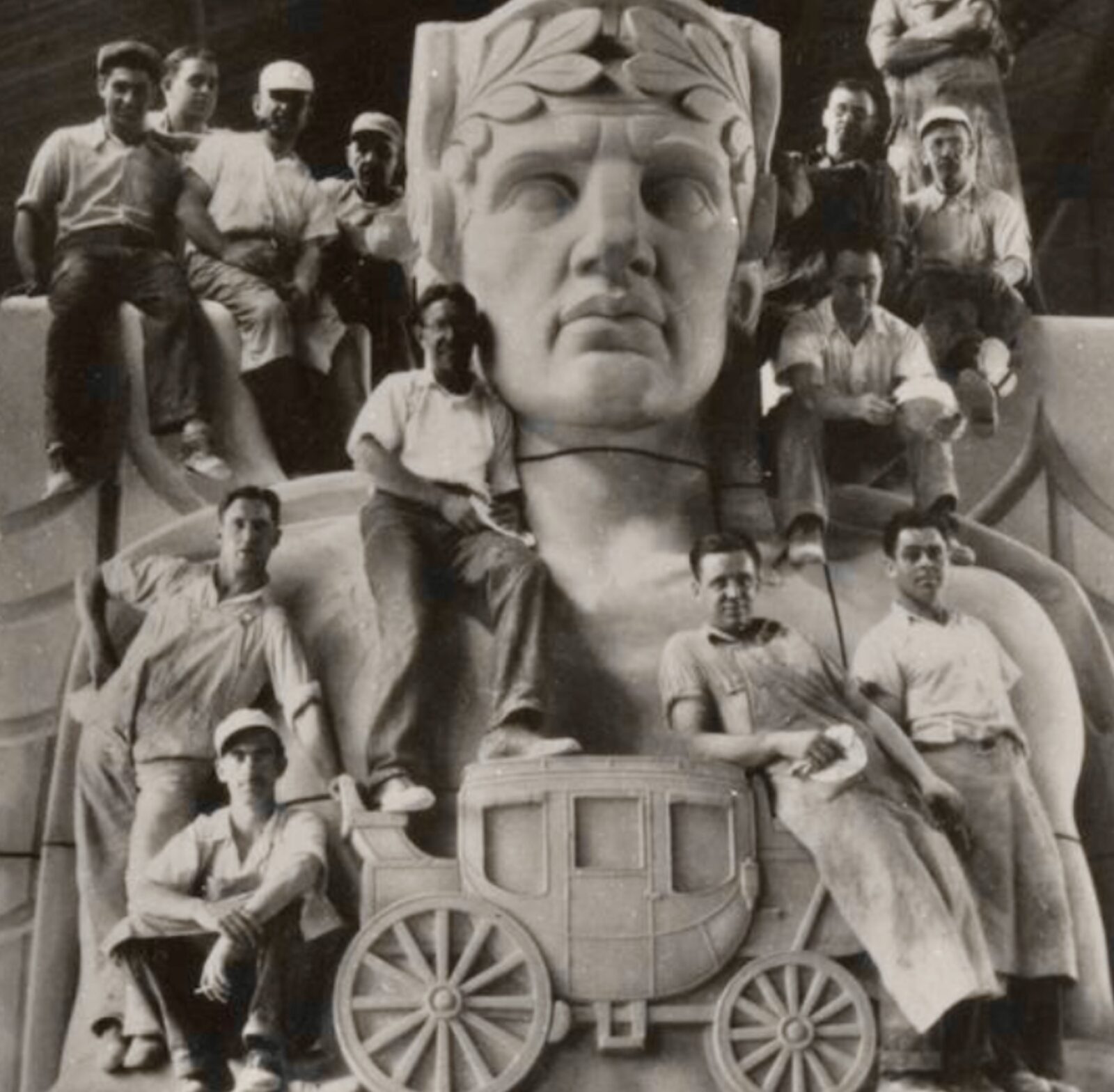
While Hering received top billing, the physical labor and artistic execution fell largely to Cleveland’s Italian “scalpellini” (master stone carvers). Many of these craftsmen hailed from Oratino, a small town in Molise, Italy, and had been brought to the city by Giuseppe Carabelli, a Lombardy-born sculptor and monument maker. The scalpellini found work not only with Carabelli’s firm but also at companies such as the Ohio Cut Stone Co., which helped carve and assemble the Guardians from Berea sandstone. These artisans settled in what would become Cleveland’s Little Italy and contributed their skills to some of the city’s most enduring landmarks.
Despite their craftsmanship, the scalpellini remained largely anonymous. Their names were absent from bridge plaques, and their role in the Guardians’ creation faded from public memory — until the threat of demolition, decades later, renewed interest in the statues’ origins.
Porter’s utilitarian outlook was consistent with his broader philosophy. During his nearly three-decade tenure, he championed massive freeway expansion projects, often at the expense of neighborhoods, parks, and historical landmarks. His plans to extend freeways through Cleveland and its eastern suburbs met fierce resistance — especially from residents of Shaker Heights and Cleveland Heights, two affluent communities that flourished during the rise of then-local oil tycoon John D. Rockefeller. As one local historian put it, “Porter’s vision was blind to beauty.”
But the Guardians proved immovable, both physically and symbolically.
As word of the demolition proposal spread, public backlash followed. Local newspapers, including The Plain Dealer and the Cleveland Press, published editorials condemning the plan. The Cleveland Chapter of the American Institute of Architects issued a formal statement calling the Guardians “irreplaceable monuments of civic art.” Citizens organized petitions, public meetings, and protests. Schoolteachers incorporated the statues into local history lessons. Artists produced sketches and posters in tribute. Rally signs read, “Don’t Deface the Guardians!” and “Preserve Our City’s Soul.”
One preservationist later recalled, “We fought to save a city, not just a statue.”
As the public rallied to defend the Guardians, Porter’s power began to wither. In 1977, he was indicted on corruption charges for bilking workers out of payday money (he would later plead guilty, pay a $10,000 fine and serve a 2-year probation). The scandal ended his decades-long grip on public works in Cuyahoga County. His downfall coincided with a growing national shift away from car-centric urban planning and toward historic preservation, public transportation, and walkable cities.
In 1976, the Hope Memorial Bridge was added to the National Register of Historic Places, granting it protection. In the early 1980s, the bridge underwent a major renovation. Rather than being demolished, the statues were cleaned, restored, and reappreciated.
Today, the Guardians of Traffic stand not only as symbols of industrial progress but as monuments to cultural resilience — preserved through civic engagement and resistance to short-sighted modernization. As one speaker remarked during a 1970s public hearing, “The Guardians stood long before Porter, and they will stand long after.”
And indeed, they have. When Cleveland’s Major League Baseball team adopted the Guardians name in 2021, it marked not only a nod to the statues’ towering presence but also to the city’s layered past — to its immigrant story, its civic struggles, and the belief that some things are worth preserving.