By Roseanne Montillo
Sergeant Joe Petrosino bundled deeper into his coat as he stared at the body on the ground. He looked again at the dead man. He had been found almost three hours earlier, folded in two and stuffed inside a wooden barrel normally used for food.
Petrosino was handed a crucifix removed from the dead man’s neck, his boss, Inspector George W. McClosky, telling him that neither he nor any of the other officers had figured out what to make of the necklace. It was a strange crucifix, McClosky had concluded, the insignia within it, I.N.R.I., stumping them.
Petrosino felt the heavy gold in his hands and traced the letters with his thumb, knowing what they meant: I.N.R.I. — Iesus Nazarenus Rix Iudacorum, Jesus of Nazareth, King of the Jews, he told McClosky. The inspector nodded, having taken Petrosino only seconds to figure it out. The dead man’s ears were also pierced by tiny round earrings, Petrosino saw; he sported a thick mustache speckled with gray hairs and had a scar on his left check shaped like the letter v. He wore good clothes, the fabric looking expensive, especially that of his coat, which had been used to cover the barrel.
The barrel itself was trademarked with the letters “W&T” and its sides imprinted with “G233.” It was used to hold sugar, not flour, its bottom laid out with a mixture of sawdust and onionskins to help absorb the blood. Cigar butts had been strewn inside as well.
Petrosino determined him to be a recently arrived immigrant from Southern Italy, either from Calabria or Sicily, and a Catholic. Most likely, he told the reporters on the scene, he’d crossed those involved in the Black Hand business and met a bloody end.
He should have known that this murder would not be solved that quickly, nor that it would go away without any further entanglements.
When Petrosino first heard of a band of criminals running havoc across the country, he had not believed them to be dangerous. Actually, he had thought them as nothing more than a bunch of country buffoons transferred to the big city. Nothing but a gang of extortionists who did not want to legally work for their keep, but lived on the money they could extract from everybody else.
Joe Petrosino was actually born Michele Giuseppe Pasquale Petrosino on August 30, 1860, in the small town of Padula, Italy. His name change occurred in 1873, when he and his family landed in New York, where he remained until 1909, never having the desire to revisit his birthplace, unlike his countrymen, who always kept the old country in their thoughts.
His family arrived with the first, barely perceptible wave of Italian immigrants into the country, few in numbers, people who came from the northern areas of Italy and brought with them trade, art, jobs, talent and yes, even some money. Americans saw them not seemingly as a scourge, but as an asset to the country. Things radically changed by the 1880s, when Southern Italy was rocked by unemployment, political unrest, division of labor, poverty, hunger and natural disasters, forcing millions of inhabitants to leave their country for lands unknown. Those who made their way to America came from areas in dire straits, such as Sicily, Calabria, Basilicata, Puglia, Campania, and carried with them not the sophistication believed to be innately born to those of the North, but with a desire to work, to better their lives, a love of family, and an attachment to old traditions. Some even went on to say that they brought with them the sense of criminality believed to be part of their nature.
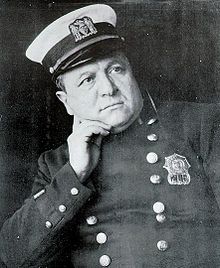
By the time this influx of Italians into New York occurred, Petrosino had become a policeman. He’d joined the force in 1883 thanks in part to Alec “the Clubber” Williams, a brutal member of the NYPD for whom Petrosino had become an informant.
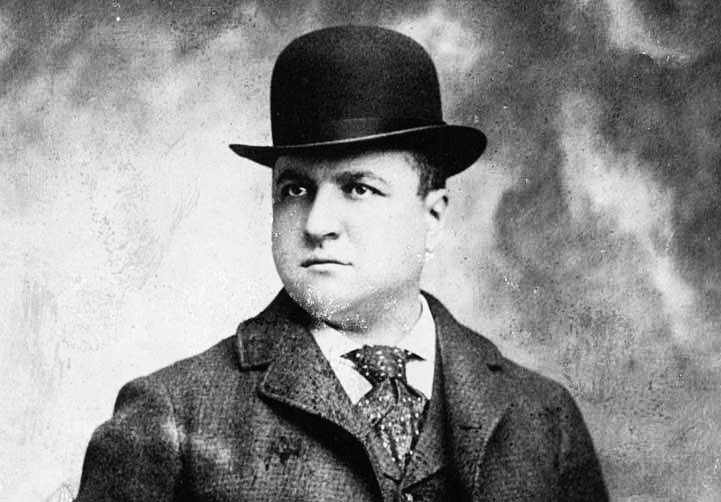
“At first sight he looks like a man who owns a shop or a café in Little Italy. He lacks refinement and seems rather slow of comprehension. His face is expressionless, and he could move through a crowd without attracting anyone’s attention. But it is precisely this that is (his) strength,” a reporter wrote of Petrosino. “He is a master of the art of feigning a timid naiveté. But more than a robber and killer have learned to their cost how quick is his mind and how nimble is his arm.”
He moved quickly through the ranks of the department, becoming indispensable even to his superior, the then Commissioner Theodore Roosevelt, with whom he became a close friend. On July 20, 1895, Roosevelt promoted him to detective sergeant in charge of the department’s Homicide Division. The pinnacle of his career came in 1908 when he was promoted to lieutenant and placed in charge of the Italian Squad, an elite corps of Italian American detectives assembled specifically to deal with the criminal activities of organizations like the mafia
Petrosino would never have thought of the Italian Squad if not for the murder of Chief David C. Hennessy in New Orleans, back in 1890. He had read of the crime in the papers, followed the arrest of the suspected Italians and the trial that had taken place; the terrible aftermath, the issues that had arisen, the lynching of 11 Italian immigrants that had been set free, as an act of revenge by local businessmen and politicians. It was this steep rise in crimes, and also this rise in antipathy toward Italians from most citizens who no longer welcomed them in America, that worried Petrosino.
The Squad carried out thousands of arrests, resulting in the dramatic reduction of crimes against the Italian American community in New York City. The Black Hand was on its heels, now it was time to dismantle the criminal syndicate altogether.
In January of 1909, Petrosino was called into the new Commissioner’s office, Theodore Bingham, with word of a special assignment. He arrived to the meeting early, where Bingham told him that he would be sent to Sicily, to collect information on criminals who’d left Italy years earlier and now were running the streets in New York. The information he would gather and bring back to New York would be used by the government to deport them.
Normally, Petrosino would have welcomed the opportunity with enthusiasm. This time, however, he felt weary—not because the mission was dangerous, though it was, but for reasons far more personal. Roughly a year earlier, while celebrating his promotion to lieutenant at his favorite restaurant, Saulino’s, his life had taken a pivotal turn. It was there that he met the owner’s daughter, Adelina, a 37-year-old widow nearly a decade his junior. Romance had never come easily to him, but with the aid of celebratory wine, he surprised himself by proposing marriage that very evening—and to his delight, she accepted. Within weeks they were wed at St. Patrick’s Church on Mott Street, and by November 1908 they had welcomed a daughter, also named Adelina.
Make the pledge and become a member of Italian Sons and Daughters of America today!
Now, Bingham was asking him to leave his family for weeks, possibly even months. He was nearly 50 and found that after more than thirty years in law enforcement, he was growing tired, his new roles of husband and father taking precedence over his work. Still, he agreed to depart, and on February 9, 1909, boarded the Duca di Genova on its way to Italy.
The department had taken precautions to conceal both his name and identity, sailing under the name of Simone Villetti. He kept a low profile, and arrived in Genova on February 21, quickly leaving the port and boarding a train for Rome.
As he moved away from the area, he bumped into two American journalists, Guido Menio and Camillo Cianfrina, who wrote for The New York Herald. As he had feared, they recognized him. He wondered how many people would be able to do so. Politely, he advised the two writers not to tell anyone about meeting him, nor to write about the encounter. The two were surprised. Didn’t he know it? Details of his trip had been reported days earlier in the papers all over New York and the United States. The whole of the country knew that he was in Italy and of his supposed secret mission. Petrosino was startled. Now, he knew that he had a mark on his back.
He had not mentioned this to his companions before, but for a few minutes he had been aware that there was another person who had joined their little group. He alerted the journalists as they began to make a circuitous route back to his hotel. At one point, they lost the mustachioed young man and it was them who were following him as he headed toward Piazza Silvestro and entered a post office. After he reemerged, Petrosino left his companions and followed the boy, while one of the journalists went inside, bribed the clerk, and learned about a telegram the boy had sent. The note had gone off to Noto, a small town in Sicily and a place on Petrosino’s itinerary.
Petrosino arrived in Palermo on February 28. Right away, he disliked the city. He dragged his suitcase across Piazza Marina, checked into Hotel De France, giving his name as Simone Guglielmo Valenti, then headed across the street to the Banca Commerciale and, using his real name, opened an account so that Commissioner Bingham could send him money for his daily needs.
He should have gone to the Police Department and introduced himself to Commissioner Baldassare Ceola, but instead headed for the American Embassy to meet with the American Consul William Henry Bishop, who immediately warned him to be careful. Palermo was unlike any place he’d ever been to before, Bishop said, corruption rampant at every corner and every level of government. Besides, many of the criminals Petrosino had deported from New York made their home in Palermo, Bishop told him, hanging around Piazza Marina hoping to find ways to return to America; they would recognize him right away and would not take kindly to him being there. Petrosino assured him that he would be careful.
On March 6, six days after arriving in Palermo, Petrosino finally went to meet Commissioner Baldassare Ceola. By then, the whole of the city was aware he’d been there for days. Although Ceola was slightly irritated it had taken him so long to go and introduce himself, he welcomed Petrosino.
He’d heard much about Petrosino, but his physical presence did not impress him. A short, thickset man wearing a tall hat and high-heeled boots, his manners were rough, his Italian rusty and speckled by English smatterings.
Petrosino talked about the reason why he was there, wanting to alert him that he was in the city, but giving him only vague details. He spoke quietly and as little as possible, refusing Ceola’s advice to take one of his men with him for protection. No one would do anything to him, Petrosino told him. They wouldn’t dare touch him.
Ceola was stunned. He reminded Petrosino that he was not in New York anymore, where criminals not only feared him, but in a strange way, even respected him; where he could walk around unafraid with the assurance that one of his men had his back. In Palermo, Ceola told him, criminals were of a different breed: bolder, more brutal, certainly unafraid. They’d shoot to kill if he gave them a chance. He did have a gun, didn’t he? Petrosino said that he did, but kept it locked in his room. And with that, he said his goodbyes and left.
On the morning of March 12, Petrosino traveled to Caltanisetta, a small and desolate city to the northwest of Palermo. There he spent the day digging through the archives and files of the tiny police department and library, then, at half past four, with two notebooks filled to the brim, headed to the station and made his way back to Palermo.
It was already dark by the time he arrived in the city. The route from the Palermo train station to his hotel took him directly through Piazza Marina, and there, he spotted a man who’d recently also come back from New York. Immigration had deported him on charges of human trafficking on a tip Petrosino had provided. Recognizing Petrosino, the man tipped his hat and moved on.
Petrosino dropped his bag and notes in his hotel room and made his way toward the Café Oreto for his evening meal. The café was a popular spot, he’d learned, frequented not only by the locals, but Mafiosi as well.
He was given his usual spot at the back of the café. As he began to dip into the fish soup, the door opened and two young men walked in. The two sat at the bar, swallowed a few pale drinks, then quickly headed out of the door. Petrosino dropped a few coins on the table, grabbed his coat, and followed them. It was nearing nine o’clock already, darkness had fallen hours earlier.
Just moments later, a barrage of shots echoed throughout Piazza Marina, three of those shots sounding in a continuous succession. No one moved toward the sound. Only a young man, a sailor from the ship Ancona who, worried that someone needed help, rushed toward a darkened area where he thought the sounds had come from. There, he found a middle-aged man shot to death. A derby hat lay strewn nearby.
On learning of the murder, President Roosevelt said, “I can’t say anything except to express my deepest regret. Petrosino was a great man. I knew him for years, and he did not know the name of fear. He was a man worthwhile. I regret most sincerely the death of such a man as Petrosino.”
The Italian Police determined that a member of the Black Hand, someone who had followed him from New York City to Sicily, had killed Petrosino, striking while in Palermo. The American Police, on the other hand, felt that a Sicilian, someone who lived and worked in Sicily, had killed him. He had not followed Petrosino from America, but rather, this individual had figured out that Petrosino was in Palermo and shot him while on the spot; it was a crime of opportunity, simple as that. The autopsy revealed that he had been shot three times, once in the back, where the bullet still remained lodged, one time in the neck, and a third bullet had gone through the temple.
Newspapers reported that Petrosino had fired a shot in return, a revolver found on the ground next to him, but that was not true. The pistol, it was determined, belonged to one of the assailants, who most likely dropped it before running away. Petrosino’s gun was found in his room, unloaded and stored with the rest of his belongings.
Police concluded that trusted informants most likely had turned on him, and a high-ranking official in Palermo agreed. “Petrosino was a clever, intelligent and shrewd man. His masterstrokes were always calculated with a minimum margin of error, and he was almost never taken by surprise…His confidence derived from the fact that he had certainly been guaranteed his references in Palermo. It seems strange that he took the route in a dark part of the square, with dangerous or suspect people, without taking the necessary precautions to defend himself.”
Another friend agreed. Petrosino was “strong in body and spirit, fearless and determined. He was cold, clever, analyzing every move before acting. He studied well his opponents.” This could have happened to anyone, but not to Petrosino.
Petrosino’s body left Italy on April 9, aboard the English vessel, Slovenia, his funeral held at the old St. Patrick’s Cathedral where Monsignor Kearney ordained, and his old friend, Monsignor La Valle spoke. Thousands of people crowded the streets as the hearse brought his body to the Calvary Cemetery, where bugles sounded off as the casket was lowered into the ground. At just 48 years old, Petrosino left behind a legacy of honor that endures to this day.