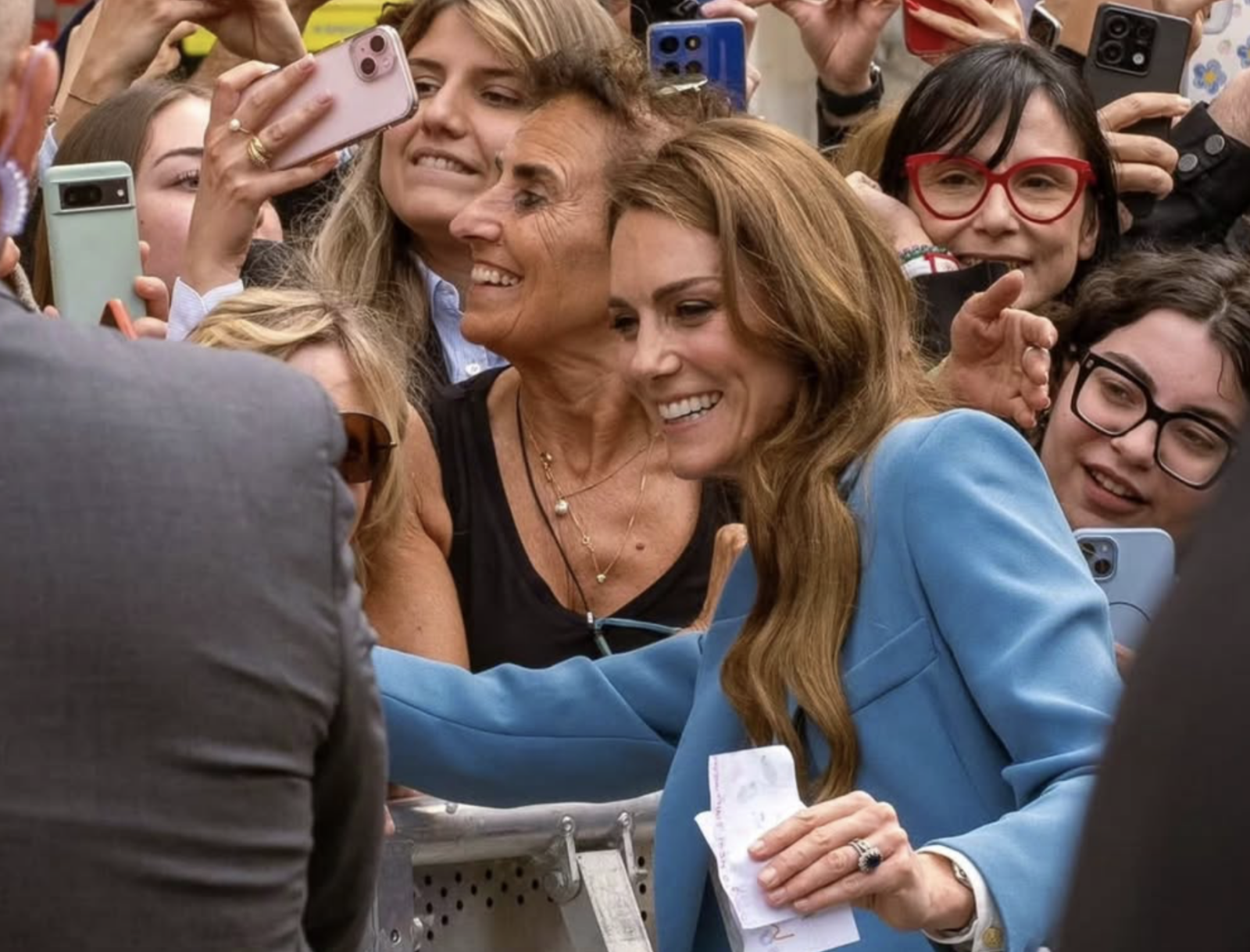
This past week, Catherine, Princess of Wales traveled to Italy for her first solo trip abroad since completing cancer treatment, as the English royal refocuses on one of her signature causes: early childhood education and development.
During a visit to Reggio Emilia, she warmly greeted local leaders, introduced herself to children as “Caterina,” gleaned firsthand insights from educators, and sat down to make tortelli (a traditional pasta dish popular to the region).
The princess, now 44, spent a year off before college in Florence, studying art history and learning Italian, prior to attending the University of St. Andrews in Scotland, where she met Prince William.
Regarding her trip, the royal was on a fact-finding mission, examining Reggio Emilia’s early childhood curricula.
The approach, used in public daycare centers and preschools in the northern Italian city, emphasizes a child’s natural curiosity and potential, with teachers serving as facilitators rather than traditional instructors, while parents and the broader community remain actively involved in the learning process.
View this post on Instagram
The approach partially emerged from the Montessori philosophy, which stands in contrast to models in places like the U.S. and Britain that emphasize standardized testing to gauge a child’s academic development.
An innovative educational thinker, Loris Malaguzzi, built upon Montessori and other progressive reform movements to help shape Reggio Emilia’s child-centered philosophy for youngsters ages 0–6.
According to the princess, she’s focused on “protecting human connection” in a world increasingly dominated by digital distractions.
As the Italy trip wound down, the princess had two inspiring words for her staff:
“Where next?”
Buckingham Palace has not publicly revealed the royal’s type of cancer, but officials confirmed she’s completed treatment and is now in remission.
In 1930, immigrant families banded together to create the Italian Sons and Daughters of America (ISDA), now one of the most prominent and financially successful Italian American organizations in the nation. In the last decade, we built a 730,000-strong social media community, grew our not-for-profit fraternal association, ISDA Financial Life, to nearly a half billion dollars in member assets, co-founded the Russo Brothers Italian American Filmmaker Forum (RBIAFF), and launched the fastest-growing Italian American publication (La Nostra Voce).
