
By Philip Micali
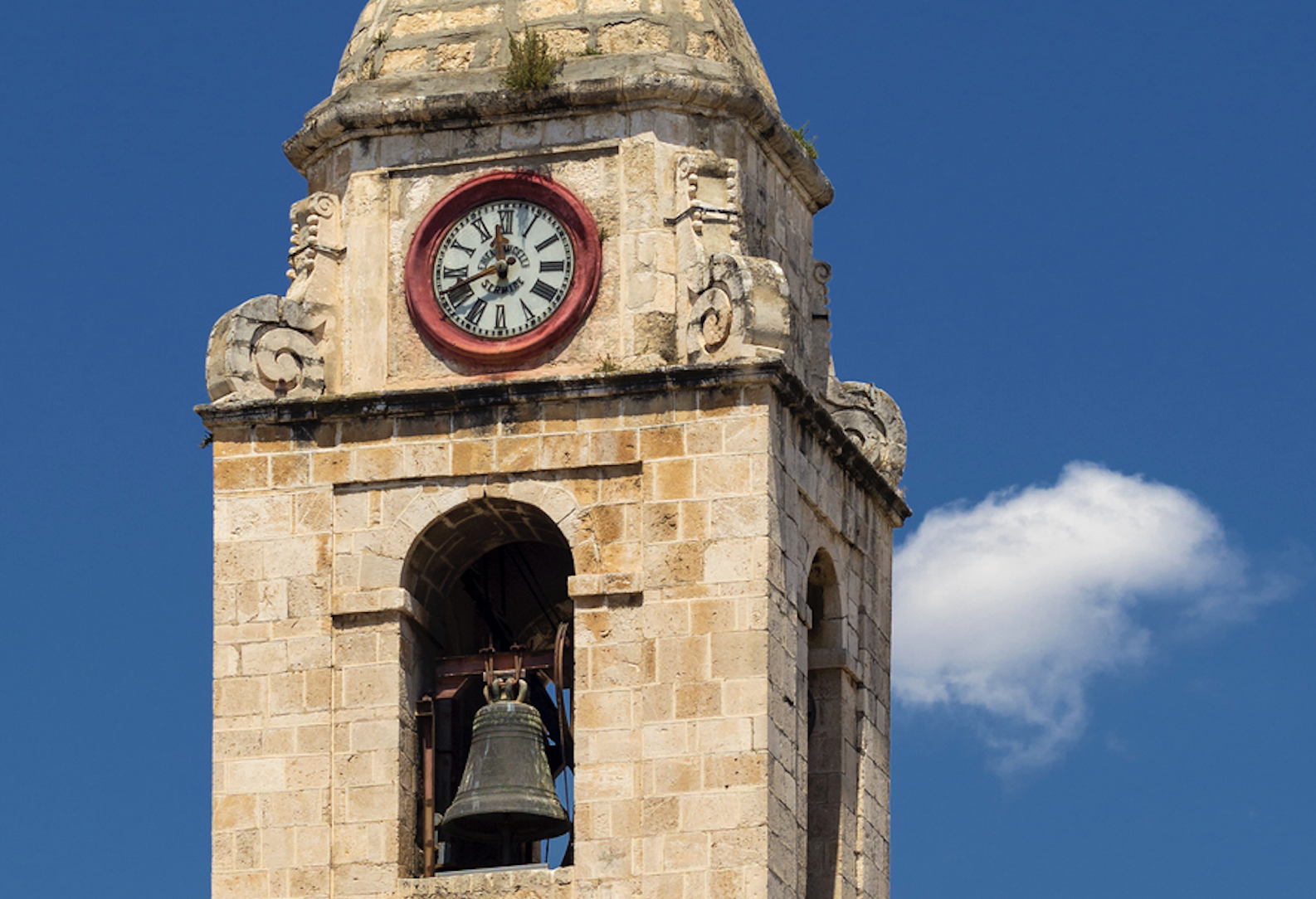
Legend has it that a monk, living in the Middle East, heard the daily call to prayers from the mosques. Upon returning to Italy, he pitched the idea that Christians should have something similar, to call the congregations to mass. And thus, the idea of bell towers was born.
On a recent tour I led through the land of my ancestors, the nutshell-sized region of Molise, travelers got to roam far and away from the beaten track to visit a special place: the Campane Marinelli Foundry, which sits at the top of the Molise region, crowning the tiny town of Agnone.
It’s a Pontifical Bell Factory that has been casting bronze bells for churches and places across the world for more than 800 years. It’s a place lost in time, where a priest is an essential part of the craft process, called in to recite a prayer while molten bronze is poured into its clay-clad casing buried in a deep, cool tomb; only to reemerge fully intact and ready to sound out — in a perfect blend of physics, metallurgy, clay pottery art and mysticism.
The Marinelli clan has been casting bells in bronze as they always have since medieval times, with hot furnaces and deep cooling pits. Only during WWII did the Germans occupy the foundry, melting down the precious bronze to make ammunition.
The Marinelli Foundry is the oldest in Italy, and one of the oldest in the world. A note from the 800s reveals the “recipe” for bell making in regard to the dominant note: “If the musical note is ‘increasing’ we must reduce the thickness of the bell, if the note is ‘decreasing’ it is the diameter the one that must be reduced.“
Americans know well, from Philadelphia’s cracked Liberty Bell, that calculation must be absolutely perfect. (Perhaps they should have turned to Marinelli instead of the British!)
The Liberty Bell — like most of the images etched into bells worldwide — takes its cue from the Bible, with its inscription, a reference to the Book of Leviticus:
Proclaim LIBERTY Throughout all the Land unto all the Inhabitants Thereof
Lev. XXV. v X.
The Campane Marinelli Foundry is now listed as a UNESCO cultural heritage site and is one of the many unique places I pride myself in sharing our Italian heritage with our group members. Together, we can discover those traditions passed down for generations, even in a time when they seem to blur in our über-connected world.
Phil Micali lives in Cleveland Heights, Ohio
www.philitaly.co | See Italy then SEE Italy | Philitaly100@gmail.com
Make a pledge and join Italian Sons and Daughters of America today!
