
- From the 1870s to 1920, approximately 3,000 Sicilians per year immigrated to America via New Orleans. They worked on plantations, railroads and docks, eventually becoming entrepreneurs in importing, shipping, farming and retail. One prominent Sicilian American, Joseph P. Macheca, owned a shipping company and controlled premium dock space in New Orleans. By the 1880s, the city’s port was rapidly expanding, and rival business executives sought to claim Macheca’s dock contracts with the city.
- On October 14, 1890, Police Chief David Hennessy was assassinated. Despite a wide pool of potential suspects, the New Orleans City Council granted the “Committee of Fifty” $15,000 to push for the conviction of Italians. Eleven men, including Macheca, were tried, but none were found guilty. The following day, on March 14, 1891, all 11 were brutally murdered outside Parish Prison by the largest lynch mob ever to assemble on U.S. soil. Among the mob’s leaders was James Houston, a corrupt businessman and politician, who would go on to assume control of Macheca’s dock space in the city’s French Quarter…
On March 14, 1891, prominent New Orleans citizens — including future mayors and governors — led the largest lynch mob ever to assemble on U.S. soil.
Numbering in the tens of thousands and wielding torches, rifles and rope, the mob of vigilantes stormed into Parish Prison and murdered 11 Italian immigrants, all of whom had either just been acquitted or were falsely implicated in the 1890 murder of New Orleans Police Chief David Hennessy.
The victims included:
–Antonio Bagnetto, fruit peddler: tried and acquitted
–James Caruso, stevedore: not tried
–Loreto Comitis, tinsmith: not tried
–Rocco Geraci, stevedore: not tried
–Joseph Macheca, fruit importer and Democratic Party political boss: tried and acquitted
–Antonio Marchesi, fruit peddler: tried and acquitted
–Pietro Monasterio, cobbler: mistrial
–Emmanuele Polizzi, street vendor: mistrial
–Frank Romero, ward politician: not tried
–Antonio Scaffidi, fruit peddler: mistrial
–Charles Traina, rice plantation laborer: not tried
Mob conspirators claimed that mafia influence swayed jurors, despite no evidence; and according to History.com, the court proceedings surrounding Chief Hennessy’s murder marked the genesis of Italian American mafia tropes that persist today (from boorish Saturday Night Live sketches, to Hollywood’s repetitive stereotypes).
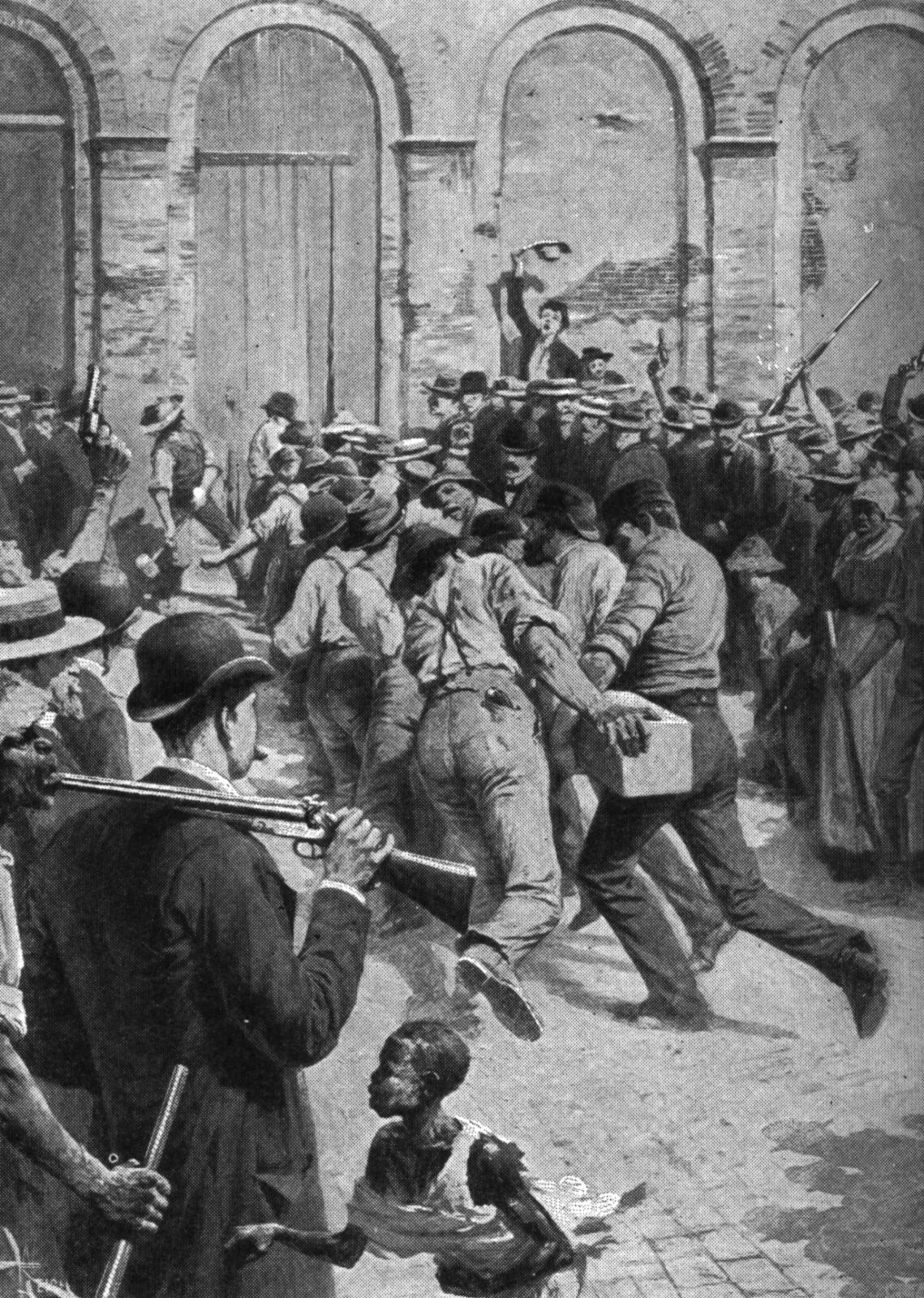
Italian Americans and leaders of the Kingdom of Italy were outraged by the mass lynching. Italy broke off diplomatic relations and recalled its ambassador from Washington, D.C. Then-President Benjamin Harrison, in turn, removed the U.S. legation from Rome. The lynchings even touched off talk of war between the U.S. and Italy, according to The Washington Post.
Prominent U.S. newspapers, including The New York Times, praised the lynchings. Theodore Roosevelt, in a letter to his sister, sided with the mob, writing: “Personally, I think it a rather good thing.”
Related story: New Orleans Mayor Apologizes for 1891 Mass Lynching of Italians
With a looming presidential election and a deepening diplomatic crisis, President Harrison urged communities across the nation to celebrate Columbus, show their patriotism and show more tolerance toward immigrants. It was a major success, as more than one million people gathered in New York City on Oct. 12, 1892, to honor Columbus Day and cheer on the 40,000-strong parade (the larger-than-life NYC celebration took place exactly 400 years after the navigator first landed in what was deemed the New World; the national parade also jumpstarted the mass dissemination of the freshly scripted Pledge of Allegiance).
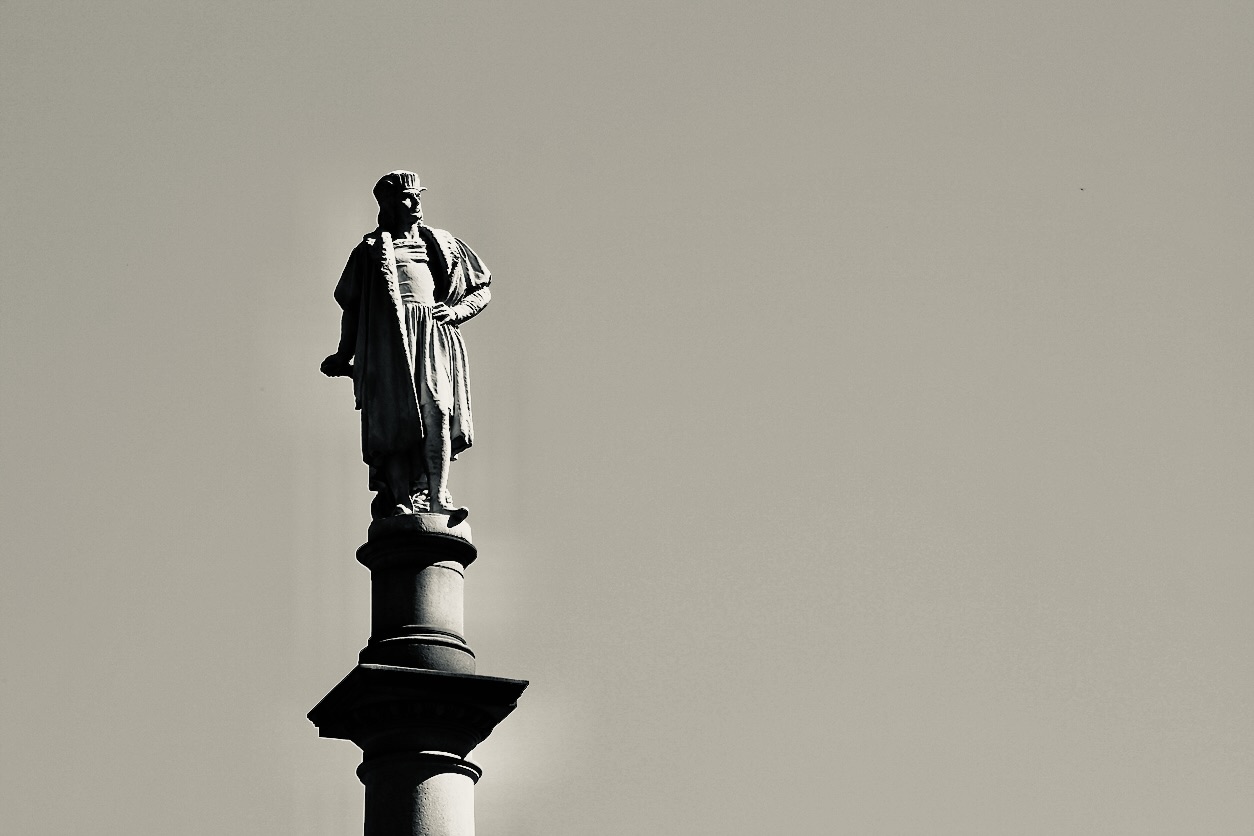
The next day, on Oct. 13, 1892, the towering Columbus Circle statue was unveiled in front of thousands of people. And just like that, the deep cultural connection between Columbus and Italian Americans was cemented. Harrison had successfully quelled the boiling diplomatic tensions, but he would ultimately lose the presidency to Grover Cleveland.
Despite the outpouring of support, Italian Americans would go on to experience crushing suppression across the U.S. At least 40 more lynchings of Italians took place on U.S. soil, and during WWII, 600,000 Italian immigrants and Italian Americans were deemed enemy aliens by order of the U.S. government — despite the fact that more than one million Italian American soldiers were fighting and dying in Europe and the South Pacific to protect America’s freedoms.

Many of these “enemy aliens” were surveilled, stripped of their livelihoods and native language, and were forced to leave their homes; and some were even sent to internment camps. Infamously, Joe DiMaggio’s father, a fisherman in California, was forced to hand over his boat to the U.S. government.
Columbus statues and monuments were installed in Italian communities across the U.S. to fuel assimilation and combat discrimination during this decades-long period of widespread racism and sedition. They were paid for, in large part, by poor Italian Americans who spent years rounding up funds to pay for the statues.
Columbus Day became a permanent national holiday in 1934 when Congress, after lobbying by the Knights of Columbus, authorized President Franklin D. Roosevelt to declare Oct. 12 as the designated date. In 1971, Columbus Day was made a federal holiday on the second Monday in October.
Despite this history, Columbus statues have been reinterpreted as symbols of hate and enslavement by misguided revisionists who simply don’t know the full story.
This is why Italian Americans are fighting to preserve Columbus statues, holidays and parades.
The Conference of Presidents of Major Italian American Organizations (COPOMIAO) — led by Italian Sons and Daughters of America (ISDA) President Basil M. Russo — collaborated directly with the White House in crafting the 2022, 2023 and 2024 Federal Columbus Day proclamations, which examine and clarify this grossly overlooked history. Russo also worked with former First Lady Jill Biden in organizing the first-ever Italian American leadership reception at the White House in 2023, where she publicly addressed the lynching before Russo and his peers.
Please share this story; it needs to be told.
(To dig deeper into Columbus, consider reading Carol Delaney’s “Columbus and the Quest for Jerusalem.” Delaney is a Professor Emerita from Stanford University.)
Make a Pledge and join Italian Sons and Daughters of America today.
