By Richard Leto
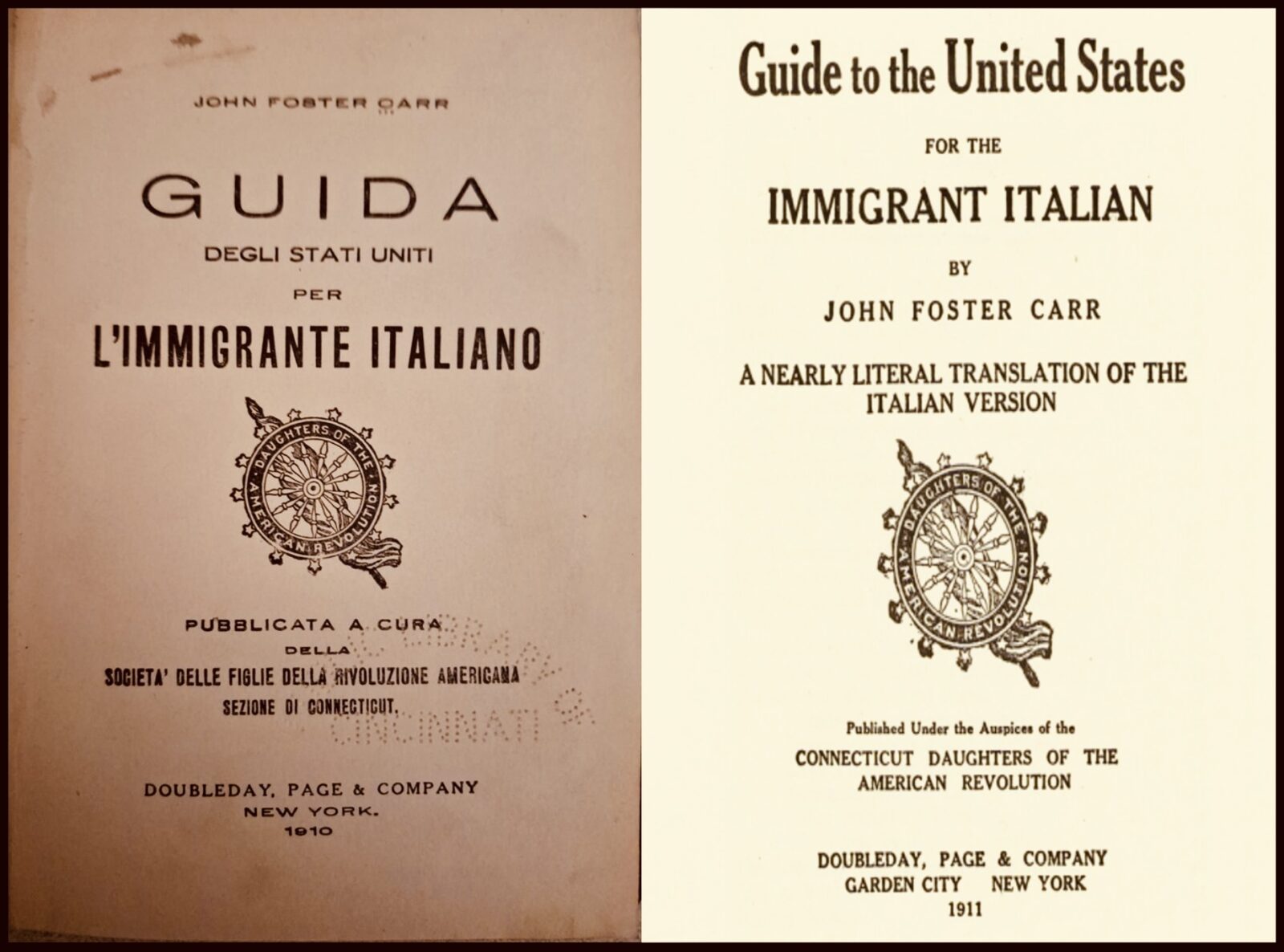
Recently, while conducting family genealogy research, I came across an intriguing 70-page handbook titled the “Guide to the United States for the Immigrant Italian” by John Foster Carr. I immediately thought of my paternal and maternal Italian ancestors who achieved their westward destiny during the Great Arrival with the help of such organizations.
The handbook, a collaboration between Carr and the Connecticut Daughters of the American Revolution (DAR), offered advice on finding work, becoming a U.S. citizen, and learning English.
A direct quote found on the back cover provides unique insight on the vital role that the Connecticut DAR played during the early period of the 20th century.
“Thousands of immigrants have found employment and homes in the state of Connecticut. Many of them come from distant lands and speak no English. To help them become Americans and citizens the Daughters of the American Revolution in Connecticut have opened night schools and classes in English, as well as free reading rooms, with books and papers in foreign languages. They have provided lectures on American history in the Italian language. And so, as a friend, this Society has prepared the present guide to help the immigrant adjust himself quickly to the living conditions and social customs of the United States of America. In the state of Connecticut alone the Society has more than 4,350 members, divided into 47 Chapters, in the different cities and towns. All these Chapters are ready to give help to the immigrant Italian.”
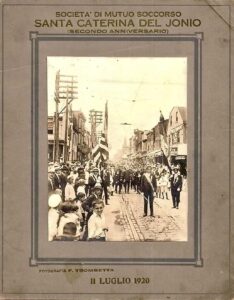
Throughout my years of researching and documenting my Italian immigrant family, who settled in my hometown of Philadelphia, I have found there were various organizations that aided new immigrants, particularly in the late 1800s to early 1900s. Those that come to mind were mutual aid and fraternal societies, and settlement houses. Numerous settlement houses were dotted across America that provided much-needed community social services to new immigrants. Services ranged from childcare, citizenship classes, English language instruction, general education, cultural assimilation, and legal services.
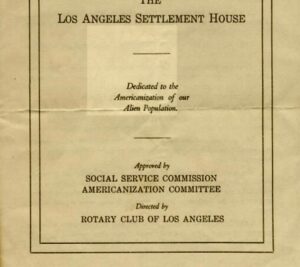
What started out as continuing my family research turned out to uncover these often-overlooked aspects of the Italian American experience. So, in my humble opinion, a guidebook or the community social services provided by the settlement house movement across America were akin to lifelines that enabled our ancestors to prosper and put down the roots that would grow to become our 18-milliion-strong culture.
ISDA, and the ISDA Fraternal Association, shepherded its’ members from one era to the next, from assimilation to prosperity.
About Rich Leto:
Rich was born and raised in the Italian enclave of South Philadelphia, PA (South Philly). He currently resides in Columbus, Ohio. He is an ISDA Order/Fraternal member who attended the Cleveland and Pittsburgh ISDA National Conventions. As a proud second-generation Italian American, he enjoys informal writing as a hobbyist regarding the Italian American experience.
