

By Judith Anne Testa, Fra Noi
When and how, we might ask, did this temperamental, politically-obsessed and sexually driven man, who spent much of his life wandering from place to place, ever find the time or conditions to write “The Divine Comedy,” the greatest masterpiece of Italian literature? Neither of those questions has a certain answer. Nobody knows precisely when Dante started writing his “Commedia,” although he seems to have begun work on it in Florence, before his exile. (The title doesn’t refer to humor in the modern sense, but is a more ancient use of the word, meaning a work with a good or happy ending.)
When Dante’s wife, who did not accompany her husband into exile, asked a nephew to sort through some papers Dante had left behind, the nephew found a bundle of sheets covered with tiny writing. Gemma recognized it as her husband’s work and delivered it to one of his poet friends in Florence, who was stunned by the power of what he read. The bundled sheets were quickly sent to Dante.

Wherever he happened to be when he finished a section of his epic, Dante sent the canto to Cangrande della Scala, the one ruler he esteemed and trusted, in Verona. There, in Cangrande’s court scriptorium, the cantos were copied, bound and readied for circulation. “The Divine Comedy” thus appeared not as a single work but in installments. As the successive cantos became known, they made Dante the most renowned literary figure in Italy. And his fame wasn’t confined to the rarefied world of intellectuals. Ordinary Florentines, many of whom were literate, also eagerly read and discussed the poem. At the time of Dante’s death, it was believed that the poet had completed the work, but the last 13 cantos had never arrived in Verona.
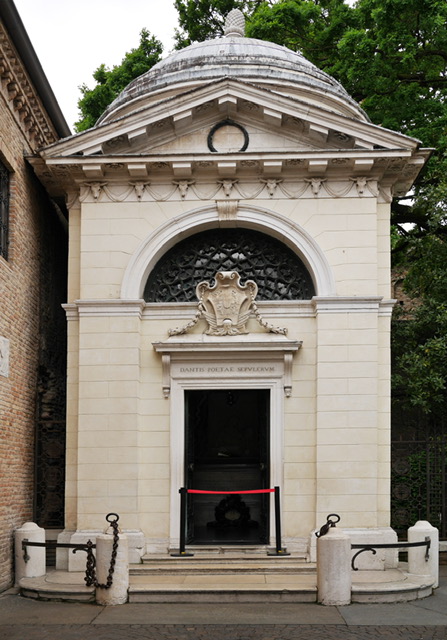
For months after Dante died, his sons conducted a frantic search for the missing cantos. When they were unsuccessful, friends urged the young men to finish their father’s work themselves, which is like asking Beethoven’s servants to compose the final movement of the Ninth Symphony or telling Michelangelo’s plastermixers to finish painting the Sistine Chapel ceiling. Finally — or so the story goes — Dante’s son Jacopo had a dream in which his father appeared to him and told him where to find the final cantos: in a window frame concealed behind a mat tacked to a wall in the house where the poet had died.
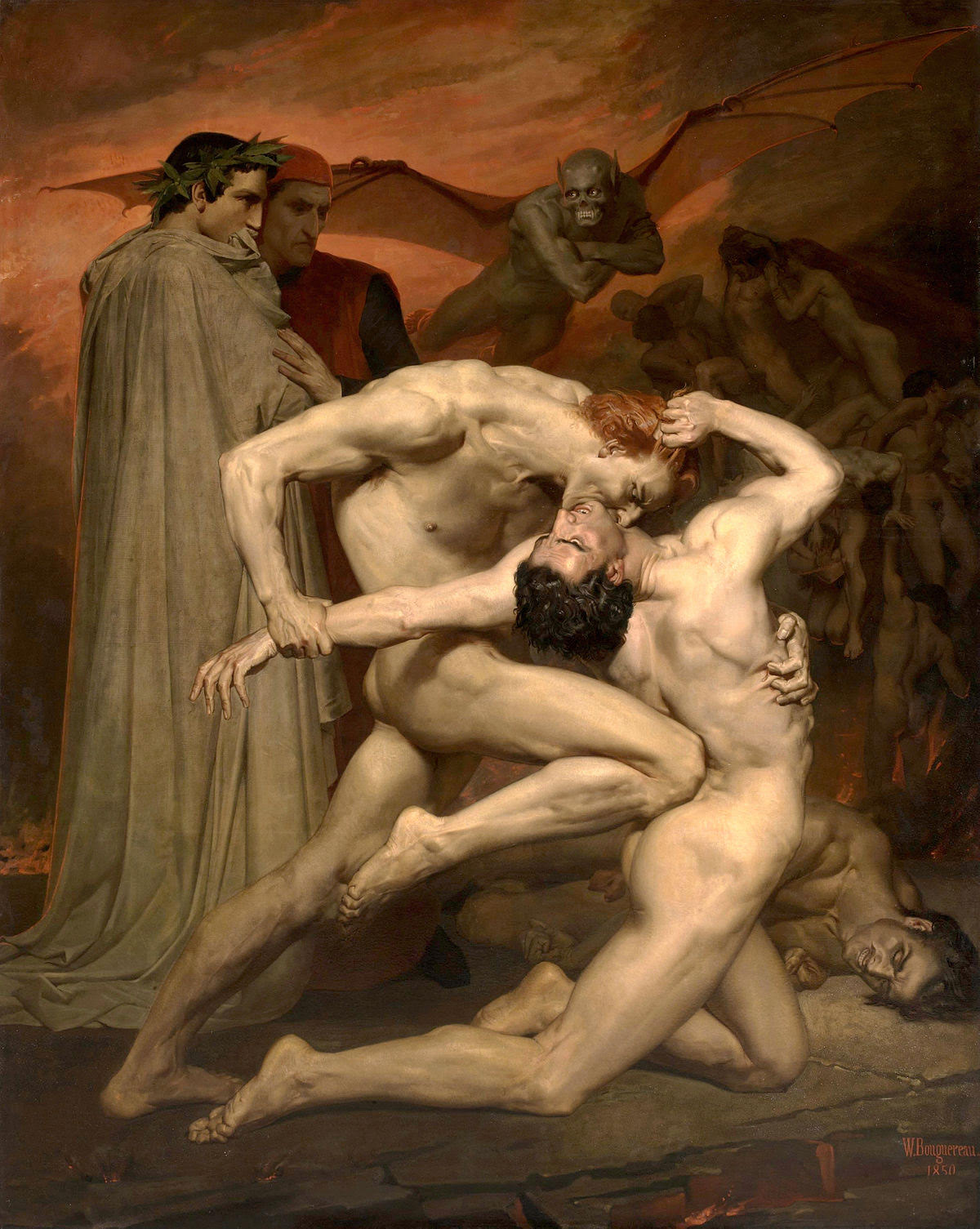
Sure enough, there they were, covered with mold but still legible. These, too, were sent off to Cangrande, and so the poem was finally completed. In his three-part epic, Dante details a fictional sojourn through Hell (Inferno), Purgatory (Purgatorio) and finally his vision of a dizzying flight through Paradise (Paradiso). Along the way, he encountered a host of individuals he either knew well or knew of, having hit upon the perfect way to reward those he approved of and punish those he regarded as villains. He wafts the people he believed deserving to Paradise, while he crams his Hell with those “most exceedingly vile Florentines” of his own and earlier times — forgers, traitors, violent sodomites, murderers, bankrupts, heretics, thieves, and usurers. Dante treats his own most frequent lapse, lust, as the least serious of the Seven Deadly Sins, placing those guilty of it not in Hell but in Purgatory, where they will be purified and eventually saved.
As a modern writer said of the “Commedia,” “Nothing like it had ever been written before. It reared up from the lush, exquisitely cultivated garden landscape of previous Italian poetry like a massive rocky mountain impenetrably covered by clouds.” And in writing of his beloved Beatrice as his final guide, the beautiful, immortal being who leads him up through the wheeling spheres to Paradise, to a beatific vision beyond even his own formidable powers of description, Dante at last fulfilled the promise he had made when he composed “La vita nuova” — “to write of her what has never been written of any other woman.”
Reprinted with permission from Fra Noi. (© 2021) For more information on Dante, visit franoi.com.
