

By Vincenzina Grasso, La Nostra Voce
A century ago, when my mother was 10 years old, she was learning the necessary skills to make a great corredo. Her name was Maria Venneri and she was anxious, with the help of her mother, to begin this long journey since it was a colossal task.
In those days a great dowry was similar to an insurance for a great marriage. Otherwise, the opportunity was slim. Also, very important if over the age of thirty, the possibility would be nil, because of the biological clock and the life expectancy which was shorter a century ago.
A successful dowry was similar to the Egyptian times of 4,000 years ago; with natural fibers of linen, silk, and wool. All of the tools were primitively made.
This article first appeared in La Nostra Voce, ISDA’s monthly newspaper that chronicles Italian American news, history, culture and traditions. Subscribe today.
When my mother finished her dowry, she married my father at the age of 19. Following the birth of their first son, twin girls were born three years later. Friends and relatives were sympathetic since they were both girls. She immediately responded “don’t worry about the corredos, I can handle it!”
Her plan was to raise more silkworm caterpillars, plant more linen seeds and buy more wool fleece. When we were both toddlers, the journey began with the complex linen fibers. The flax plants were harvested in late summer and tied into bundles to dry. The next step was the process of retting. The bundles were placed in a slow-moving river for two weeks, as the moisture decomposed the tissue around the stalks of the plants. Next step was to dry the bundles completely.
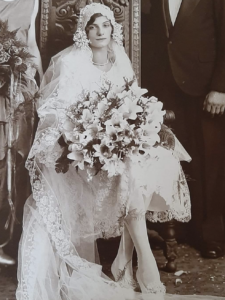
Then, by using a wooden bat, my grandfather made smaller bundles by intensely beating and crushing the outer crust of the stalks. The next step was more complicated and was done by our mother and grandmother. Many primitive tools were used to separate the woody bits. Later, different sizes of steel combs were used until the internal wooly fibers were obtained.
Next, they were spun into thread and woven into fabrics. A favorable dowry contained six sets of king size sheets, twelve or more pillow cases, two dozen bath and face towels, two dozen dishtowels with colorful stripes to distinguish the difference between a few dozen of future baby diapers, and a dozen swaddling clothes.
A few king size blankets and four comforters were included which were made of linen, silk, or wool. In addition, enough heavy linen material was made to make two king-size mattresses, which were later filled with straw or cornhusks, while the wealthy used wool fleece. Also included were a few dozen napkins, 6 tablecloths, and a few dozen sanitary napkins for monthly use.
Mothers and daughters also always included a beautiful wedding dress designed and made by both of them. If no marriage took place, the beloved dress was to be worn for eternity to honor their virginity. (On a personal note, when my sister and I learned that our great aunt was a “Zitella” old maid, we bluntly asked if we could see her “going away” dress. She smiled and gingerly led us to her hope chest, and we were in awe to see her beautiful dress)! We were in America when we learned that she looked radiant.
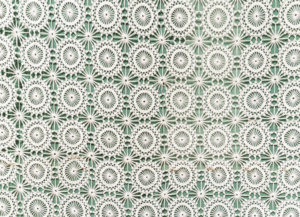
After all of the fabrics were made for the dowry, mothers and daughters were quite eager to display all of the intricate and impressive needlework with amazing results. A few days before the wedding, all of the beautiful articles were placed in flat decorated baskets, and taken to the home of the future in-laws where relatives and friends admired them until the wedding day.
When World War II began, our mother stopped making our dowry, since we didn’t receive money from our father in America. She started her weaving business to support her large family of eight, which included four in-laws, bartering for food, supplies, and fuel for cooking and heating.
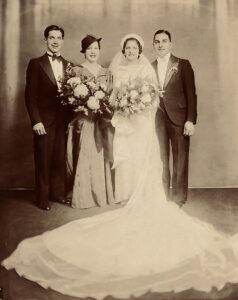
She wove hundreds of yards of fabrics for the corredos of many future brides instead. Her strategy was for our very survival, and to join our father in America as soon as World War II ended. My father and I embraced for the first time when I was 13 years old. Years later, the traditional bridal showers completed our dream dowry.
I also inherited some items that my parents used for over seven decades. My late husband, Sebastiano, and I discovered that their linen sheets still had the charm to have a cool serene sleep on a warm summer night.
In winter, my Sebastiano reminded me it was time for the cozy plaid wool blanket. Now, I continue the beloved tradition, plus all of the cherished memories which keep me company and slowly lull me to sleep.
