By Brendan Young, La Nostra Voce
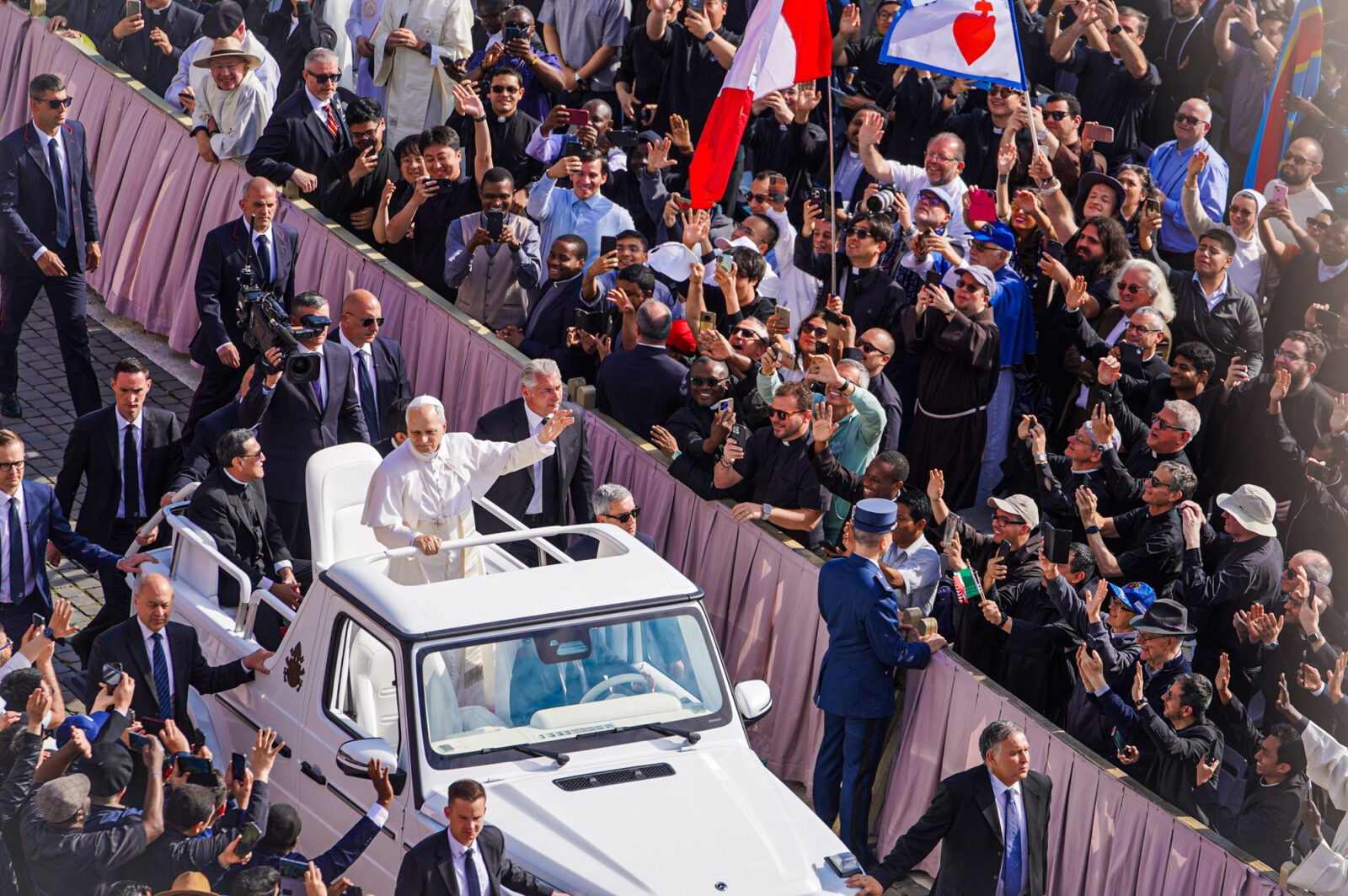
White smoke curled from the Sistine Chapel chimney, the bells of St. Peter’s rang out across Rome, and the world held its breath for what seemed like an interminable amount of time. When the Cardinal Protodeacon finally stepped onto the Vatican’s central balcony to proclaim “Habemus Papam,” the name that followed stunned the globe: Robert Prevost — an American! — had been elected Pope Leo XIV.
I knew little about the man behind the name: a member of the Augustinian Order and a native of the Chicago area. And, like many, I immediately reached for my phone, eager to learn more, especially about his roots. What emerged in the days after the conclave was almost as surprising as the election itself: we had an Italian American Pope.
Of course, Pope Francis, born in Argentina as Jorge Mario Bergoglio to a father from Turin and a granddaughter of Genovese immigrants, was also an Italian American, though from South America. We often forget that South America, like its northern counterpart, saw a massive wave of Italian immigration, particularly in Argentina and Brazil. But Pope Leo was born and bred in our great nation, and for that we are proud, even more so as Italian Americans. His family story and postwar Baby Boomer upbringing offer a sense of familiarity, even reassurance, to our community.
This article will appear in the June 2025 edition of La Nostra Voce, ISDA’s monthly newspaper that chronicles Italian American news, history, culture and tradition. Subscribe today!
While Pope Leo’s maternal grandparents were of mixed race, born in Hispaniola and New Orleans respectively, his paternal grandmother was a French immigrant, and his paternal grandfather, Salvatore Giovanni Riggitano, was born in Milazzo, near Messina in Sicily, in 1876. Riggitano emigrated to the United States in 1903, arriving on the SS Perugia to New York City, and settled in Illinois, where he would teach Italian, French and Spanish.
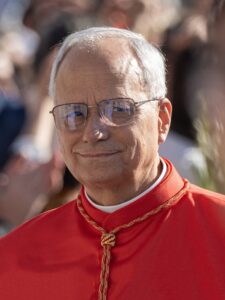
Eventually, he would drop “Salvatore,” keeping the English form of Giovanni, John, and adopted his second wife Suzanne’s mother’s maiden name, Prevost, which he would give to his two sons. The second son, Louis, the Pope’s father, was born in Chicago in 1920. There, he would marry Mildred Martinez in 1949, giving birth to three sons, the last of whom was Robert (now Pope Leo), born in 1955.
Yes, the Pope is a quarter Italian, and a second-generation Italian American. But “only” or “just” 25% Italian extraction does not make His Holiness any less Italian American than anyone else. That he likely learned the Italian language later in life during his years of study and work in Rome, is to his credit; it would not make him a “Johnny come lately.”
We do not know if the Pope has visited (or how often) his town of origin during those years, or whether he’s in touch with his Italian relatives; nor do we know, in decades past, how often the Prevost family enjoyed pasta dinners.
We do know this: through his words, his example and his identity, Pope Leo already shows us that there is room at the table for everyone — culturally and spiritually — no matter their family background or heritage, both as Italian Americans and as Catholics. His very motto, “In the One, we are one,” taken from the writings of his spiritual father, Saint Augustine, and the message he has expressed so far during the first few weeks of his papacy, are an indication of the importance he places on unity, which no doubt will prove one of the key messages of this pontificate.
For those struggling to identify as Italian American, young or not so young, because your Italian blood might be less than a major percentage, or for those seeking validation, look no further than Pope Leo. His own story can “give permission” and reassure us, at a crossroads in history, where going forward, we will see increasingly less “pure” extraction but allowing the Italian American identity to flourish.
Perhaps another indication of a bigger picture (or Divine Providence): Pope Leo was elected on May 8, the feast day of Our Lady of the Rosary of Pompeii, the most popular devotion among Italians at the time of the largest immigration, and which the immigrants continued to lovingly practice in their adopted country.
Interestingly, I learned of the white smoke as I was burying a friend, Sr. Lisa Marie DiSabatino, who was half Italian and half Polish. Her father Anthony was a first-generation Sicilian American; his parents lived near Pope Leo’s grandfather’s hometown. Anthony died while serving overseas in the U.S. Army during World War II, Sister wasn’t even 2 years old. As a result, she had little exposure to her Italian side but readily acknowledged those roots. Another sign?
Saint Augustine also stated: “Let us all embrace one another: in necessary things, unity; in uncertain things, liberty; in all things, charity.” What better example, what better words to follow, than those of this Saint, and those of his spiritual son, our Holy Father, Pope Leo.
Viva il Papa!
-Brendan Young, a second-generation Italian American originally from Buffalo, New York, is a member of ISDA.
Make a Pledge and join Italian Sons and Daughters of America today.
