
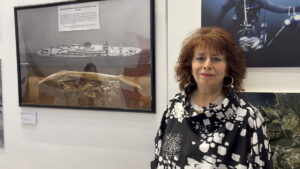
ISDA member Pierette Simpson, an author, filmmaker and survivor of the shipwreck, continues to make waves with her gripping account and dedication to preserving the SS Andrea Doria’s history.
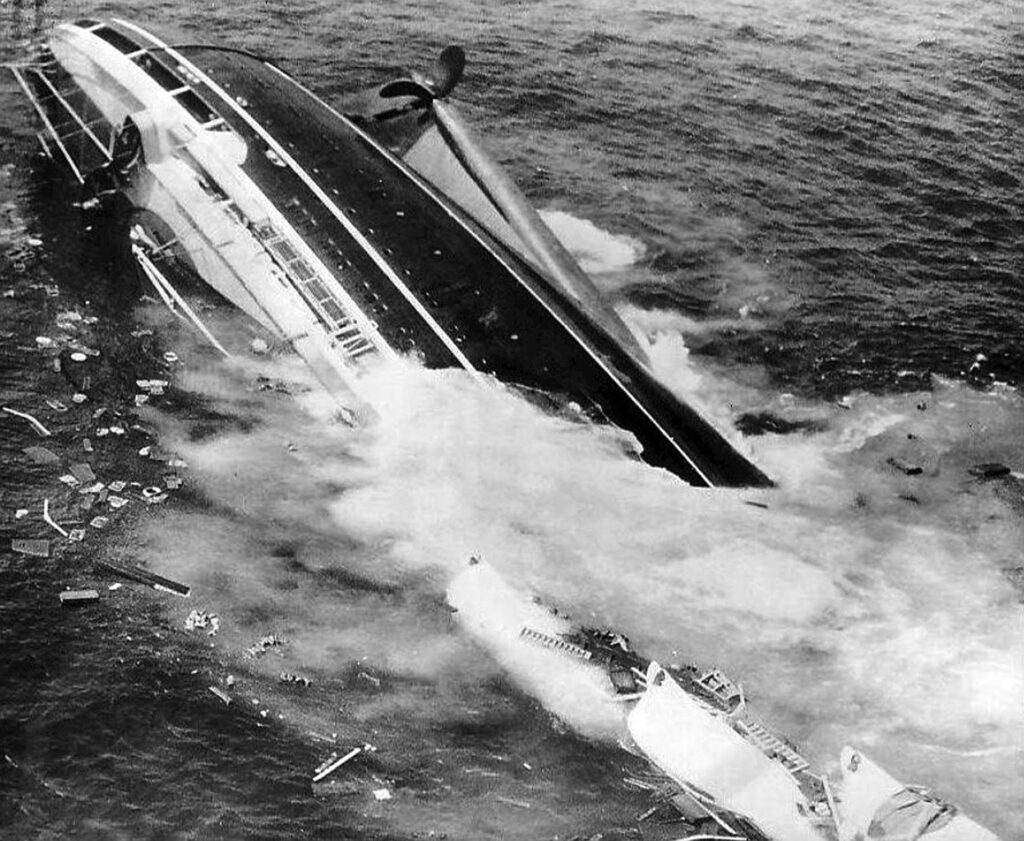
On July 25, 1956, shortly before midnight and shrouded in dense fog, the Swedish liner SSStockholm slammed full speed into the side of the Andrea Doria, killing 51 people and sending the Italian luxury ship to a watery grave off the shoals of Nantucket.
Pierette Domenica Simpson, at age 9, was aboard with her grandparents immigrating to the U.S.
In July, Simpson took part in a survivors-only gathering at the Italian American Museum (IAM) in NYC’s Little Italy. Her film “Andrea Doria: Are the Passengers Saved?” was screened and attendees toured an exhibition of artifacts curated by the museum, including a 140-pound brass bell from the ship and items from the vast collection of artifacts retrieved by the diver John Moyer, who first explored the wreck in the 1980s.
This feature article appeared in the November edition of La Nostra Voce, ISDA’s monthly newspaper that chronicles Italian American news, history, culture and traditions. Subscribe today!
“This museum is all about telling the Italian experience, coming to America and being in America,” IAM Founder and President Dr. Joe Scelsa told The New York Times. “Even with the sinking of the ship and the terrible loss of life that took place, I will tell you, every one of them that survived still felt the trip was worth taking because of the opportunities America offered. That’s the message.”
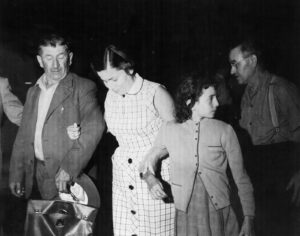
Doria, an opulent 697-foot Italian ocean liner that carried travelers from Genoa to New York, was a jewel of her time. She boasted elegant paintings, tapestries and murals, along with lavish amenities that included several outdoor swimming pools.
Equipped with 11 watertight compartments, a full fleet of lifeboats and radar, a cutting-edge innovation of the era, the Doria seemed every bit the model of modern maritime safety.
Passengers felt reassured as she completed 100 transatlantic crossings, before tragedy struck.
The Stockholm, under the watch of Third Officer Johan-Ernst Carstens-Johannsen, had departed from New York on a voyage to its homeport of Gothenburg, and as night fell, the two ships were barreling toward each other from opposite directions.
Each ship used its radar to arrive at different conclusions: While the Swedish liner decided on the standard port-to-port pass (on the left), Doria’s Captain, Piero Calamai, elected to pass on the starboard (right) side.
The officers didn’t realize they were on a collision course until shortly before 11:10 p.m., when Calamai spotted Stockholm’s lights through a thick curtain of fog. “She’s coming right at us!” one Doria officer shouted.
With just moments to spare, Calamai ordered a hard left turn to outrun the Stockholm. Carstens, having spotted the Doria, tried to reverse his propellers and slow down.
It was too late. Stockholm’s icebreaker bow crashed into the Doria’s starboard side like a battering ram, snapping bulkheads and penetrating some 30 feet into its hull. It remained lodged there for a few seconds, then broke loose, leaving a gaping hole in the side of the Doria.
Prior to the fatal, screeching collision, Doria was unquestionably the symbol of Italy’s revival from the economic ruin of WWII.
Designed by Italy’s greatest artisans of the time, she was called “a floating art museum” with works reflecting the nation’s artistic heritage of painters, ceramists, sculptors and designers. It was a prestigious choice of travel by immigrants seeking a new life, and the rich and famous, such as Anna Magnani, Cary Grant, Orson Wells and Spencer Tracy.
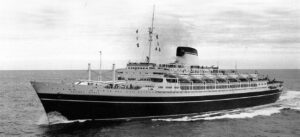
“After what seemed like eternity, my nonnis and I sat on the floor in prayer circles of the already heavily inclined liner; the Ave Maria’s last words ‘…now and at the hour of our death’ suddenly took on an eerie meaning. After all, we did not know that Captain Calamai had sent out an SOS and rescue ships were on their way. For 1,640 passengers they were angels of mercy,” said Simpson. “Even after 69 years, I quiver when I recall my frail, 9-year-old body dangling from a rope around my waist over the black ocean. Fortunately, I didn’t understand the concept of drowning, but the intense screams from above and below signaled a great danger.”
The Andrea Doria tragedy remained one of the most complicated and controversial collisions at sea. How could this happen on such a large ocean? Simpson’s research, based on interviews with maritime experts in both Italy and the U.S. and with the scrutiny of a computer simulation at the U.S. Merchant Marine Academy in New York, revealed how the Stockholm’s crew contributed to the collision:
- The captain assigned an inexperienced Third Officer and two other young men to the bridge in fog; he remained in his cabin even while in the most trafficked area near the Northeast coastline (approximately 50 miles from the Nantucket Shoals)
- The young men were overworked and overwhelmed
- The Third Officer was directed to navigate in a lane designated for westbound traffic, thus in our lane as they traveled eastward
- The Stockholm had an antiquated radar that had to be set by hand, with a flashlight to determine position of vessels
- Its foghorn was silent, although prescribed by maritime law
- The Third Officer misread his radar, thinking the Doria was approaching on his left; he mistakenly ordered two right turns which led to the shocking collision, at full speed
The emergency effort to save more than 1,600 people aboard the Doria, widely deemed the greatest sea rescue in history among maritime experts, is the subject of Simpson’s book, Alive on the Andrea Doria!: The Greatest Sea Rescue in History.
In 2019, Simpson made headlines when she rang the Doria’s bell at the Columbus Day Parade in New York City — a poignant gesture symbolizing her commitment to ensuring the ship’s story continues to echo from past to present in honor of the survivors and victims.
Make a Pledge and join Italian Sons and Daughters of America today.
