
The following article, written by Jerry Finzi, appears on GrandVoyageItaly.com.
Whether you’re Voyaging through Tuscany, Lazio, Campania, Puglia or Sicily, you will inevitably come across the most beautiful floral displays in hanging wall pot gardens.
The kaleidoscope of colors is often dizzying, and the collection of interestingly shaped terracotta pots along with the texture of old stone walls.
Although many plants are hung in more common hanging baskets from metal arm brackets or on balconies, the unusual thing for Americans to see is pots hanging directly on the walls of houses.
And it’s not just one pot but often dozens creating texture and color on the side of a home. It’s easy to get this look in your home garden, if you use the right brackets and choose plants carefully.
|
|
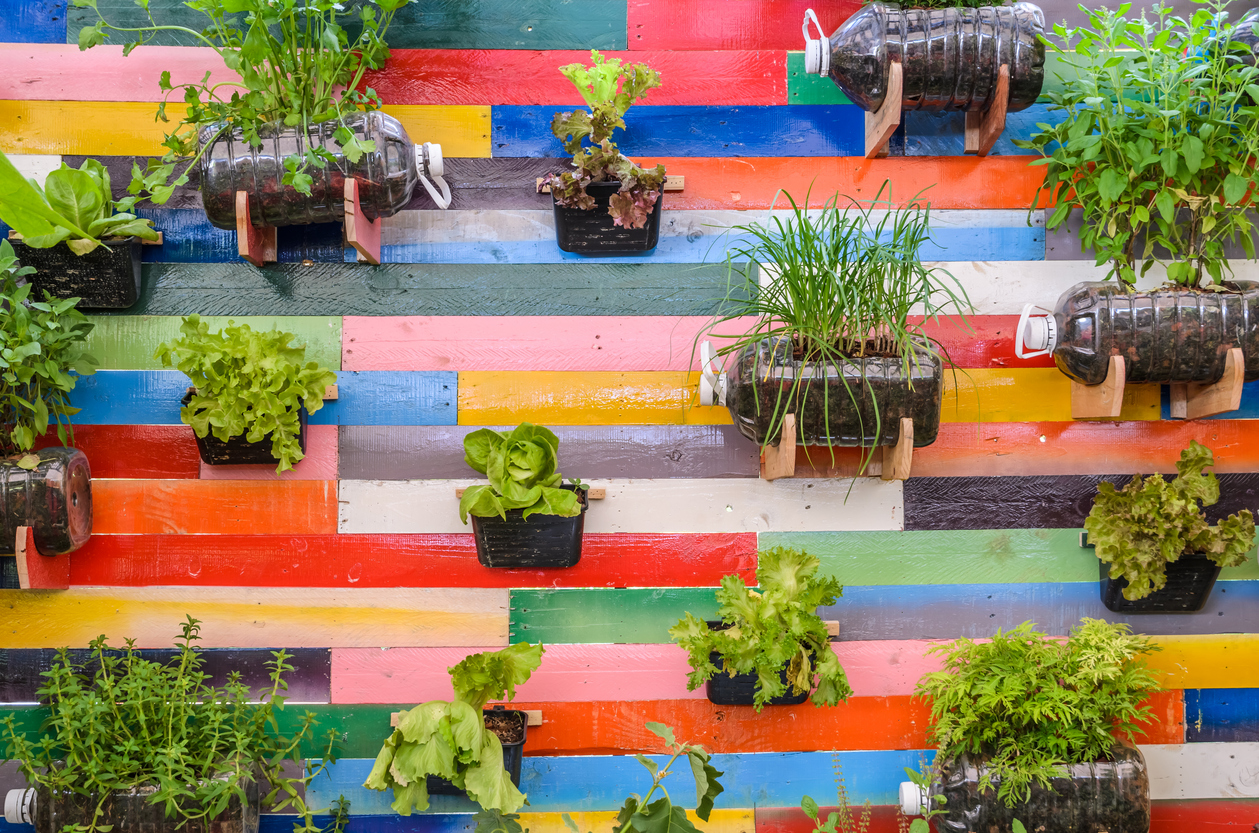
If you cook with herbs (as any good Italian does), planting some of your favorite herbs in your hanging wall garden is a great option. Many herbs require good drainage and soil that’s not too high in nutrients, like sage, thyme, or oregano. The wall is a perfect environment, in fact, many herbs in Italy grow naturally in cracks in craggy walls. Since mint is usually a runner, often turning into a garden weed, growing it up on your wall is a great way to control its rambunctiousness. For things like basil or parsley, which need more nitrogen (for leaf growth) and water, plant them in a richer, water retaining soil. You can even add some Soil Moist water retention crystals to your soil mix. Plant these pots lower down so you can easily snip what you need before preparing dinner. |
Growing Tips
- Depending on the type of home you have, make certain your pots are going to be draining out and away from your wall, especially if you have wood siding.
- If you are reusing old clay pots, brush them clean in a solution of water, detergent and a teaspoon of bleach.
- Even if your home has brick or stone walls, be careful when watering. Use a long hose wand designed for watering hanging plants and perhaps keep a step ladder nearby to help access higher plants for feeding and pinching back spent blooms.
- If you have vinyl siding, screw brackets onto the flat area of the siding and make sure you screw into woo behind the siding. If you have stone or brick walls, you need to buy a carbide bit for your drill–drilling pilot holes that fit plastic or fiber wall anchors. Drilling into mortar joints is preferred. You want brackets solidly mounted to prevent heavy pots from falling.
- Consider using bottled, liquid plant food that attaches to your hose, or use slow release fertilizer or feeding spikes. Remember that blooming plants need lots of potassium (K).
- Use a product like Soil Moist (see below) to increase the water-holding capacity of your pot’s soil. Use very few crystals per pot–perhaps a sprinkling of less than 1/2 teaspoon. If you make a mistake and add too much, the crystals will swell into a gelatinous mess and possibly pop out of the top of your pot.
- Other plants to try: Begonia, Lobelia, Portulaca, Sedum (there are many trailing ones), Black-Eyed Susan Vine, Alyssum, Sanvitalia, Perlargonium peltatum, Scaevola, Ipomoea, Lantana, Verbena, Coleus,
