
By: Francesca Montillo, ISDA Food + Travel Writer
Christmastime in an Italian or Italian American household means a lot of things. Food, family, decorating, setting the nativity scene. Did I say food already? It also means that your breakfast for the month of December involves something sweet and seasonal, most likely either panettone or pandoro.
But herein lies the conundrum: which of these Christmas cakes has the upper hand? Which do you prefer, is one superior than the other?
In Christmastime gatherings with legions of more or less tolerated relatives, discussions may often turn to politics and sports, but there is one question that is likely to heat up a conversation even more so than these topics: it is the eternal duel between the two most loved desserts of an Italian Christmas — Panettone and Pandoro.
In my research, and by research I basically mean asking friends and family what they prefer, it seems that there are some strong favorites. Rare are the people that willingly admit to loving both, as if to say that doing so is in some fashion betraying the other.
So let’s learn about the two so we can make an informed decision on selecting a personal favorite.
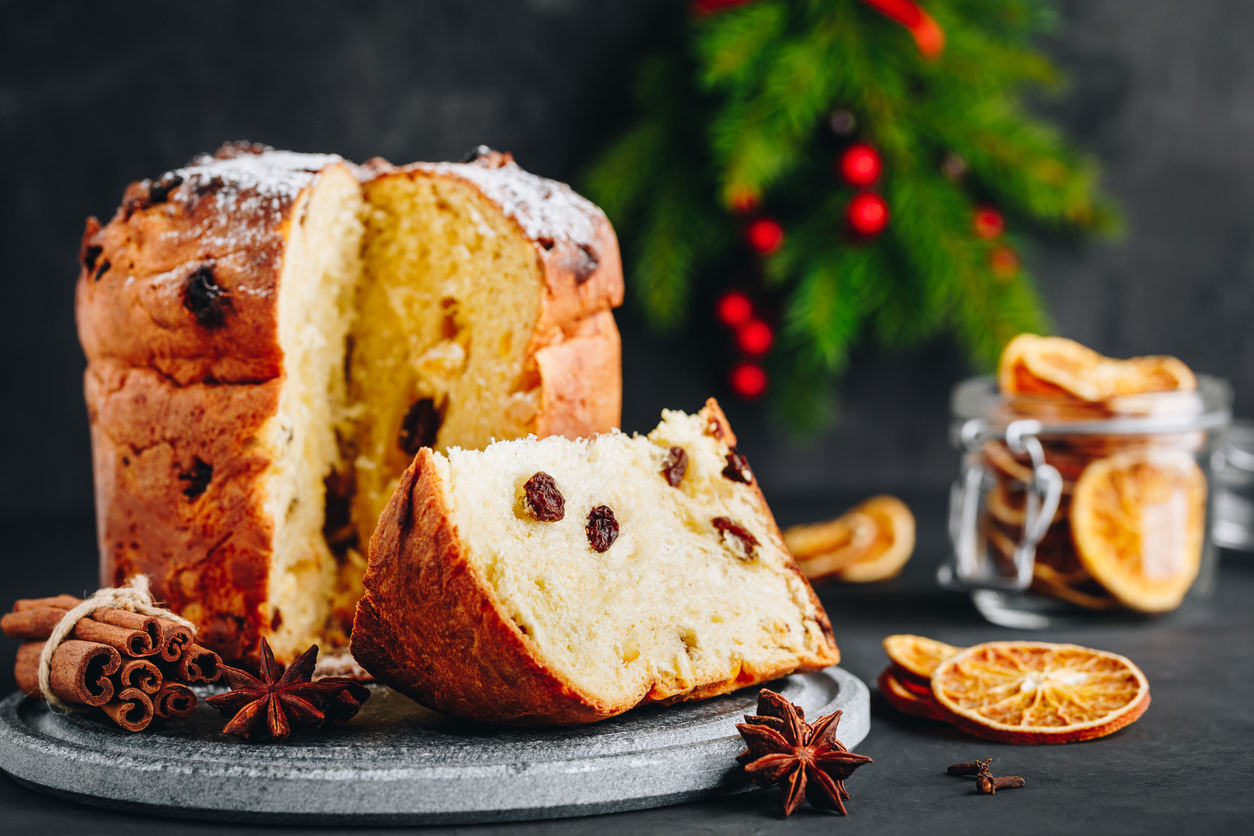
Panettone is the typical Milanese Christmas cake, generally dome shaped. The modern shape of Panettone is attributed to Angelo Motta, who in 1919 perfected its production by increasing the leavening and cooking times, making it taller and wrapping it with the crown paper. Panettone is created by cooking a leavened dough that is mainly comprised of water, flour, butter, sugar and egg yolk, to which candied fruit such as orange and citron peel and lots of raisins are added.

Pandoro, on the other hand, is the typical Veronese Christmas cake, whose main ingredients are flour, sugar, eggs, butter, cocoa butter, vanilla and yeast. It has a truncated star shape, usually eight-point, and it is typically served with some powdered sugar on top.
The birth of Pandoro presents a very complex tradition: some even see a first form dating back to the first century AD, the recipe of a cook named Vergilius Stephanus Senex, which involved the preparation of a sweet bread by adding butter.
The surest ancestor of Pandoro, however, is Nadalin: a dessert invented in Verona in the thirteenth century, to celebrate the first Christmas under the Scala family. It begins to take shape probably thanks to the influence of “pan de oro,” or golden bread, a sweet bread served in Renaissance Venice on the tables of the rich. It got its name from the addition of eggs to the dough, which in fact made it more golden.
The modern form of Pandoro has a precise date of birth: Tuesday, 14 October 1884, that day the Veronese pastry chef Domenico Melegatti presented the patent for a Christmas cake to the Ministry of Agriculture and Commerce of the Kingdom of Italy. Also in this case what varies considerably is the height of the cake and the addition of even more butter and eggs, which make its dough so fragrant and soft.
Shall we talk calories? Perhaps we shouldn’t, this is after all, the holiday season. A time in which calories don’t count. But for those who have an interest in such things, let’s briefly discuss.
From a caloric point of view, much to my own surprise, the Pandoro is slightly richer than its Milanese rival. A serving contains on average between 390 and 410 calories. Panettone, however, is no lightweight with around 330 and 360 calories per serving. At the same weight, Pandoro, light and airy though it may be, is more caloric and “heavier”, given the greater presence of saturated fats, basically due to a greater quantity of butter and eggs.
But the biggest question remains: Which do Italians prefer?
According to various data collected in Italy by trusted authorities (not my own personal friends and family) who actually study these trends, the winner is:
Panettone!
Panettone remains the favorite for Christmas binges. The Milanese dessert is preferred by 46% of Italians, while the Pandoro is in second place with 37%. Third place goes to other typical local sweets, which account for 17%. Men seem to have a strong preference to panettone, at 50% favoring it, over 33% favoring pandoro.
As for my own personal preference? My vote goes firmly for the pandoro. It’s light, (if not in calories) airy texture is what my tastebuds prefer. But want to know what I prefer even more than plain pandoro? Lemondoro! This is the traditional pandoro dough, filled with limoncello pastry cream. Yes, indeed, this is the season of sweet bliss.
