
By William Cerruti, Italian Cultural Society
Filippo Mazzei
One Italian who helped found the nation was Filippo Mazzei from whom Thomas Jefferson, the author of the Declaration of Independence, derived “all men are created equal” from a 1774 essay penned by his friend Mazzei in the Virginia Gazette.
The essay contained the phrase, “Tutti gli uomini sono per matura equalimente liberi e independenti” (All men are by nature equally free and independent.”) Writing for the Gazette under the pseudonym “Furioso,” Mazzei helped convince Virginians that independence from England was possible and Europe would be sympathetic to the American cause.
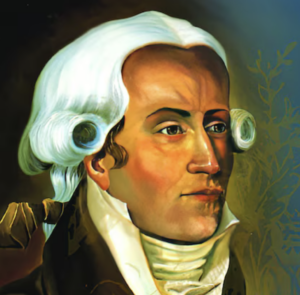
His 1774 pamphlet entitled “Principle of the American Revolution by a citizen of Virginia” contained the famous phrase used by Jefferson in the Declaration of Independence. “All men are by nature equally free and independent. This equality is necessary in order to create a free government. All men must be equal to each other in natural rights.”
When the war came Mazzei accepted dangerous assignments for the American cause. From 1779 to 1783, he traveled throughout Italy and France, securing loans, purchasing military supplies and rallying diplomatic support for the revolution. Captured by the British along with his family, he eventually escaped and continued to secure support for the struggling colonies.
On Sept. 3, 1783, the American Revolution ended with the signing of the Treaty of Paris, cementing independence from Great Britain.
Caesar Rodney
On July 1, 1776, the Delaware delegation to the Continental Congress was deadlocked over independence. One delegate favored breaking from Great Britain, another opposed it, and Delaware’s vote hung in the balance.
About 80 miles away in Dover, Caesar Rodney — a Founding Father, lawyer, and politician of English and Italian descent — received word of the impasse and set out on a breakneck, overnight ride to Philadelphia.
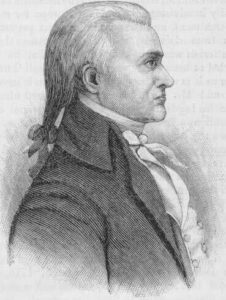
It would be hard to overstate how consequential Rodney’s vote was, or how arduous the journey to cast it proved to be. Stricken with facial cancer and asthma, Rodney pushed through thunderstorms, traveling by horseback and horse-drawn carriage and taking four ferry crossings — all to beat the clock and cast his vote for a free nation.
Arriving just in time on July 2 at the Pennsylvania State House (now Independence Hall), Rodney cast the tie-breaking vote that secured Delaware’s support for independence, clearing the way for adoption of the Declaration of Independence and cementing his place in American history (Rodney would go on to sign the hallowed document a month later).
William Paca
The quill paused for only a moment. William Paca looked at the document before him and understood its consequence. The words spoke of liberty and independence, but the British Crown would view them differently. To King George III, this was treason.Paca dipped the pen into ink and signed his name. If the American revolution failed, that signature could become his death warrant.
Today, visitors admire the faded signatures on the Declaration of Independence, but in 1776 those names represented a wager with the highest possible stakes. The fifty-six signers placed their fortunes, their families and their lives behind the proposition that thirteen colonies should become a nation.
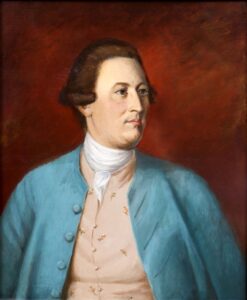
His family had once been Pacci, reflecting Italian roots traced to southern Italy. His willingness to act when conviction demanded courage earned him a place in history.
Paca served in Maryland’s Committee of Correspondence and later in the continental Congress, joining those who believed reconciliation with Britain had become impossible. The colonies needed more than eloquent speeches; they required men prepared to accept the consequences of their beliefs. After independence, Paca continued building the nation he had helped create serving as Governor of Maryland. And later appointed a federal Judge by George Washington.
Francesco Vigo
Born Giuseppe Maria Francesco Vigo in Modena, Italy, he later joined the Spanish army and became a successful merchant in the frontier settlements of North America making his fortune in the fur trade in the Louisiana Territory.
After meeting George Rogers Clark in Kaskaskia in July 1778, he decided to help Clark capture Fort Vincennes. Vigo advanced him money for supplies to keep his men from deserting, and in December of that year he allowed himself to be captured by the British, putting his life in danger while spying for Clark.
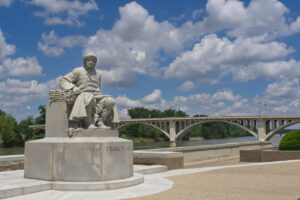
While imprisoned, he discovered that the British did not expect a winter attack. When he was released because of his affiliation with Spain, he shared that intel with Clark, who mounted a surprise assault in February 1779 and took control of the fort, ultimately securing the Northwest Territory for the young nation, Vigo went on to establish Jefferson Academy, now known as Vincennes University, in Jasper, Indiana.
While never reimbursed for his large investment in the success of the Revolution, he has been recognized for his contribution through monuments, schools, parks, counties and historical remembrance.
Christopher Columbus
It all started with the voyage of Columbus across the Atlantic on an impossible mission into the unknown to discover the American continent, a continent unknown to the rest of the world.
Historians consider Columbus voyage one of the most significant events in recorded history and Columbus one of the most important historical figures of the last one thousand years. With reviews like that he is not replaceable.
“Columbus Voyage was the most significant event to happen to our species.” -Neil deGrasse Tyson
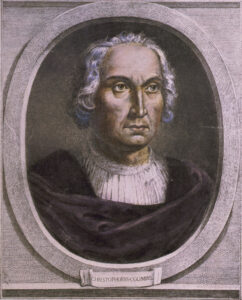
Columbus made four voyages across the Atlantic and opened the Americas to Europeans and the widespread transfer of people, plants and animals that affected every society on the planet. Foods from the Americas such as potatoes, tomatoes and corn became staples of Europeans while wheat from Europe became a main food source for people in the Americas. Coffee from Africa and sugar cane from Asia became major food crops for Latin American countries. Europeans brought livestock unknown in the Americas like cows, pigs, sheep and horses.
The introduction of the horse allowed native American tribes to shift from a nomadic to a hunting lifestyle. While Columbus was from Genoa, Italy, he sailed for Spain, but his voyage was financed by Italian merchants. He is recognized for his discovery that changed the course of world history. For Italian Americans, the Columbus Day holiday is a national symbol of pride, unity and identity. Columbus Day is the only national Holiday observed in the United States each year in October. And one celebrated by Italian Americans who are referred to as the Children of Columbus.
Amerigo Vespucci
The man who gave his name to America was another Italian explorer of the day, Amerigo Vespucci from Florence who explored the coast of South America for Portugal. Amerigo Vespucci’s voyages defined the New World.
Born in Florence, Italy, his voyages demonstrated that the New World, first discovered by Columbus in 1492, was not Asia’s eastern outskirts but an entirely separate landmass unknown to the people of the Old World. It came to be known as America, a name derived from Americus, the Latin version of Amerigo.
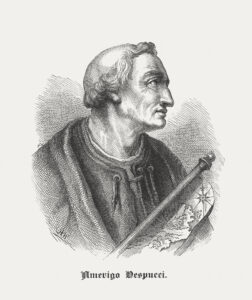
Vespucci had made several voyages that explored the east coast of South America between 1499 and 1502. The expeditions became widely known in Europe after Vespucci wrote about them in 1502, realizing it was a continent and dubbing it the New World.
In 1507, German cartographer, Martin Waldsseemuller, produced a world map on which he named the new continent America after the feminine Latin version of Vespucci’s first name. Vespucci named one part of South America during his voyages in South America, Venezuela (Little Venice), where the natives lived on water.
Giovanni Caboto (John Cabot)
Another Italian explorer, Giovanni Caboto (John Cabot) who was also born in Genoa and raised in Venice claimed North America for England in 1497.
He was also financed by Italian merchants and his own money. Upon landing he planted both the British and Venetian flags.
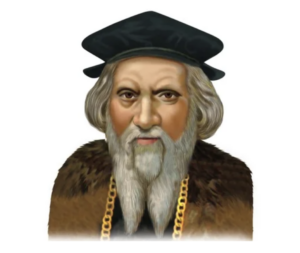
He was a citizen of Venice. Like Columbus, he thought he had landed near the coast of Asia. He was the second European to land in the Americas. His first voyage was successful not only because he reached the new land and returned but also because he discovered the massive cod fishery, we now call the Grand Banks.
Cabot’s second voyage in 1498 included five ships and followed the North American coast to Chesapeake Bay locking in England’s claim to the continent. Both Columbus and Caboto were born in Genoa just a year apart.
Giovanni da Verrazzano
The Verrazzano Bridge links the New York Boroughs of Brooklyn and Staten Island. Giovanni da Verrazzano from Florence, Italy sailed for France and laid claim to parts of North America for France in 1523. Verrazano had set sail with the support of Florentine Bankers and the French king in search of a passage to the Pacific Ocean and the Far East.
His ship, the Delfina, was designed in Genoa, the birthplace of Columbus, as the first high-capacity type of European ship large enough for oceanic trade and exploration. On his voyage, Verrazzano explored the coastline of the eastern seaboard of the United States and Canada. He was the first European to enter New York harbor.
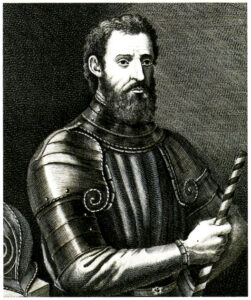
He named the area Santa Margherita, also the name of a famous seaside town on the Italian Riviera near Florence and Genoa. Verrazzano wrote a report based on his travels to the New World, used later by explorers including Henry Hudson (Hudson’s Bay). It is believed that Verrazzano was the first to explore Hudson’s Bay.
Verrazzano’s 1524 arrival in New York Harbor took place 85 years before Hudson’s 1609 expedition. Hudson’s route was almost identical to that of Giovanni Caboto’s 1497 voyage from England to Newfoundland. Hudson used Verrazzano’s maps to chart his route to New York.
In 1930, immigrant families banded together to create the Italian Sons and Daughters of America (ISDA), now one of the most prominent and financially successful Italian American organizations in the nation. In the last decade, we built a 730,000-strong social media community, grew our not-for-profit fraternal association, ISDA Financial Life, to nearly a half billion dollars in member assets, co-founded the Russo Brothers Italian American Filmmaker Forum (RBIAFF), and launched the fastest-growing Italian American publication (La Nostra Voce).
