
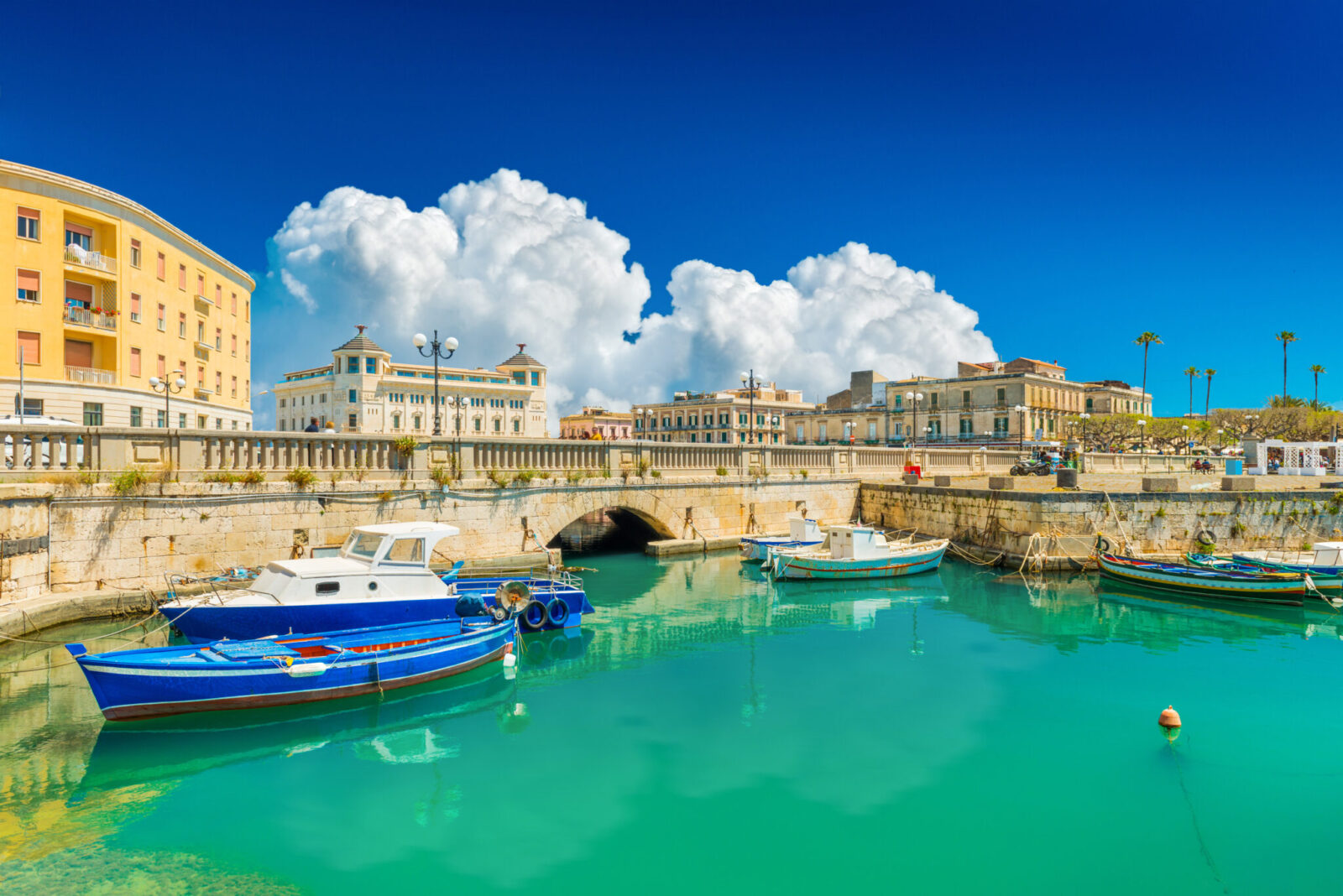
A sun-drenched view of the Umbertino Bridge (Ponte Umbertino), the historic bridge connecting Ortigia to mainland Syracuse.
By Francesca Montillo, ISDA Food + Travel Writer
I have always felt a deep connection to Eastern Sicily — and to Sicily as a whole. Of all Italy’s regions, Sicily feels the most genuine to me. I know the word authentic has become somewhat overused in travel writing, but there is simply no better way to describe this island. Perhaps it’s because I’m Southern myself, born in neighboring Calabria, or because my grandmother, Rosina, was Sicilian. Whatever the reason, Sicily has always felt deeply familiar to me.
I often tell people that Sicily has an attitude — a kind of “take us as we are, or don’t come at all” spirit. While some of Italy’s northern regions polish and perfect themselves for visitors, Sicily doesn’t perform. It welcomes you warmly, generously, and wholeheartedly, but never at the expense of its identity. It is raw, vibrant, chaotic (in the best possible way), and alive with energy around every corner. What Northern Italy may offer in refinement and elegance, Sicily offers in soul, realism, and intensity. And that is exactly why I love bringing travelers here.
Sicily is the Italy you discover after you think you already know the country. It’s for travelers ready to experience a different side of this extraordinary country — one that is layered, emotional, deeply historic, and unforgettable.
Syracuse
Syracuse — or Siracusa in Italian — is a city that effortlessly satisfies every kind of traveler. As Sicily’s fourth-largest city and one of its most beloved destinations, Syracuse offers a captivating blend of history, culture, natural beauty, and unforgettable cuisine. Its shimmering sea enchants visitors, its layered history fascinates scholars, and the food alone is reason enough to make the journey.
It is lively and sophisticated enough to offer endless experiences, yet approachable and easy to navigate — even for travelers visiting Italy or Sicily for the very first time. Guests quickly feel comfortable wandering its streets, independently, soaking in the atmosphere at their own pace.
The city stretches partly across the mainland and partly onto the enchanting island of Ortigia, the historic heart of Syracuse, which is connected by bridge to the rest of the city. Because of this unique geography, Syracuse is often called “the island within the island.”
Its streets are a beautiful collision of medieval charm and Baroque grandeur. Sunlit piazzas, narrow winding lanes, elegant palaces, and ancient facades make the city feel suspended in time. From its stunning coastline and archaeological treasures to its vibrant open-air cafés and restaurants serving extraordinary Sicilian cuisine, Syracuse captures everything that has made Sicily one of the world’s most magnetic destinations.
Ortigia
Ortigia is the historic heart and soul of Syracuse. Stretching just over half a mile, this small island represents the oldest part of the city and captivates visitors with its timeless beauty, layered history, and undeniable charm. Connected to the mainland by the Ponte Umbertino and Ponte Santa Lucia, Ortigia feels wonderfully removed from the bustle of modern traffic while remaining effortlessly accessible.
To wander through Ortigia is to step into a living, open-air museum. Its maze of ancient streets and small historic quarters reveal centuries of Greek, Roman, Byzantine, Arab, and Baroque influence woven together into one extraordinary place. Among its most iconic landmarks is the magnificent Cathedral of Syracuse, built directly upon the remains of an ancient Greek temple. The cathedral beautifully reflects the island’s complex past, blending multiple architectural styles into one breathtaking structure.
Other remarkable sites include Castello Maniace, the imposing Swabian-Norman fortress overlooking the sea; the elegant Church of Santa Lucia alla Badia; the ancient Temple of Apollo; and the remnants of the Temple of Athena, still embedded within the cathedral itself. Yet the true social heart of Ortigia is Piazza Archimede, where the stunning Fountain of Diana — created in 1907 by sculptor Giulio Moschetti — anchors the lively square with dramatic beauty and mythological symbolism.
Noto
Noto is one of Eastern Sicily’s most dazzling treasures and an absolute must-visit while exploring this part of the island. Often referred to as the capital of Sicilian Baroque, Noto is celebrated for its extraordinary beauty, elegance, and architectural harmony. Its historic center was recognized as a UNESCO World Heritage Site in 2002, and the moment you arrive, it is easy to understand why.
Although Noto’s origins are ancient, the city visitors see today is largely the result of an extraordinary reconstruction effort following the devastating earthquake of 1693, which destroyed much of southeastern Sicily. What emerged from that tragedy was a masterpiece of Baroque urban design, a city built in warm golden stone that seems to glow in the Sicilian sunlight.
At the heart of Noto stands the magnificent Noto Cathedral, officially known as the Cathedral of San Nicolò. It is the unmistakable symbol of the city and one of my favorite places to revisit whenever I am in the area. The cathedral’s grand sandstone façade, framed by twin bell towers and approached by a sweeping staircase, creates one of the most breathtaking scenes in all of Sicily. Inside are important works of art, some rescued from Noto Antica, the original medieval city destroyed in the earthquake. Flanking the cathedral are the elegant Palazzo Vescovile and Palazzo Landolina, which add even more grandeur to the piazza.
Another gem not to be missed is the beautiful Church of Santa Chiara, one of the finest examples of Sicilian Baroque architecture. Completed in 1758 and once connected to the convent of the Benedictine Sisters, the church is filled with graceful decorative details and quiet elegance. Today, the adjoining convent houses the Civic Museum of Noto. But perhaps the greatest reward is climbing to the church’s terrace, where sweeping panoramic views over Noto’s honey-colored rooftops unfold before you. At sunset, when the entire city is bathed in golden light, the view is nothing short of unforgettable.
Modica
Modica is another extraordinary jewel tucked into the hills of the Val di Noto and one of southeastern Sicily’s most captivating destinations. Recognized as a UNESCO World Heritage Site for its remarkable Baroquearchitecture, Modica enchants visitors with its dramatic beauty, rich history, exceptional cuisine, and timeless atmosphere. Like nearby Noto, the city was largely rebuilt after the devastating earthquake of 1693, yet despite its reconstruction, wandering through Modica still feels like stepping into another era.
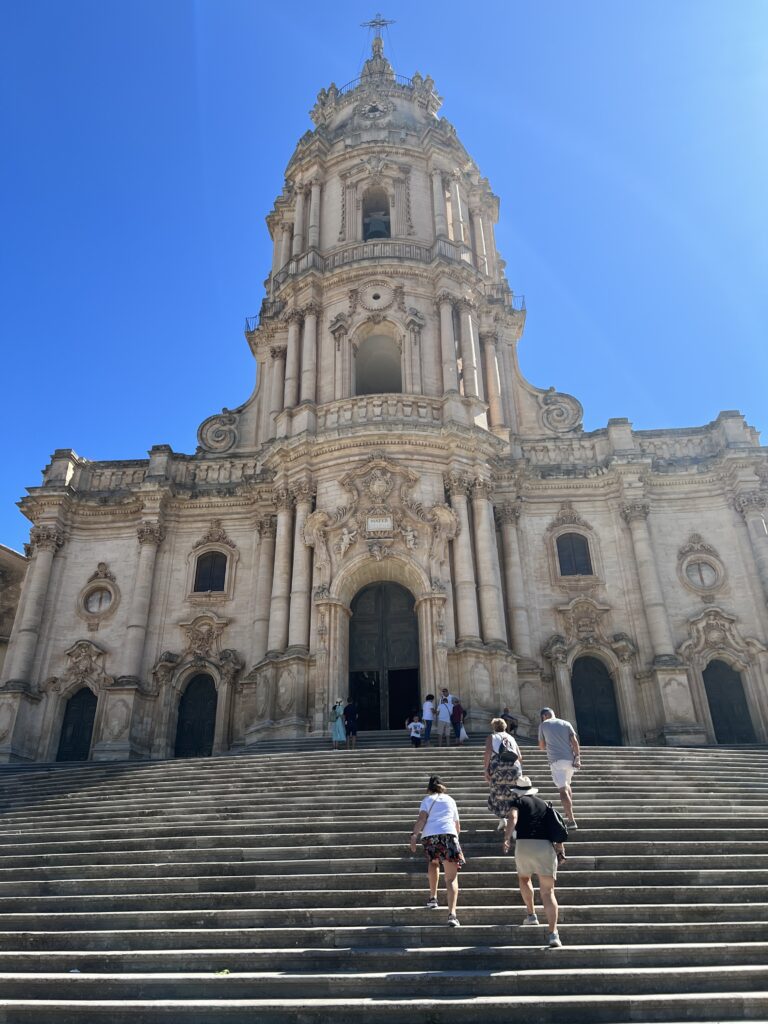
The best way to experience the city is simply to walk it. Lose yourself among its narrow alleyways, stone staircases, hidden courtyards, and sun-kissed piazzas, where daily life unfolds much as it has for centuries. Built across steep hillsides, Modica rises in layers of golden stone, creating one of the most striking landscapes in all of Sicily. One of the city’s most iconic landmarks is the breathtaking Cathedral of San Giorgio, perhaps the most recognizable image of Modica itself. Perched majestically at the top of an imposing 260-step staircase, the cathedral watches over the city like a crown. Its dramatic façade and commanding position make it one of the masterpieces of Sicilian Baroque architecture and one of the most unforgettable sights in the region.
And then, of course, there is the city’s most famous treasure: Modica chocolate. Known around the world, Modica’s chocolate is unlike any other. Made using an ancient cold-processing technique introduced centuries ago, the sugar crystals remain intact rather than fully dissolving, giving the chocolate its signature grainy, almost crunchy texture. Flavors such as cinnamon, carob, jasmine, citrus, and even chili pepper add depth and complexity to every bite. I always bring home several bars whenever I visit, and without fail, my family says the same thing: it tastes unlike any chocolate they have ever had before.
Ragusa
Ragusa is another extraordinary Sicilian gem that quietly waits to be discovered. Ironically, despite its remarkable beauty and rich history, Ragusa remains less visited than many of Sicily’s more famous destinations — and that is precisely part of its charm. Its relative lack of mass tourism allows visitors to experience a more authentic, unhurried side of Sicily, making it one of the island’s most rewarding places to explore.
Like many cities in southeastern Sicily, Ragusa was devastated by the catastrophic earthquake of 1693. In the years that followed, local architects and noble families rebuilt the city in spectacular Baroque style. What makes Ragusa especially unique, however, is that it was reconstructed in two distinct sections, creating a fascinating dual identity that still defines the city today.
The original historic center, known as Ragusa Ibla, was rebuilt on the ancient site where the Ragusan nobility chose to return after the earthquake. This is the soul of Ragusa — a maze of winding lanes, stone staircases, elegant Baroque palaces, hidden churches, and breathtaking viewpoints. At its heart stands the magnificent Cathedral of San Giorgio, one of the finest masterpieces of Sicilian Baroque architecture and the unmistakable symbol of the city. Wandering through Ragusa Ibla feels almost cinematic, as though time has paused somewhere between past and present.
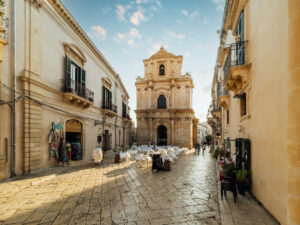
Above it lies Ragusa Superiore, the newer and more modern part of the city. Here, broad avenues, elegant buildings, and a more contemporary atmosphere contrast beautifully with the ancient charm of Ibla below. Together, these two worlds create one of Sicily’s most fascinating urban landscapes — a city suspended between old and new, tradition and reinvention.
Taormina
Taormina has long been considered one of Sicily’s most glamorous and beloved destinations, and it is easy to understand why. Perched dramatically above the Ionian Sea, with breathtaking coastal views, lush landscapes, and an extraordinary mix of historical, cultural, and archaeological treasures, Taormina possesses a beauty that is almost otherworldly. In recent years, its international allure has only grown thanks to the popularity of the television series The White Lotus, which introduced a new generation of travelers to its timeless charm.
For centuries, Taormina has captivated poets, writers, artists, and travelers from around the world. Its elegant atmosphere and spectacular scenery have also made it a favorite retreat for internationally renowned celebrities, all drawn by the city’s unique combination of sophistication and old-world Sicilian beauty.
At the center of daily life is Corso Umberto I, the town’s lively main street. Stretching between Porta Messina to the north and Porta Catania to the south, this historic pedestrian avenue cuts through the heart of Taormina and serves as its social and cultural backbone. Lined with boutiques, artisan shops, cafés, restaurants, and elegant storefronts, the Corso hums with energy from morning until late into the evening. Named after King Umberto I of Savoy, it has become one of Sicily’s most iconic promenades, where visitors from every corner of the world gather to stroll, shop, dine, and simply absorb the atmosphere.
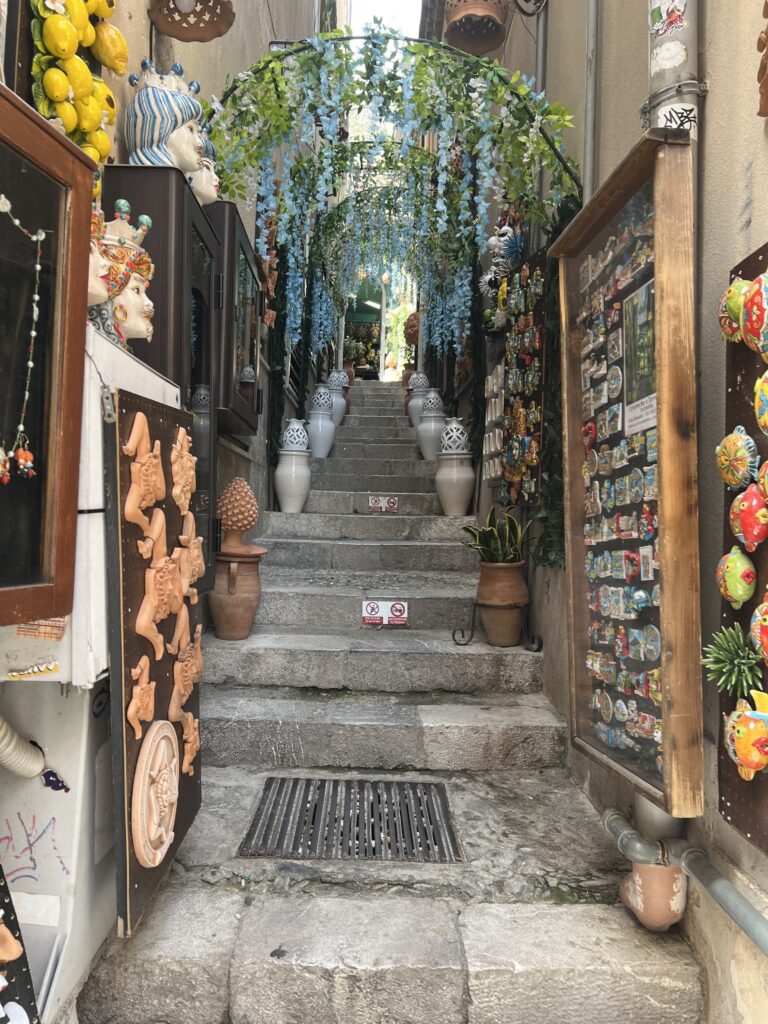
Yet beyond its fashionable façade, the Corso also reveals the city’s layered history. Architectural details and artistic remnants from different eras appear around nearly every corner, while narrow side streets branch off unexpectedly into quiet hidden alleys. These smaller lanes offer a welcome escape from the crowds and reward curious wanderers with panoramic terraces, medieval churches, flower-filled courtyards, and glimpses of ancient ruins that seem suspended in time.
What to Eat in Sicily
Sicily offers a rich culinary tradition that combines Mediterranean, Arab, and Spanish influences. Many gastronomic specialties of Sicily are worth enjoying. Below are a few of my favorites:
Seafood: As an island, it’s no surprise that Sicily is famous for its fresh fish dishes. Among the specialties, there is pasta with sardines (pasta with anchovies, pine nuts and raisins), and swordfish alla ghiotta (swordfish with tomatoes, olives, capers, and oregano). Try also the grilled fresh tuna.
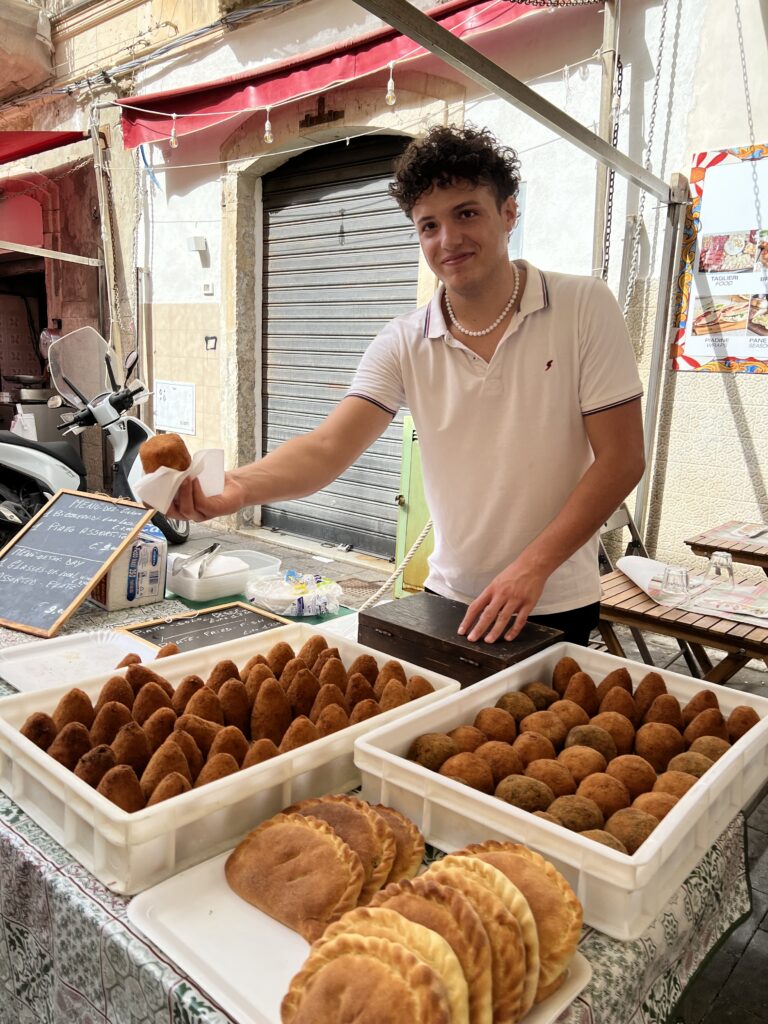
Arancini: Arancini are balls, or pyramids, of rice stuffed and fried. Common variants include:
- Arancini al ragù (stuffed with meat).
- Arancini al burro (stuffed with butter or béchamel, mozzarella, and diced cooked ham).
- Arancini with pistachio (stuffed with pistachio pesto and cheese).
Fried cauliflower: This specialty of Syracuse is also known as “poached cauliflower.” The cauliflower is first boiled and then dipped in a light batter, then fried until golden brown. It is often served with lemon sauce.
Anelletti Al Forno: Anelletti are typical Sicilian ring-shaped pasta cooked in the oven. Anelletti are usually prepared with meat sauce, eggplants, peas, and cheese. It is a delicious and hearty dish that will delight the palate.
Sweets and other Goodies:
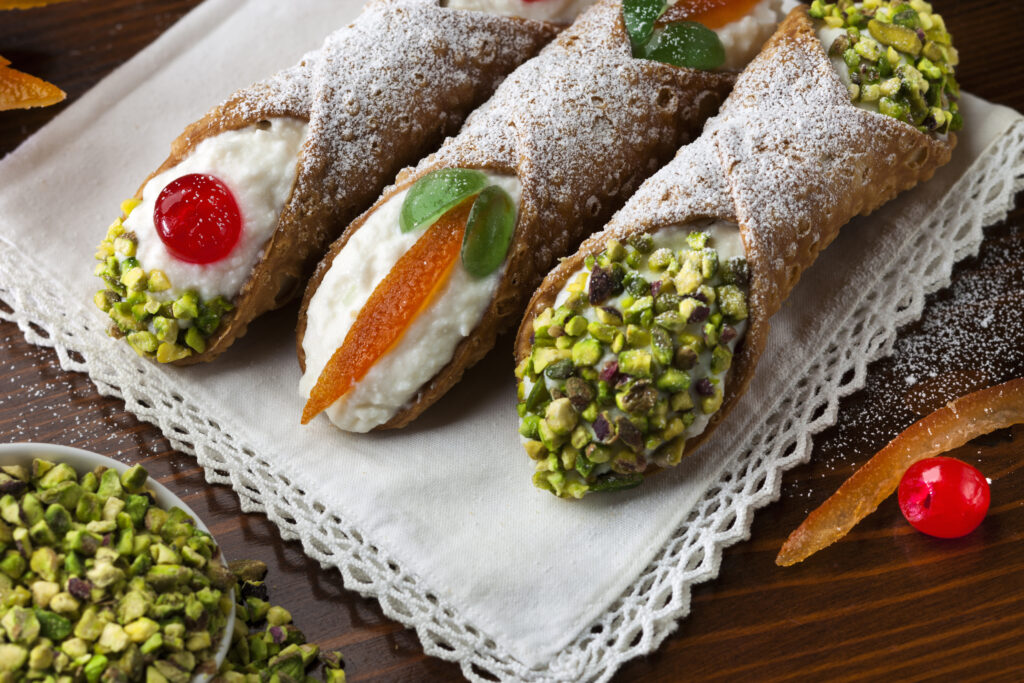
Sweets: Sicily is a mecca for sweets. If you have a sweet tooth like I do, this alone is a valid reason to visit the island! Try the Sicilian cassata (ricotta cake, candied fruit, and almond paste) or ricotta cannoli. The marzipansweets made with almond paste are also delicious.
Citrus fruits: Sicily is renowned for its citrus fruits, especially oranges. Tarot and blood oranges are typical varieties of Sicily. They are juicy and aromatic, perfect to be enjoyed fresh or used in preparing drinks and desserts. A spremuta is freshly squeezed orange juice famous in Sicily and ideal at breakfast.
Wine: Italy, of course, is known for its quality wines, and Sicily is no exception. Here, in particular, you’ll find the famous Moscato wine of Syracuse, a sweet and aromatic wine. Other local wines, such as Nero d’Avola or Inzolia, are worth tasting!
An ISDA member and longtime contributor, Francesca is a native Italian living in Boston. An avid cook and baker, she is a culinary instructor who loves teaching others how to prepare simple, approachable Italian dishes. She is also the proud owner of Lazy Italian Culinary Adventures that features week-long culinary trips throughout Italy. Learn more at thelazyitalian.com.
