
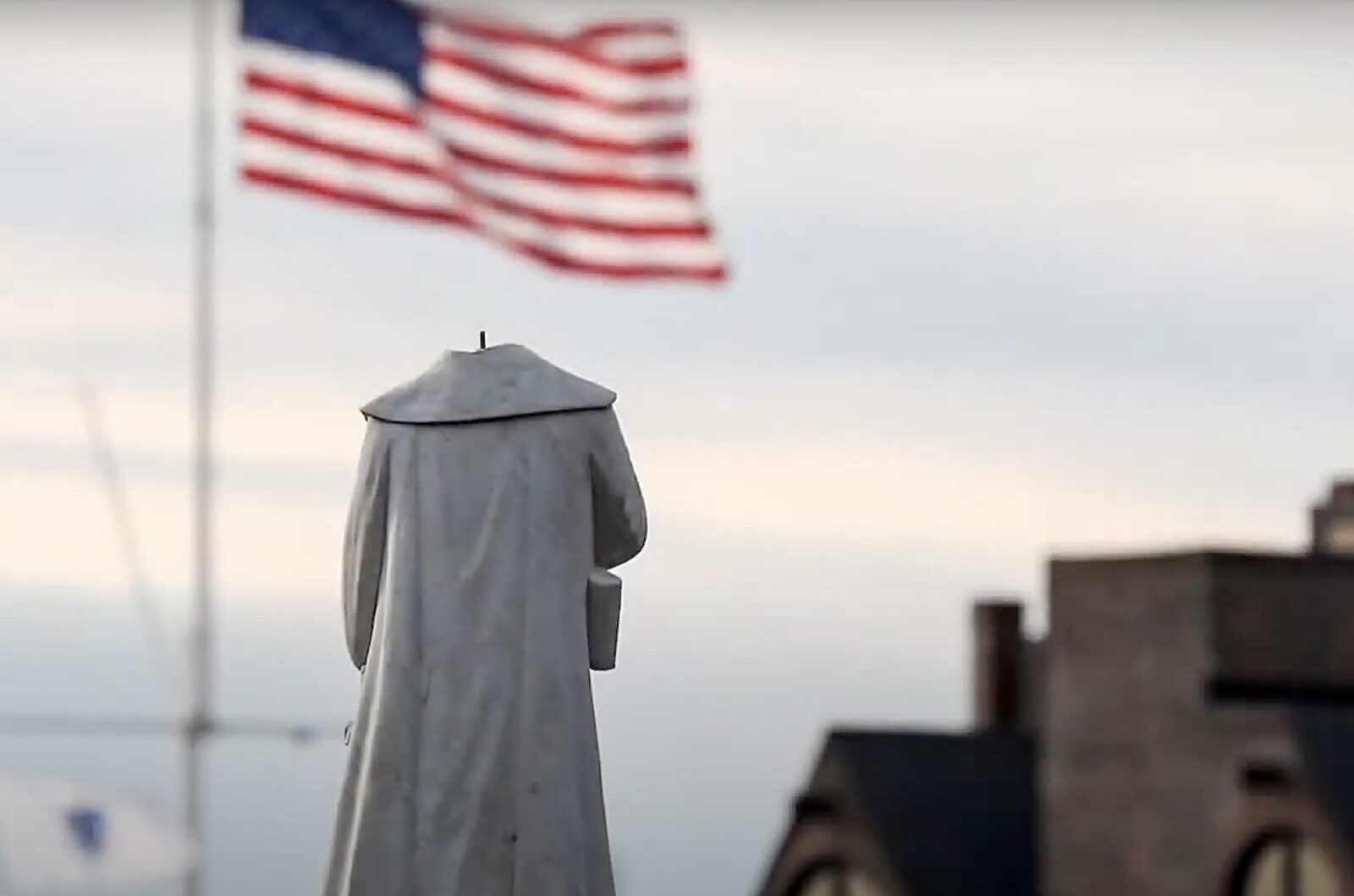
Four years ago, Boston’s Columbus statue was beheaded in the city’s North End during civic unrest. This week, Massachusetts’ Columbus Day holiday was preserved thanks to a viral petition letter distributed to the MA House Committee on Steering, Policy and Scheduling.
MA lawmakers blink on erase-and-replace bills amid heavy resistance from national Italian American coalition.
Two bills that were advancing through the Massachusetts House and Senate, seeking to replace Columbus Day with Indigenous Peoples’ Day, are dead-on-arrival thanks, in part, to a viral petition spearheaded by affiliates of the Conference of Presidents of Major Italian American Organizations (COPOMIAO), a national coalition of prominent cultural, educational, fraternal, and anti-defamation groups.
Basil M. Russo, president of COPOMIAO and Italian Sons and Daughters of America (ISDA) — along with Tom Damigella of the Italian American Alliance and Andre DiMino of the Italian American One Voice Coalition — led the grassroots effort, which inundated lawmakers’ email inboxes with petitions.
“We support mutual respect among all ethnicities and races, but this type of erase-and-replace legislation — which is resonating less and less with a majority of Americans — unfairly pits one group against another,” said Russo. “We want an equitable solution for all, and we’ll continue with our successful advocacy and legal efforts to help achieve a compromise.”
A Legal Reckoning
This past April, in a landmark 7-0 appeal decision, the Commonwealth Court of Pennsylvania revived a lawsuit aimed at blocking Pittsburgh City Hall’s decision to remove a local Columbus statue. In a 24-page opinion, the court reprimanded Pittsburgh’s attempt to uproot the statue, writing that city hall does not have “…‘free reign’ to act as it pleases in defiance of the law.”
Philadelphia litigator George Bochetto filed the lawsuit, and subsequent appeal, on behalf of the Italian Sons and Daughters of America (a COPOMIAO affiliate organization). The reinstated suit will now go back before Judge John T. McVay, Jr. of the Allegheny County Court of Common Pleas “for further factfinding and decision,” per the opinion.
In December 2022, the Commonwealth Court of Pennsylvania — in a separate lawsuit — sided with Bochetto when it blocked Philadelphia’s former mayor from removing the city’s 148-year-old Columbus statue from a public plaza. In that decision, Judge Paula Patrick wrote: “It is baffling to this court as to how the City of Philadelphia wants to remove the Statue without any legal basis. The city’s entire argument and case is devoid of any legal foundation.”
Columbus’ History
Opponents of Columbus statues and holidays often assume that the parades and monuments represent colonialism or enslavement. Ironically, the navigator’s likeness was initially embraced to promote greater acceptance of early immigrants to our country.
In 1892, U.S. President Benjamin Harrison organized the first national Columbus Day parade in New York City, aiming to ease a diplomatic crisis between the U.S. and Italy. This crisis arose a year earlier when the largest lynch mob in American history murdered 11 innocent Italian immigrants in the streets of New Orleans.
President Harrison’s NYC parade, which drew more than a million attendees, inspired Italian Americans throughout the 1900s to create Columbus statues and hold parades across the U.S., symbolizing their drive for assimilation. Today, the holiday honors Italian American pride and heritage.
In 2020, during civic unrest, Boston’s North End Columbus statue was beheaded and removed. The protestors, in their effort to support marginalized groups, unknowingly targeted the very monuments that were inspired by the same spirit of inclusivity from more than a century ago.
Politicians, instead of introducing erase-and-replace legislation, should consider inviting more voices to the discussion, creating an intercultural dialogue built on mutual respect and compromise.
Over the past two years, Russo and his Italian American peers have worked directly with White House officials to develop Columbus Day proclamations that explore the history behind the holiday.
See the 2022 and 2023 Columbus Day Proclamations for further context.
An Equitable Way Forward
COPOMIAO suggests that the day after Thanksgiving be recognized as Native American Heritage Day and that the entire month of November be celebrated as Native American Heritage Month, as is already declared by proclamation by the U.S. government.
There is also the option of recognizing August 9th as Indigenous Peoples Day, which was designated by the United Nations in 1999.
ABOUT COPOMIAO
Formed in NYC in 1975, the Conference of Presidents of Major Italian American Organizations (COPOMIAO) — a national coalition of 65 cultural, educational, fraternal and anti-defamation groups — seeks to promote our history and traditions for today’s generations, and tomorrow’s.
Make a Pledge and join Italian Sons and Daughters of America today.
