
Le Due Torre, or the Two Towers, constructed in the early 12th century, are symbols of medieval wealth in Bologna.
By Francesca Montillo, ISDA Food + Travel Writer
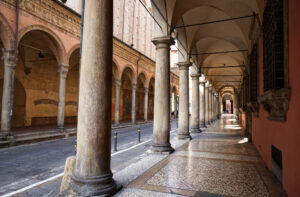
Bologna is the largest city in the Northern region of Emilia-Romagna. The capitol of the region, Bologna is known for its prestigious schools, medieval towers, centuries-old churches and priceless art. Simply put, it’s a jewel of Italy, and when strolling down the pedestrian-friendly streets, one will immediately notice miles of picturesque porticoes that provide shelter from the elements and serve as the city’s connective stone tissue. Founded in 1088, the University of Bologna is the world’s oldest university where the philosopher and poet Dante studied in the 13th century.
The famous towers of Bologna — former status symbols of wealth — are unmistakable, and only about 20 remain from some 200 that were built between the 12th and 13th centuries. Le Due Torre, or the Two Towers, are the most famous in Bologna and stand practically next to each other. They feature a “Pisa” effect as both have a slight lean. And if looking at them reminds you of New York City’s fallen Twin Towers, it’s because Minoru Yamasaki, the architect for the magnificent structures, is said to have been inspired by Bologna’s Due Torre.
UNESCO Designation
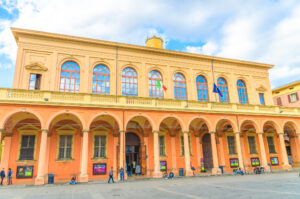
In 2006, Bologna was named a UNESCO City of Music, thanks to its rich arts scene. The Teatro Comunale di Bologna, Bologna’s opera house, is one of the most culturally significant theaters in Italy. The city is also host to numerous festivals, including the International Contemporary Music Festival, International Classical Music Festival and the Italian Autumn Jazz Event.
Bologna La Grassa
Now, let’s talk about food. Bologna is Italy’s food capital and affectionately known as “Bologna, la Grassa” or “Bologna, the fat one.” While some say that the lunchmeat “boloney” was named after the city, the two have nothing in common. Bologna is home to mortadella, a delicious meat made from premium pork, pork fat and spices, which is cubed or thinly sliced. Enjoyed deliciously as-is, mortadella is also an important filling for stuffed pasta, such as tortellini, another famous dish of this city. Every October, the city celebrates this iconic staple with its own festival.
Bolognese Sauce and Tagliatelle
Tagliatelle al ragu is another staple of Bolognese cuisine. Known to many in the U.S. as “Bolognese sauce,” it is typically made with ground pork and veal, carrots, celery and tomato sauce. Like all Italian recipes, there are variations, including the addition of heavy cream, dry porcini mushrooms or wine. Often, though not exclusively, butter will be used as the fat, as opposed to oil. The Bologna Chamber of Commerce protectively holds the “official” recipe. Served not with spaghetti, as perhaps in other parts of Italy, it is usually served with freshly made egg noodles called tagliatelle.
Speaking of freshly made pasta, it’s unlikely that you’ll find better tasting fresh pasta anywhere else in Italy. While many Southerners make fresh pasta with just flour and water, the Bolognese add eggs. Fresh pasta is not only used to make the tagliatelle, but for lasagna, tortellini and its larger counterparts, tortelloni. You will find tortellini in brodo, at many restaurants, and while it sounds simple, the flavor of both the broth and tortellini is impeccable.
The Undisputed King of Cheese
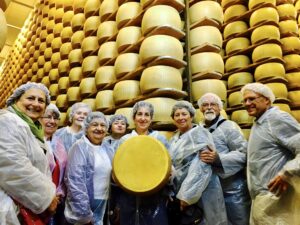
Parmigiano Reggiano cheese, easily identified by the markings on the rind, is protected by the Denomination of Origin and must follow strict guidelines and inspections. It can only be produced in the cities of Bologna, Parma, Reggio Emilia, Modena and Mantua. The cows that produce the milk used in making this specialty are fed only local grass and natural feed. No additives go in the milk and after the salting process, the curing lasts anywhere from 12 – 36 months.
The Real Traditional Balsamic Vinegar
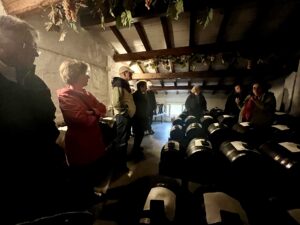
And what goes better on a nice piece of parmigiano cheese than a nice drizzle of real balsamic vinegar. Made from white trebbiano grapes and aged for at least 12 years, it’s protected by the Designation of Origin and is produced in the city of Modena, near Bologna. Classified as a condiment and not vinegar, the traditional balsamic is thick, syrupy and sweet. It goes just as well on a piece of parmigiano as it does on fresh-cut strawberries.
Tried and Tested Recommendations in Bologna
Via Drapperie, 5/A, 40124 Bologna
- A family shop since 1905, Gilberto is indeed a food souvenir mecca. While small, it offers authentic and regionally made products that even the locals appreciate. Here you can purchase wine, liquors, chocolates, sweets, oils and other typical products.
Via Caprarie, 1, 40124 Bologna
- Centrally located in the city center since 1932, Tamburini is an institution in itself for the Bolognese. Here you will find freshly made tortellini, parmigiano, mortadella made in-house, various salumi, breads and oils. Sweets made by locals can also be found here. It also offers a casual sit-down restaurant that’s ideal for anyone looking for delicious cuisine without the high price tag.
Piazza di Porta Ravegnana, 240126, Bologna
- Bottega Portici is indeed a unique experience. Part pasta shop, part café, part cafeteria, all with an open floor concept. It’s a great place for locals to buy their Sunday tortellini and for travelers to sit down with a cappuccino and freshly made cream cornetto. A casual concept that the locals love, it’s often filled with local students looking for modestly priced and delicious food.
Via Caprarie, 7, 40124 Bologna
- A family-owned shop since 1868, Atti is the go-to shop for locals. This is where they go for breads, dry biscuits, cakes, seasonal panettone, and freshly made pasta. A not-to-be missed spot, be sure to take advantage of their extensive samples and decide for yourself what your favorite is.
Vicolo Colombina, 5B, 40123 Bologna
- Located in a little vicolo, or alley, Vicolo Colombina offers traditional dishes such as tortellini in broth, tagliatelli al ragu and a large selection of local salumi. Owned by Massimiliano Poggi, this is a favorite of the locals and visitors. The passatelli in rabbit ragu and the chicken cacciatore are must-tries.
Piazza Malpighi, 16, 40123 Bologna
- If you’re maxed out on mortadella, then head to Osteria Bartolini. Claiming to bring the sea to Bologna, Bartolini offers a large selection of seafood dishes, from seafood risotto to a grand mixture of fried seafood with house made potato chips. If you’re craving something fried, opt for the fried seafood platter serving fish without the bones.
And there you have it. Go forth and experience all that Bologna has to offer!
Make a Pledge and join Italian Sons and Daughters of America today.
