

By Pamela Dorazio Dean, La Nostra Voce
Lida Tomaro Urbaz is a 95-year-old Italian American who lives in a suburb of Cleveland, Ohio. She emigrated to the United States in 1957 from Cittanova, known today as Novigrad, in the former Italian region of Istria — a peninsula east of Italy across the Adriatic Sea.
I met Lida in a local Italian American group called Il Cenacolo Italiano di Cleveland. It was founded in 1928 and is one of the few Italian American groups that still conducts most of their meetings in Italian. Because of the use of the language, it attracts many first-generation immigrants, like Lida.
I have heard and read many Italian immigration stories, but Lida’s shed light on a dark chapter of Italian history of which I was completely unaware and, that, according to Lida, had been “forgotten” by Italy and the rest of the world for decades. This chapter took place in Lida’s birthplace, the former Italian Istrian peninsula (now part of Croatia), during the post-World War II era; it is known as the “Foibe Massacre” or simply “Foibe.”
This article first appeared in the February 2024 edition of ISDA’s monthly Italian American newspaper, La Nostra Voce. Subscribe here
When World War II ended in 1945, the sovereignty of Istria was ambiguous. Marshal Josip Tito created the Socialist Federal Republic of Yugoslavia and took over Istria. He ruled with an iron fist and systematically suppressed groups and people who did not agree with him or his policies. Many who got in his way were killed and thrown into the foibe (foiba singular), which are naturally occurring sinkholes, some as deep as 200 meters, found primarily in the former Istrian region. Roughly 10,000 people were hurled into the foibe and were left to die.
Lida and her family were not spared from Tito’s atrocities. Lida’s 24-year-old cousin worked as a teacher and taught in Italian. The government did not approve, so Tito’s men took advantage of her, then placed her in front of the foibe. They proceeded to tie 10 people to her in a line. They shot her, and as she fell into the deep sinkhole, all the others were pulled in, too.
Government officials wanted all the income generated from businesses to go to them, then they would dole out a pittance to the shop owner. Lida’s father, who was a barber in Cittanova, refused to give his hard-earned money to the government, so they imprisoned him. Upon his release in 1951, he left Cittanova and moved to Trieste. The rest of the family soon followed. Lida’s family was among the 350,000 people who made a mass exodus from Istria to escape the horrors of Tito’s rule.
Life improved for Lida and her husband Mariano when they emigrated to the U.S. in 1957. She has had a good life here in the U.S. but will always fondly remember her home in Cittanova before Tito destroyed it all. Lida wrote a short remembrance of this time in her life and was willing to share it with our readers.
Before you read Lida’s words, however, it is important to note that the Italian government finally passed legislation in 2004 designating February 10 as National Memorial Day of the Exiles and Foibe, or Remembrance Day. Ceremonies are held throughout Italy to pay respects to those that died in the massacre and those that were unfairly forced from their homes.
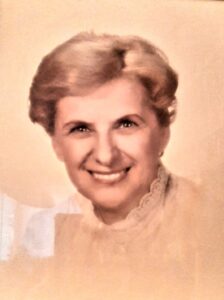
I am grateful to Lida for her willingness to share this tragic and personal story, in both English and Italian (below). Many lessons can be learned from Lida, but the most important is, as she says, life can be hard and awful, but you keep going, no matter what.
Memories of Istria, My Beloved Land
I wrote this memory in 2005 in name of my parents, Gisella and Giorgio.
I am Lida Tamaro Urbaz, born in Cittanova, in Istria, therefore I am a true Istrian.
Cittanova, was for us a corner of Terrestrial Paradise, kissed by water and blue sky, in a prosperous land, with a patrimony of simple and sage culture, passed on to us by our ancestors, based on work.
Unfortunately, our land began its sad and long odyssey in 1945, at the end of the Second World War. That which we all believed remained a free zone, administered by its people, on the contrary passed first to the administration of the Allied Military Government of Occupied Territories (AMGOT), and in 1947 became part of the Republic of Yugoslavia, a communist regime, with an insatiable thirst for power and revenge.
The new regime of Tito began with the deprivation of our freedom, our culture, our material goods, and eventually even depriving us of our last name, many that became balkanized (meaning that names were changed from Italian to sound more Yugoslavian).
Private property became common property meant to be shared with “compatriots”; our ideas of liberty, inspired by Christian teachings, were considered a penalty by the new repressive regime, and not being able to change our thoughts with their propaganda, the regime adopted the penalty of imprisonment. Even my father was subjected to that sad experience, when he refused to act as a spy. Fortunately, he managed to escape to Trieste, where we rejoined him after four years. The situation continued to worsen day by day; imprisonments escalated to executions, and as time went on the Tito regime was ever more consumed by vendetta.
The most atrocious infamy of that period of history were the “Foibe”; 100,000 innocent people, with the only fault of being Istrian, were thrown into these enormous craters that became their tombs. Unfortunately, the free world exhibited a sad behavior of cowardice by ignoring the massacres of the Foibe.
Reaching this extreme of barbarism, without hope of a return to civility, the exodus began of circa 350,000 Istrians, that left their homes, their material goods and above all their beloved land.
Ricordi dell’Istria, La Mia Amata Terra.
Sono Lida Tamar Urbaz, nata Cittanova, in Istria, quindi un’Istriana vera. Cittanova, era per noi un angolo di Paradiso Terrestre, baciato da un mare e cielo blu, in una terra generosa, con patrimonio di cultura semplice e saggia, tramandatoci dai nostri avi, e basata sul lavoro.
Purtroppo, la nostra terra, iniziò la sua triste e lunga odissea nel 1945, alla fine della seconda guerra mondiale. Quello che noi tutti pensavamo rimanesse una zona libera, amministrata dal suo popolo, al contrario passò prima sotto l’amministrazione del Governo Militare Alleato dei Territori Occupati (AMGOT), e nel 1947 divenne parte della Repubblica Yugoslava a regime comunista, assetato di potere e di vendette.
Il nuovo regime Titino, iniziò con il privarci della nostra libertà, della nostra cultura, dei nostri beni, ed eventualmente anche dei nostri cognomi, che in molti casi furono balcanizzati.
La proprietà privata divenne bene comune d condividere con i “compagni” le nostre idee di libertà ispirate dall’insegnamento Cristiano, erano considerate una minaccia per il nuovo regime repressive e non riuscendo a cambiare le nostre idee con la propaganda, adottarono la durezza della prigione. Anche mio padre ha provato quella triste esperienza, quando si è rifiutato di fare la spia. Per fortuna riuscì a scappare a Trieste, dove noi lo raggiungemmo in seguito.
La situazione continuò a peggiorare di giorno in giorno; dalle prigioni si passò alle esecuzioni, man mano che I Titini erano sempre più assetati di vendetta.
L’infamia più atroce di quel periodo della storia, furono le Foibe; circa centomila innocenti, con la sola colpa di essere Istriani, furono gettati in questi enormi crateri che divennero le loro tombe. Purtroppo, i paesi liberi, esibirono un triste comportamento di viltà, nell’ignorare i massacri delle foibe.
Giunti a questo eccesso di barbarie, senza speranze di un ritorno alla civiltà’, iniziò l’esodo di circa trecentocinquantamila Istriani, che lasciarono le lore case, i loro beni e soprattutto la loro amata terra.
