
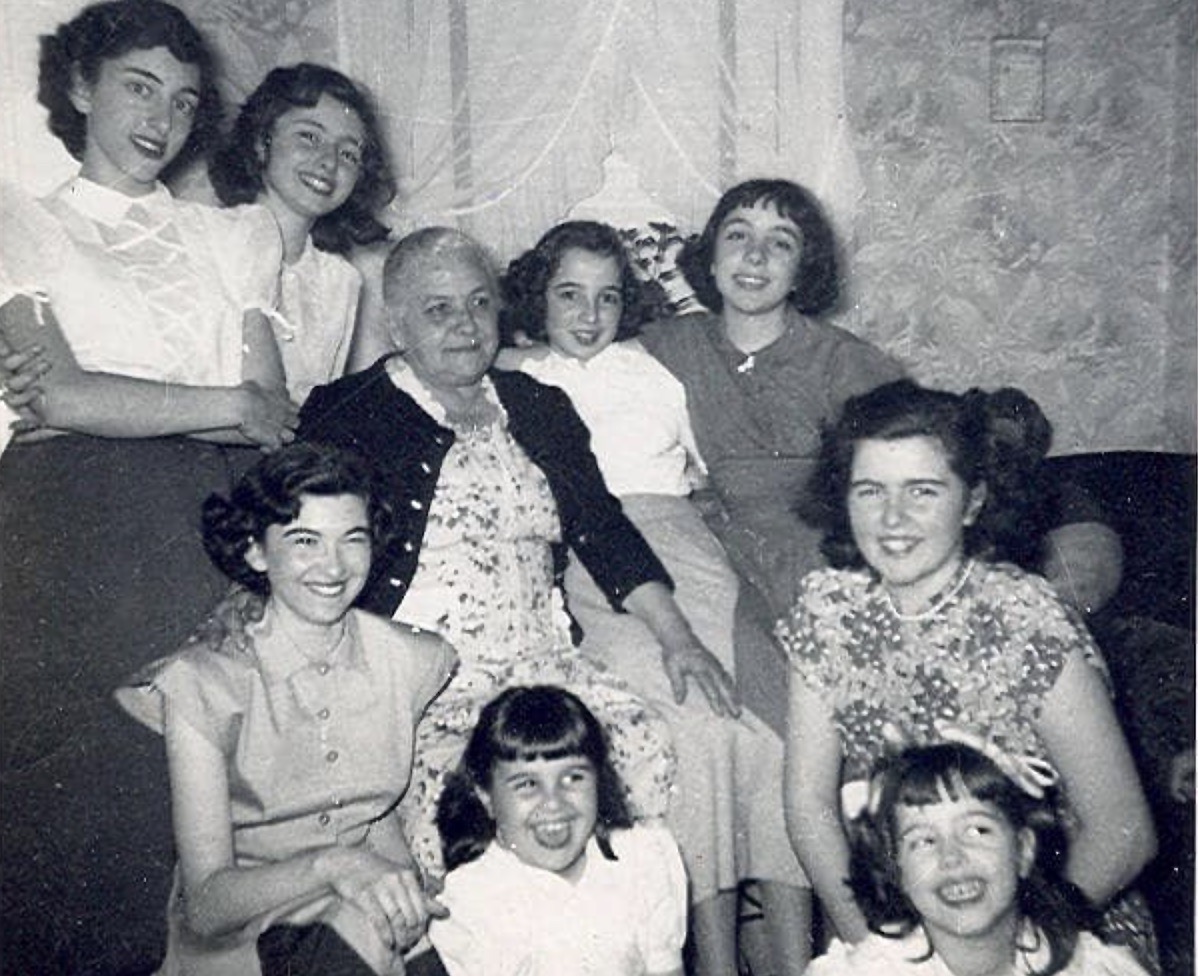
By Tony Traficante, ISDA Contributing Editor
Filomena, born in 1897, was a pretty peasant girl who grew up in the small, rugged, and mountainous hamlet of Rionero In Vultura, in the region of Basilicata. She emigrated to the United States in 1928, six years after her husband left in 1922.
She was a kind and gentle Italian woman of small stature, with a big heart. She was well-known throughout the district of Brushton, an area on the eastern boundary of Pittsburgh.
Filomena was recognized by many names. Her American neighbors referred to her as Missus, Ma’am, or Phil. Her children simply called her Mamma, and her husband called her “Figliola,” girl.
Around the neighborhood, she was “la Comare,” a religious title, as well as a term of respect.
Filomena, an Italian immigrant beauty, never received a formal education; thus, she could neither write nor read in her native language. This situation was not unusual for many southern Italian girls at the time. Initially, she spoke little or no English, but she eventually managed to make herself understood.
La Comare was a great cook and baker. The neighbors would attest to that. On Sunday, the aroma of her sauce permeated the block. On Monday, baking day, the smell of fresh bread, pizza, cakes, and pies were to die for. She was a generous sort who shared her goodies with friends and neighbors.
Unable to read a recipe, she baked and cooked from memory. If it was a new recipe, then Phil asked for reading help from one of her kids, or a neighbor. Once she baked or cooked whatever it was, the recipe was forever in her memory. When shopping for groceries she expressed her wants with the only “broken” English she knew, supplemented by hand gestures.
Her children’s friends loved her, and they especially loved coming to visit. They knew that no matter what, they would be invited to sit and dig in. Although her kids would say to their friends, “Come on we are not here to eat,” they, on the other hand, had different intentions and whispered, “shad up, we’re staying!” When Filomena said “settete e mangia,” there was no question, you sat and ate! And if you didn’t then she wanted to know “Cosa è, you sicka?” Who could, or ever would, refuse her order to eat?
Citizenship was difficult to obtain for Phil. It was years before she would apply. It wasn’t because she didn’t want to, but because of a lack of general knowledge of American history. She feared she would fail and be deported. Her children spent months in the evenings going over questions and answers that might be asked during her interview process. Phil’s husband was getting nervous, as World War II loomed. He was afraid of what could happen if she was not an American citizen. He pleaded with her, “Dai Figliola, che tu deve farlo mo.” Girl, it’s time you did it now. And so, she finally decided to go for it.
Fortunately, a good family friend acting as Filomena’s mentor and sponsor accompanied her to the testing facility. The family, who was required to stay behind, anxiously awaited her return. Did she pass? Yes, she did, and the family celebrated that night!
La Comare was a humble, virtuous, and religious lady. Every morning, with a babushka tied around her head, she dashed off to early mass.
Who was this special Lady? To many she was “La Comare,” but to me, she was my wonderful mom, Filomena Laurenza-Traficante!
Filomena was not alone; she was representative of so many Italian immigrant Moms who started anew and built up their families in our great country.
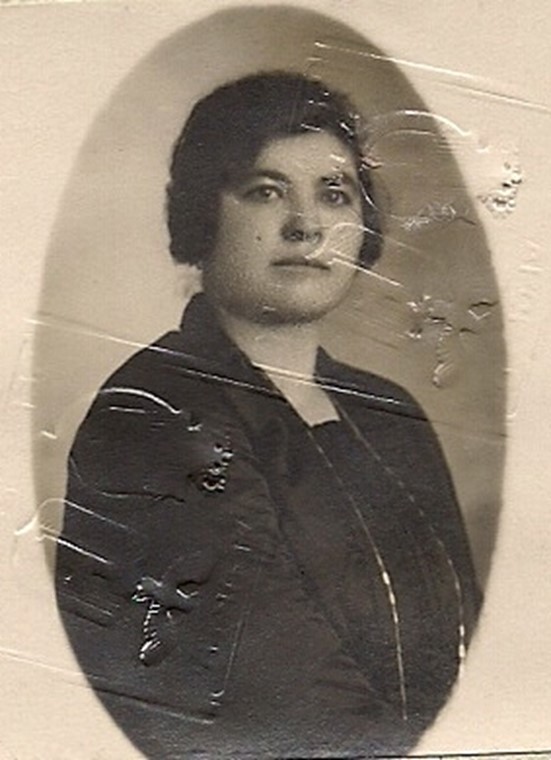
God bless her, and Happy Mother’s Day to all!
