
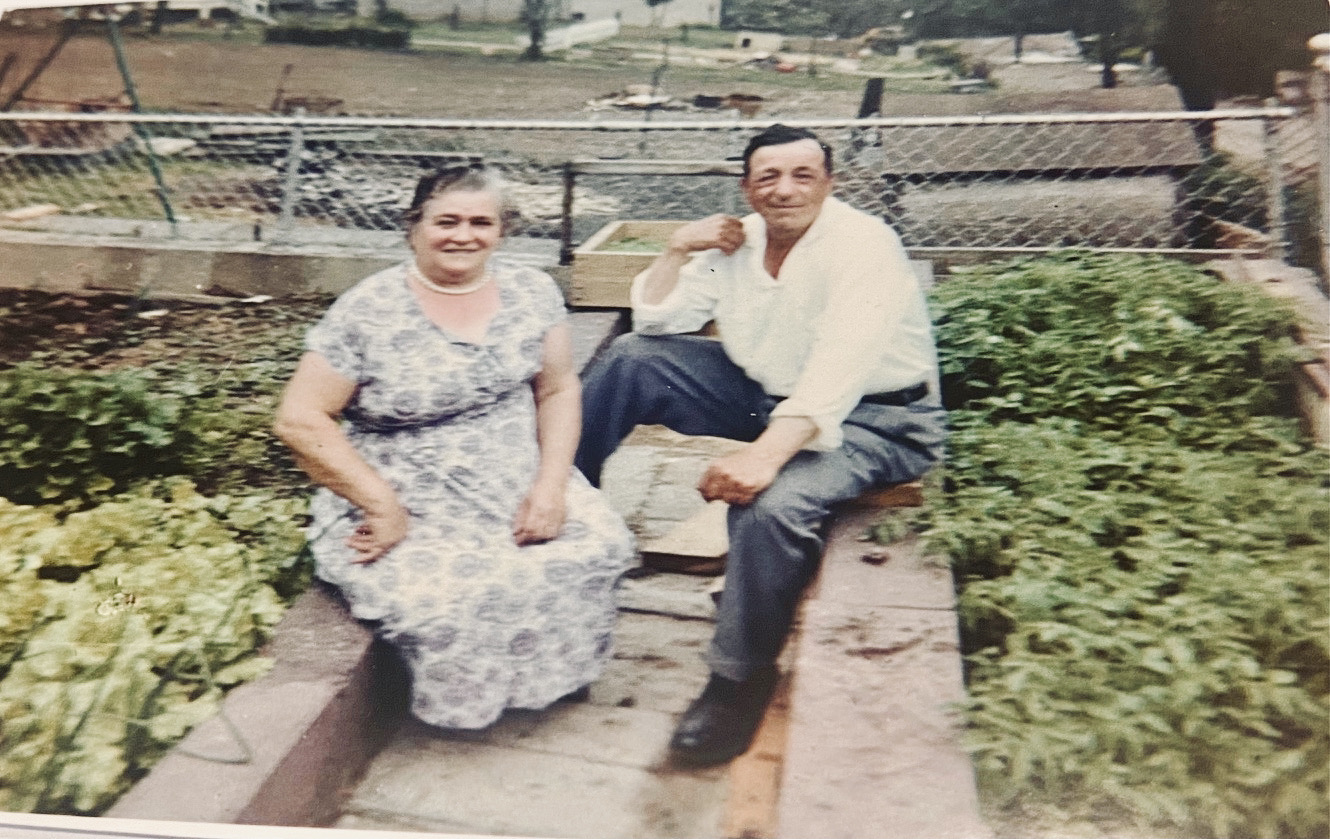
By Frank W. Santucci, La Nostra Voce
Every spring of my life, starting in 1941, my father and mother would align their planting skills with the warm sun. Willie, as he was known, would plant his tomatoes and peppers and treat them with such love that I felt the plants were part of our living family.
Lizzie, my mom, with an uncanny ability to grow many varieties of flowers, beautified the front and back of our property. Zinnias were her favorite. They also planted corn, basil, garlic, onions, zucchini, cabbage, potatoes, lettuce and celery, and the crowning glory overlooking this living salad was a 10-foot fig tree that produced the sweetest fruit imaginable.
How does a garden grow? With lots of digging, time, love and the ever-present manure. Some of the plants were seeded in late April as the winter took leave, but the sacred tomato and pepper plants had to wait for the Memorial Day holiday. Planting day started early, a cord was drawn with the precision of a surveyor, cross strings were pulled tight. A grid of two- and one-half foot squares were made. At each intersect of the cords, a hole was dug but before the plant was put in, a half bucket of manure was poured in.
Now the manure was a whole different process. Before I was old enough to drive, and since my Dad never drove, he would have others bring him sacks of horse manure. The horse waste is fairly dry, especially in the late winter and was no problem in the late spring. We would place the manure in a 50-gallon drum and add water and make a slurry. This in turn became manageable to dip a bucket in and pour the contents into the already dug holes.
When I was old enough to drive, my Dad and I would go to a chicken farm in Russellton to dig out the coops and place the precious chicken product in bushels. I had to drive very carefully to get home before it decorated the inside of my station wagon, keeping all the windows open whether hot or cold outside. The slurry was treated like liquid gold and for two to three weeks our yard was known as the Second Street filtration plant.
An interesting situation would arise at this time of year that involved the Pittsburgh Sun-Telegraph newspaper delivery boy. Our house on Second Street was set strategically between two blocks, creating an ideal route that allowed him to quicky get to his Third Street customers. The odor was so intense from late May to early June, our paper boy would empty his bag, strategically tuck the papers under his arms, place the bag over his head and run through our yard as fast as he could. Truly a sight to behold.
This article first appeared in La Nostra Voce, ISDA’s monthly newspaper, that chronicles Italian American life, culture and traditions. Subscribe today.
June was the month of flowers and our yard was noted for the fantastic array of vivid petals. It was a gorgeous showcase and amateur photographers were always taking pictures, which made my mother very proud. My dad would eagerly wait for the first tomato to ripen. There was always a friendly contest between the local neighbor gardeners; Dad won sometimes, but not always. One year I decided to pull an ornery joke on my father.
I went to the local 5 & 10 cent store and bought about six red rubber balls. Guess what happened next? Late one night I went out to the garden and attached the fake tomatoes to the plants in the middle of the garden, one side all tomatoes and the other side peppers, mostly hot cherry peppers. The next day, I encouraged my Dad to walk with me down to the garden. When we reached the point where the fake tomatoes were partially visible, I set off the tomato alarm, “Dad, look! I see some red tomatoes on the back side!” Of course, this was impossible, it was only the middle of June, and July usually was the real blossoming time.
My Dad got so excited, he started to run into the garden. The obvious came to pass as he got closer. At that point, even though my father was not athletically inclined, he did throw two red rubber balls directly toward me, missing both times. He would not admit that he was fooled in the beginning, but didn’t remain angry very long. We had a good laugh together.
A month passed and the May promise that the chicken manure had given us became a reality in the month of July. The little apples of gold “pomodoro’s” reached out from under the green foliage beckoning to be picked.
This is where the fickle tomatoes changed allegiance, now it was my mother’s turn. As the hot July sun kissed the plants, my mother would make her early daily walk through the tomato garden picking the ripest tomatoes and placing them on a table on the back porch. When there was a suitable amount for canning, the fruit was cooked and placed in sterilized glass quart mason jars. She would do this sometimes twice a week for the next six to eight weeks canning over 100 jars each year.
This kept our sauce supply for the winter months and then next April we would start all over again. Along with the other vegetables, her flowers also flourished during the hot months. The last to be picked was the garlic, it could withstand the cold. The long tops of the garlic plants were strong and braided together to store in the basement, giving us sweet tasting garlic all winter long.
As fall approached, all the vegetables were picked before the frost arrived. My brother Ralph and I had a great time kicking the leftover rotten cabbages, although once they broke open, the smell was nauseating. After 40 years of avoidance, I have finally come to enjoy the taste of sauerkraut.
Tomatoes in July, garlic in September and another growing season is history.
Make a pledge and become a member of Italian Sons and Daughters of America today.
